The first cold week arrives, the heating comes on, and the smart purifier in your living room that sat at green all summer starts flashing orange. The fan ramps up, the app shows a spike, and the air feels dry enough to give you a static shock off the door handle. It is reasonable to wonder whether something is wrong with the purifier or the house.
Usually it is neither. Three separate things tend to show up in the same week, and they have different fixes. This walkthrough helps you tell them apart, adjust what is worth adjusting, and skip the purchases you don’t need. If you are choosing an air purifier for winter indoor air quality, the same checks apply to whatever model you own.
Why the first weeks of heating make your air purifier look busier
A heating system that has been off for months has been sitting with dust in it. Forced-air systems push air through ducts and across vents that have collected fine dust over the warm season, and the first runs of the blower can carry some of it into the room. Radiators and baseboard heaters warm the dust that has settled on and around them, and the rising air currents lift it back up.
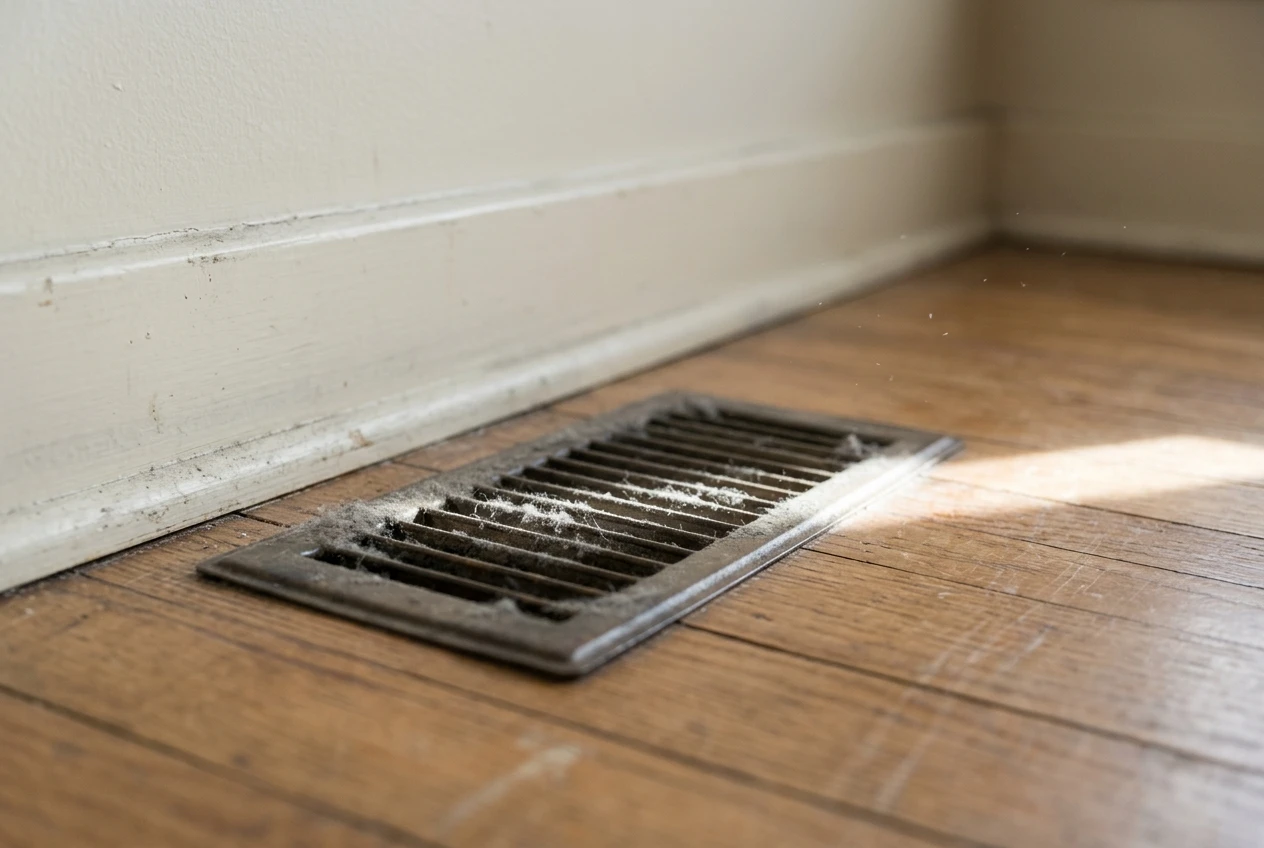
Heating also changes how people use their homes. Windows close, rugs and blankets come out of storage, and doors stay shut. Closed windows mean the air in the room is not being swapped with outdoor air, so whatever is stirred up stays around longer.
A smart purifier measures particles in the air passing its sensor and responds in auto mode by speeding up. A busier purifier in early heating season is usually the purifier doing what it was built to do, reacting to a real change in the room. The useful question is whether the reading matches what is actually in the air.
Dust, dry air, or a confused sensor: a quick way to tell which one you have
Each of the three looks a little different. Run through these in order, since the first two cost nothing.
Watch the timing. If the reading jumps when the furnace blower starts and falls back over the next hour or so, you are most likely seeing real dust that the heating system stirred up. If the reading stays elevated all day with the heating off, move on to the next check.
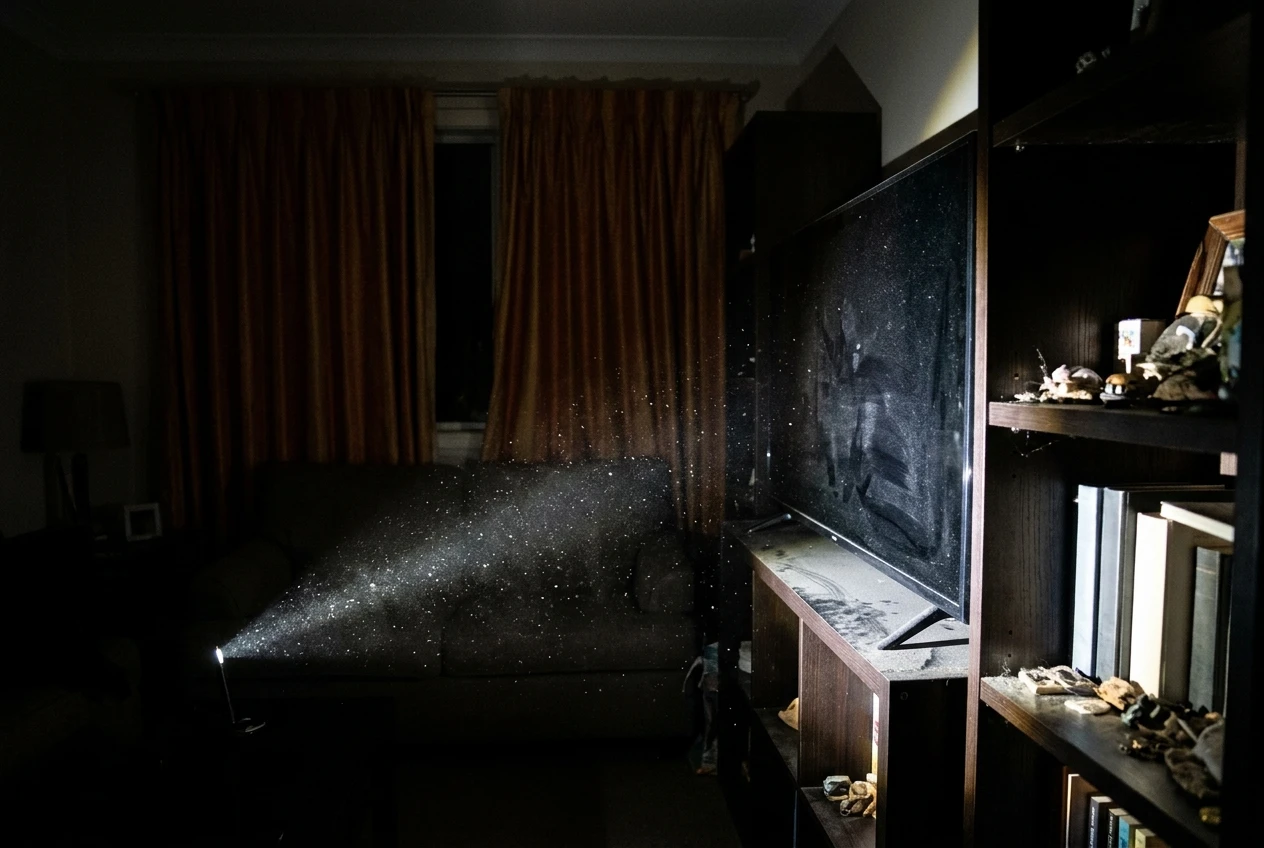
Look at the room in side light. Close the curtains partly, or switch off the lights and shine a phone torch across the room at a low angle. Floating specks, or a visible film on a dark shelf or TV screen, point to real dust. A clean-looking room that still reads high points toward the sensor.
Check for static and dry-air signs. Frequent static shocks, hair that clings, dust that sticks to screens, and wood floors that creak more than usual all suggest dry air. A small digital hygrometer, which is inexpensive and sold as a humidity gauge, gives you an actual number. A commonly suggested comfortable range for indoor humidity is roughly 30 to 50 percent, and winter heating can push a home below that.
Suspect the sensor if the numbers never settle. A dust sensor that has collected lint or pet hair can report high readings even in a clean room, and the purifier then runs faster than it needs to. If that matches what you see, the sensor cleaning steps in why your air purifier reads high when the room looks clean cover the whole process, so there is no need to repeat it here.
These can overlap. A home can have real dust, dry air and a slightly dirty sensor all at once, which is why the readings feel confusing. Sorting them one at a time makes each fix clear.
What your purifier can and can’t do about dry winter air
A purifier with a HEPA filter removes particles from the air that moves through it. It does not add moisture, and it does not remove it either. If the air in your home is dry, running the purifier on a higher speed will not change that.
What a purifier can do is help with the dust that dry air tends to keep in circulation. Dry conditions make static more likely, and static can keep fine particles clinging to surfaces and floating in the room longer. A purifier working on those particles helps with the dust side of the problem, while the dryness stays what it was.
That is why a single device cannot cover both problems. Dust is a purifier’s job. Humidity is a humidifier’s job, and it is a separate decision for a separate reason. You don’t need to buy a different purifier to deal with dry air, and a higher-end model will not do it either.
Dry air also does not mean your purifier is failing. If the app shows decent particle readings and the room still feels dry, both can be true at once.
Small settings and habits for heating season
You do not need to rebuild how you use the purifier. A few adjustments cover most homes.
Fan speed and auto mode
Auto mode is the sensible default when the heating is on, because the purifier responds to the spikes without you watching the app. If it is ramping up too often and too loudly for your taste, consider a lower fixed speed in the evenings or while you sleep. For a fuller look at when auto is enough and when a steady speed makes sense, see should you run your air purifier all day or is auto mode enough.
Many models also have a night or sleep mode that lowers the fan and dims the lights. Heating season is a good time to try it if the first cold weeks have made the unit noisier than usual.
Placement near vents and heaters
Heat sources change how the air moves in a room, so the spot that worked in summer may not work now. Keep the purifier from sitting directly in front of a supply vent or right beside a radiator. A strong blast of air across the intake can send the sensor odd readings, and the purifier may end up chasing a spike that has already passed.
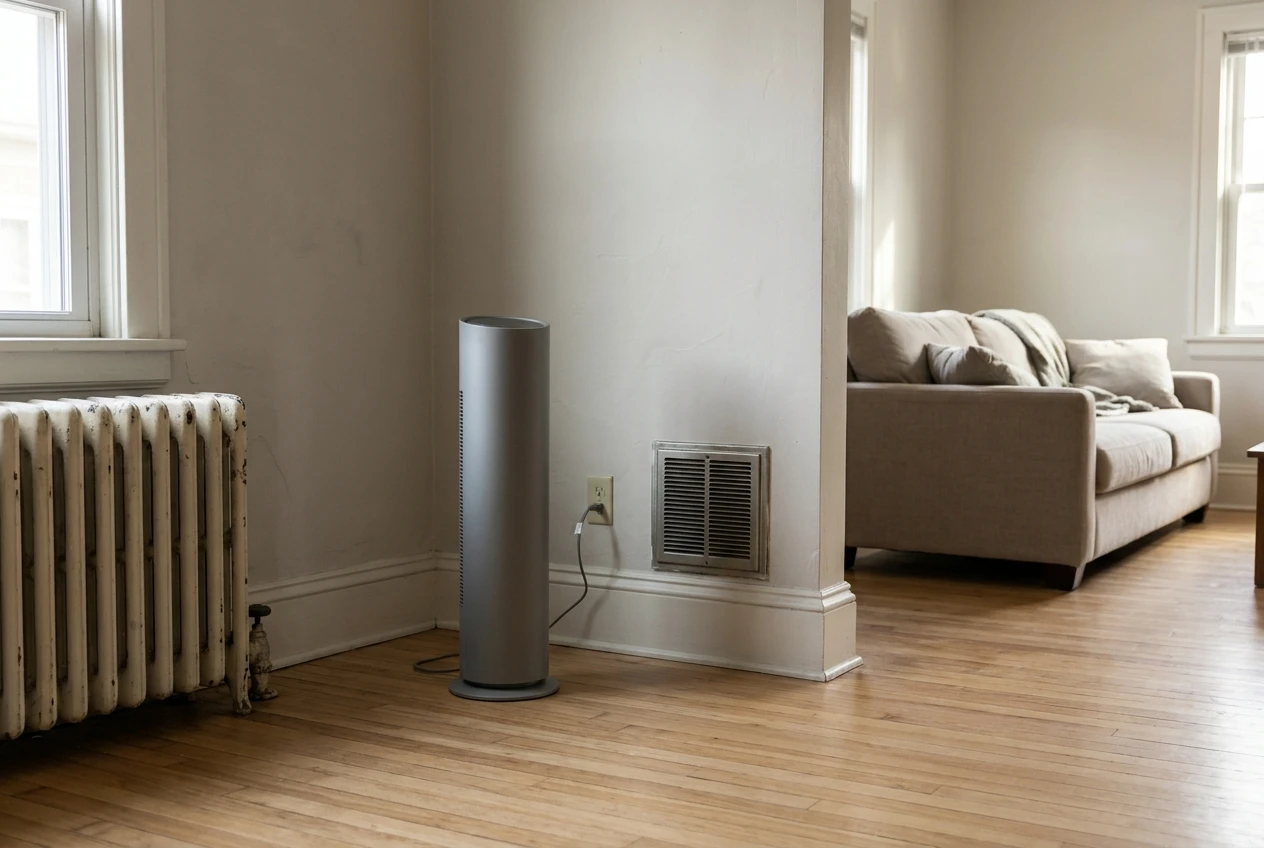
Leave open space around the unit, usually a foot or more on the sides that draw air in, and avoid tucking it behind a sofa or curtain. If a vent and the purifier currently share a corner, moving the purifier a few feet along the wall is a simple first change. The room-by-room guidance in where to put your air purifier goes through the spots that quietly waste a unit’s output.
Check the furnace filter too
If you own your home, the furnace or HVAC filter is worth checking at the start of the season. A clogged one makes the system work harder and can leave more dust moving through the ducts. Renters with a landlord-managed system may only be able to ask about it, which is still worth doing. Replace or clean it according to the manufacturer’s instructions for your system.
Cleaning the pre-filter more often in winter, and what that does to your filter budget
Most smart purifiers have a washable or vacuumable pre-filter that catches larger particles such as hair and lint before they reach the main filter. In heating season it often collects more than it did over the summer, because there is more dust in the air.
A pre-filter loaded with dust restricts airflow, so the fan works harder and the main filter takes more of the load. Cleaning it costs nothing, while a main filter that wears out early costs money. Checking the pre-filter after the first week of heating, and then again two weeks later, shows how fast it fills in your room. You can then set a schedule based on what you see. How to clean your air purifier’s pre-filter explains the cleaning method and how to judge the interval for your own home.
If a high-dust winter does shorten your main filter’s life, it helps to know your numbers before the replacement is due. How to work out your air purifier’s yearly filter cost shows how to estimate that in advance, so the next filter does not catch you off guard. Do not replace the filter before the unit’s indicator and your own inspection say it is time. The filter light alone can be a rough guide, since many units count running hours and do not measure how dirty the filter is.
If you add a humidifier, keep it from confusing your purifier
Adding moisture to dry air is a reasonable decision, and it is separate from the purifier question. If you make it, the two devices need some care around each other.
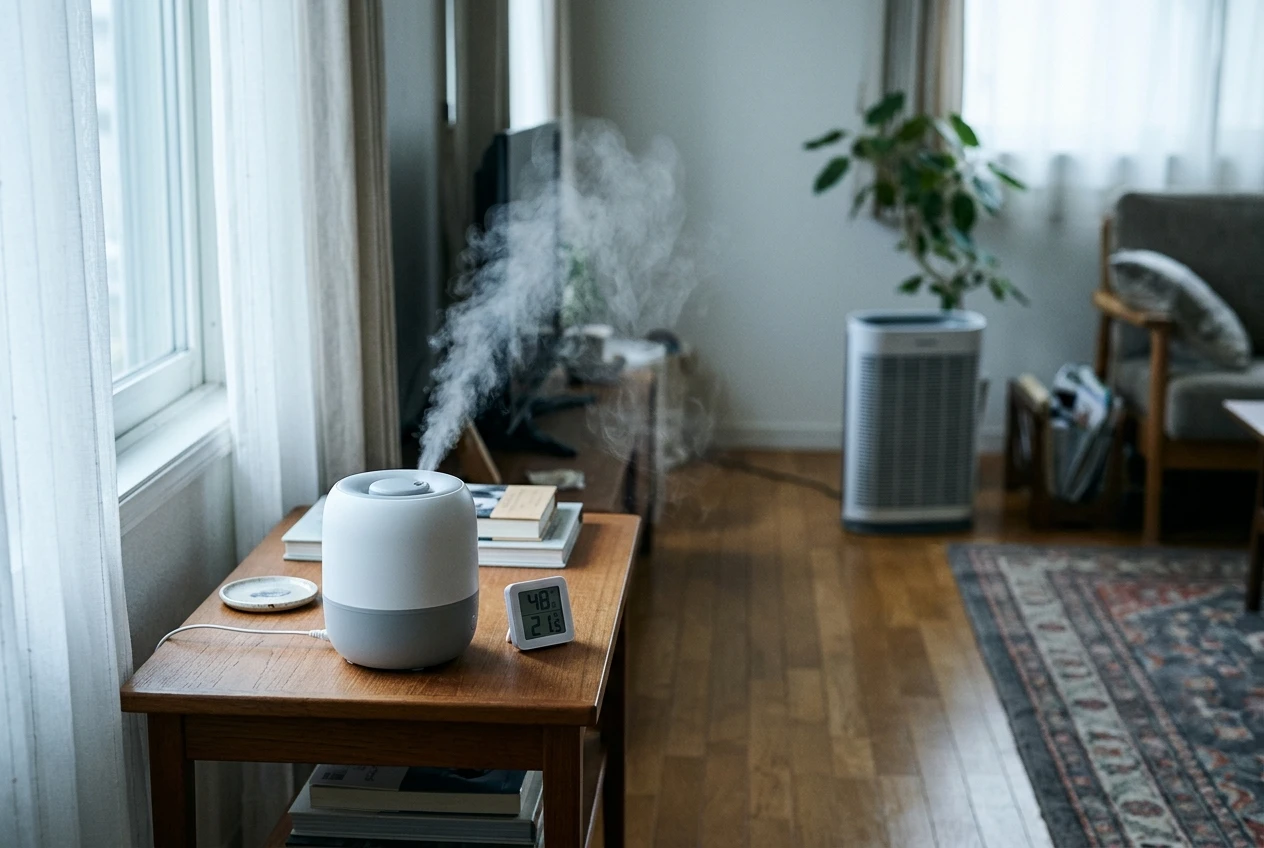
A dust sensor works by detecting particles in the air passing through it, and fine mist or water droplets near the intake can look like particles to the sensor. Some humidifiers, especially ultrasonic ones running on hard tap water, can also release fine mineral dust into the room. In either case your purifier may turn red or orange even though nothing about the air has gotten worse.
Some practical ways to avoid that:
- Place the humidifier several feet from the purifier, and point its mist away from the purifier’s intake.
- Keep the humidifier on a stable surface, not on the same shelf or table as the purifier.
- Check the humidity with a hygrometer instead of running the humidifier constantly. Too much moisture creates its own problems.
- Clean the humidifier tank on the schedule its manual gives, since a dirty tank affects the room as well as the device.
If your purifier is already showing red once the humidifier is on, your humidifier is turning your smart air purifier red: 7 checks walks through what to look at and what to protect, including the filter.
A simple heating-season checklist to run once and then forget
Run through this at the start of the cold weather. After that, you only need to repeat it next year.
- Check the furnace or HVAC filter and replace or clean it per its instructions, or ask your landlord if it is theirs to manage.
- Look at the room in side light and note whether there is visible dust.
- Move the purifier away from supply vents and radiators, with clear space around the intake.
- Clean the pre-filter and check it again two weeks later to set a realistic schedule.
- Wipe the dust sensor window if readings stay high in a clean-looking room.
- Set the fan to auto for daytime, with a night or sleep mode for the bedroom if it suits you.
- Buy a small hygrometer and read it. Decide on a humidifier only if the number stays low and the room feels dry.
- Note the filter’s replacement timing and your yearly filter cost, so no replacement comes as a surprise.
Most of this takes under half an hour, and a good part of it is checking, not buying. The purifier you already own will usually do fine once the dust has settled and the sensor is clear.
If you would like a reminder to do this before the cold arrives, join the email list. Each autumn you will get a short note to run the heating-season purifier check, so it is done before the furnace comes on.