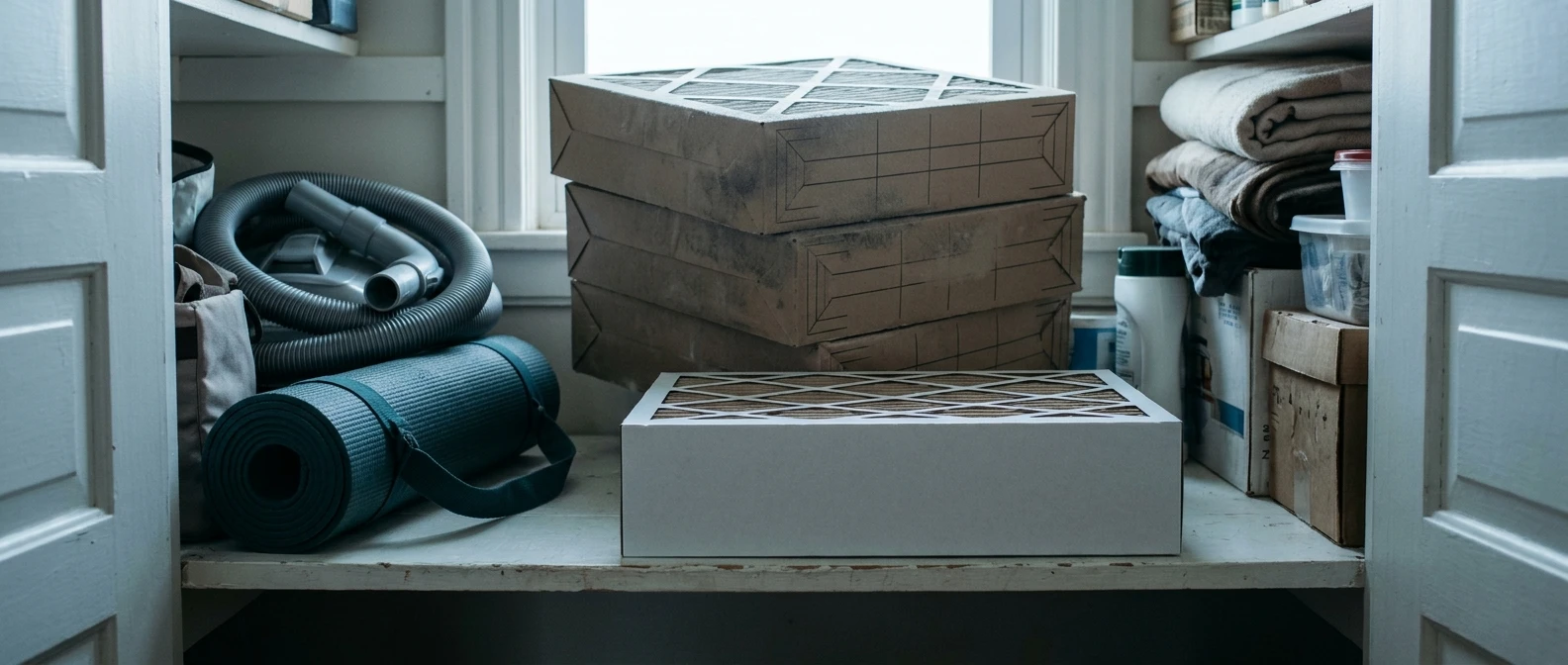
If you have ever opened a closet and found three boxes of filters for a purifier you no longer own, you already know the problem with stocking up. Spare filters feel responsible, but a stockpile only helps if the filters fit the machine you will own and are installed when your room actually needs them.
This guide covers how many spares to keep, when an air purifier filter subscription is worth it, and how to avoid paying for filters you don’t need. It leaves out the yearly cost arithmetic, which is covered in how to work out your air purifier’s yearly filter cost.
Why a closet full of spare filters is not the same as being prepared
A big stockpile ties up money in something that does nothing until it is installed. It also takes space, and it can go out of date. Manufacturers retire filter models, and a purifier you replace in two years may use a different filter entirely. Boxes bought for the old machine then become waste.
Being prepared means a much smaller thing: when the filter needs changing, the right replacement is in the house or arrives within a few days. One spare set usually covers that. Three spares cover a problem you don’t have.
There is a second gap. A spare in a box does not tell you when to swap the one in the machine. That depends on how your room behaves, which the next sections cover.
Auto-ship or buy when the light comes on: what each one is good for
Neither option is better in general. Each fits a different kind of household.
Where auto-ship helps
Auto-ship works well when your replacement rhythm is predictable and you tend to forget. Someone running the purifier at a steady setting in a bedroom, with no big changes in dust or smoke, may find that the manufacturer’s suggested interval matches reality fairly well. In that case a delivery that arrives on schedule saves you a task. If the seller offers a discount for subscribing, compare it against the regular price before counting it as a saving, since the benefit varies by seller and product.
Where auto-ship hurts
It hurts when your use is uneven. A filter that lasts longer than the schedule assumes means a new box arrives while the old filter is still working, and the boxes pile up. If your use is heavier than the schedule assumes, the delivery arrives after you needed it. Auto-ship also keeps sending filters if you replace the purifier, or if the manufacturer changes the filter model and the subscription is tied to the old one.
Where buying on demand helps
Buying when the filter light comes on keeps your cash free and your closet empty. The cost is a few days of waiting if you order late, and running a worn filter in the meantime. That is why buying on demand pairs well with one spare, which I cover below.
When deciding whether an air purifier filter subscription is worth it, ask one question: does the delivery schedule match how fast my filter actually wears out? If you don’t know yet, don’t subscribe yet.
Check your own replacement rhythm before you commit to a schedule
The filter light is a starting point, not a measurement. Many purifiers estimate filter life from running hours or elapsed time, and the manual will say which. A light based on hours cannot tell whether your room was dusty or clean during those hours. Check your model’s manual to see how it decides.
So spend one filter cycle learning your own pattern before you lock in a schedule. Do this:
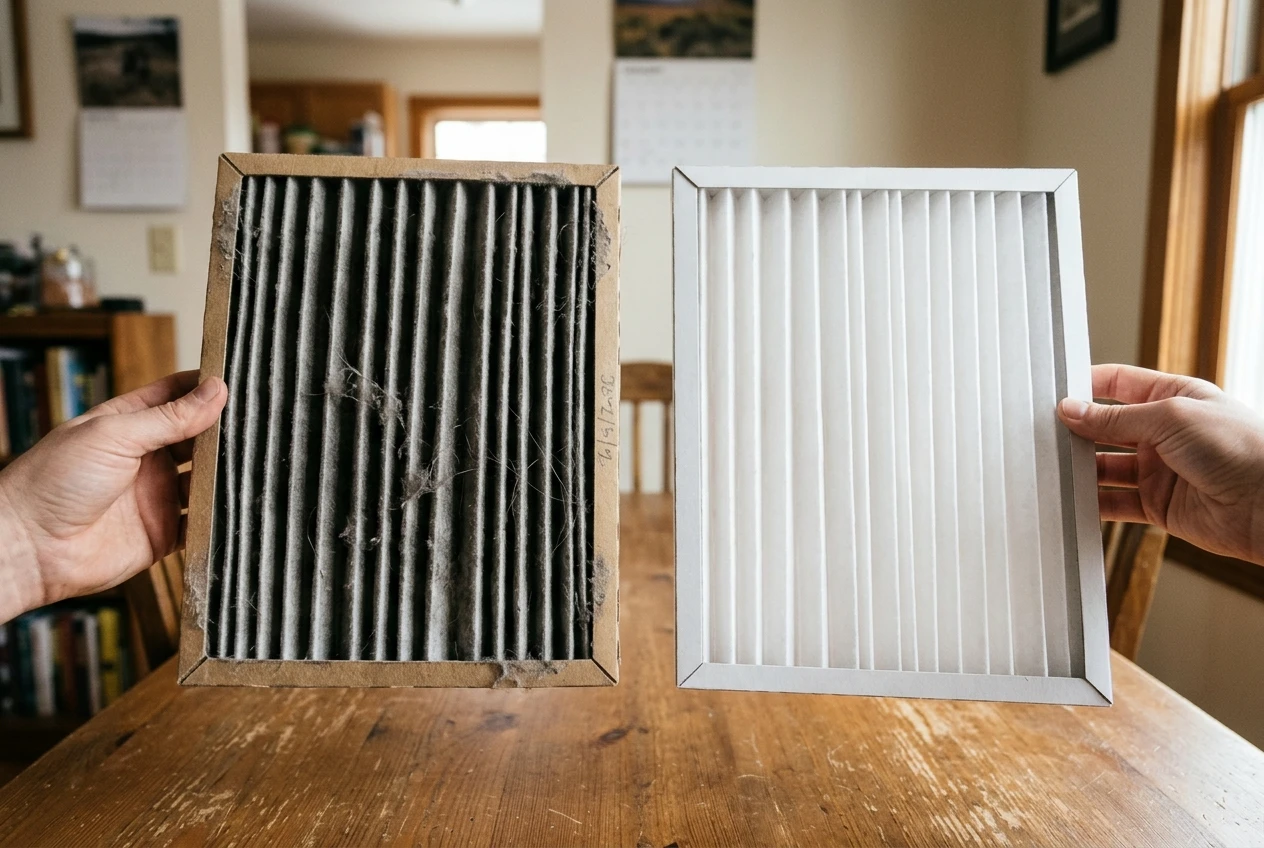
- Note the date you install each new filter and the date the light comes on. Write it on the filter’s frame or in a calendar entry.
- Look at the filter when the light comes on. Compare how loaded it looks to what the manual describes. Visible dust, hair or a heavy discoloration suggests the light may be right or even late. A filter that looks barely used suggests the schedule is conservative for your room.
- Check the pre-filter, if your model has one. A clogged pre-filter makes the main filter work harder and wear faster. How often your pre-filter really needs cleaning depends on your room, and cleaning it on time can change how long the main filter lasts.
- Note anything unusual in that period: a renovation, a season of open windows, a run of cooking or candle use, a smoky week.
After one cycle you have a real number for your home. After two, you know whether it is steady or swings with the seasons. That is the point at which a subscription schedule can be chosen sensibly rather than guessed.
If you reset the light each time you change a filter, the counter stays accurate. Many brands do this differently, and resetting the filter light on a smart air purifier covers the common methods.
The one-spare rule: how much stock suits a small home, a pet home or a smoky season
The rule is simple: keep one spare set on hand, and when you install it, order the next one. You always have a replacement ready, and you never hold more than one cycle of stock.
How that plays out depends on the household.
A small home with steady use
One spare is plenty. If your cycle is long and consistent, you may even do fine with no spare and an order placed the day the light comes on, as long as you can tolerate a short wait. A spare is cheap insurance against delays, but there is no need to build a shelf of them.
A home with pets
Hair and dander load filters and pre-filters faster in many homes, so your replacement rhythm may be shorter than the manual’s baseline. Keep one spare, check the pre-filter more often, and use your recorded dates to see whether your filter really does wear faster. If you are still choosing a machine for a pet household, this comparison of five smart purifiers for pet owners looks at hair, dander and upkeep side by side.
A smoky season
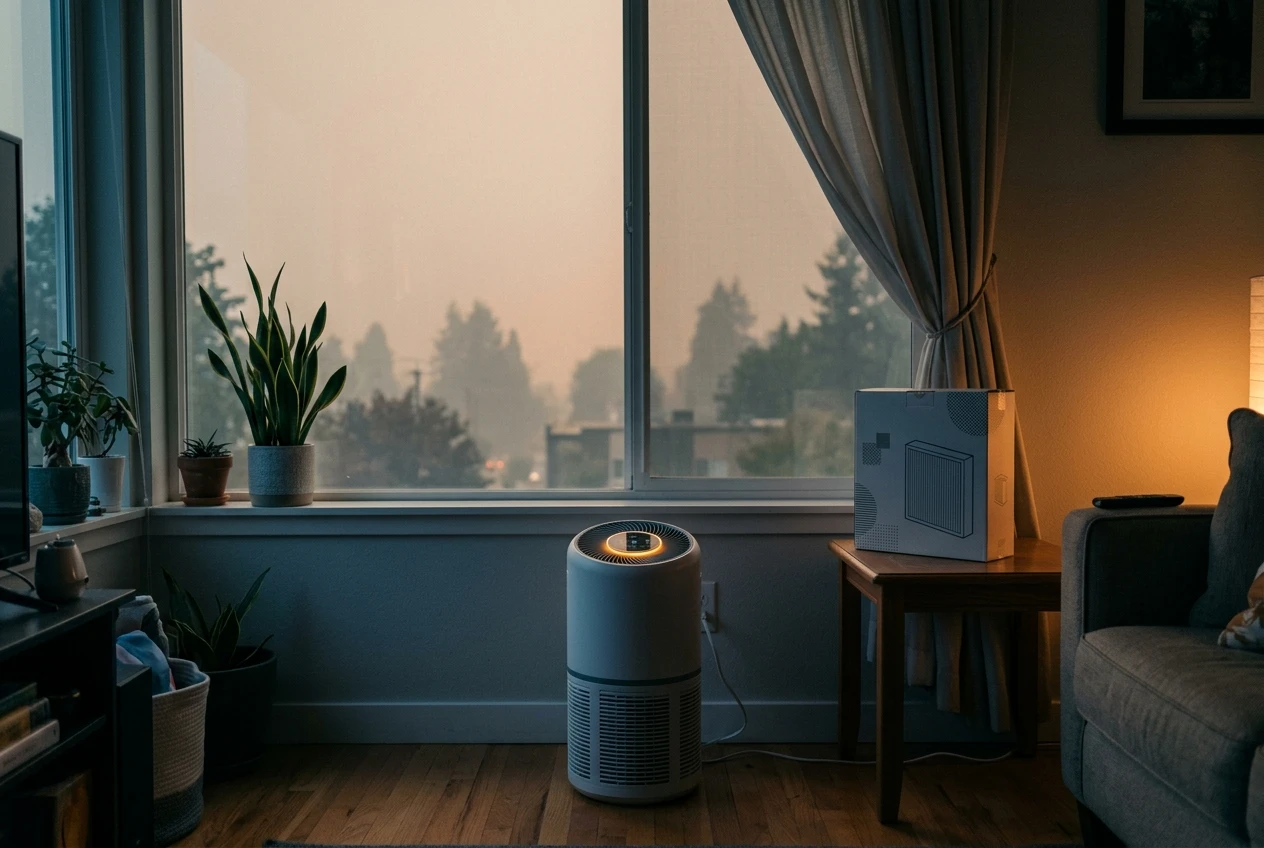
If wildfire smoke or heavy cooking smoke is a seasonal problem where you live, the filters, especially carbon ones, can be used up faster than in a normal month. Have the spare in the house before smoke arrives, so you are not ordering while the air outside is bad. After that spare goes in, order the next one straight away. The reason carbon matters so much is covered in wildfire smoke and your purifier’s carbon filter.
Some purifiers use more than one filter, such as a HEPA filter and a separate carbon layer, and they may wear at different rates. In that case the one-spare rule applies to each part separately. Check whether your model sells them as a combined set or individually.
Storage, model changes and the day you replace the purifier itself
Store spare filters the way the manufacturer recommends, which is usually in the original sealed packaging, somewhere dry and away from dust, damp and strong smells. A filter that sits in a damp garage or beside paint cans can be compromised before you ever use it. A shelf in a hallway cupboard or a spare room is usually better than a basement or garage.
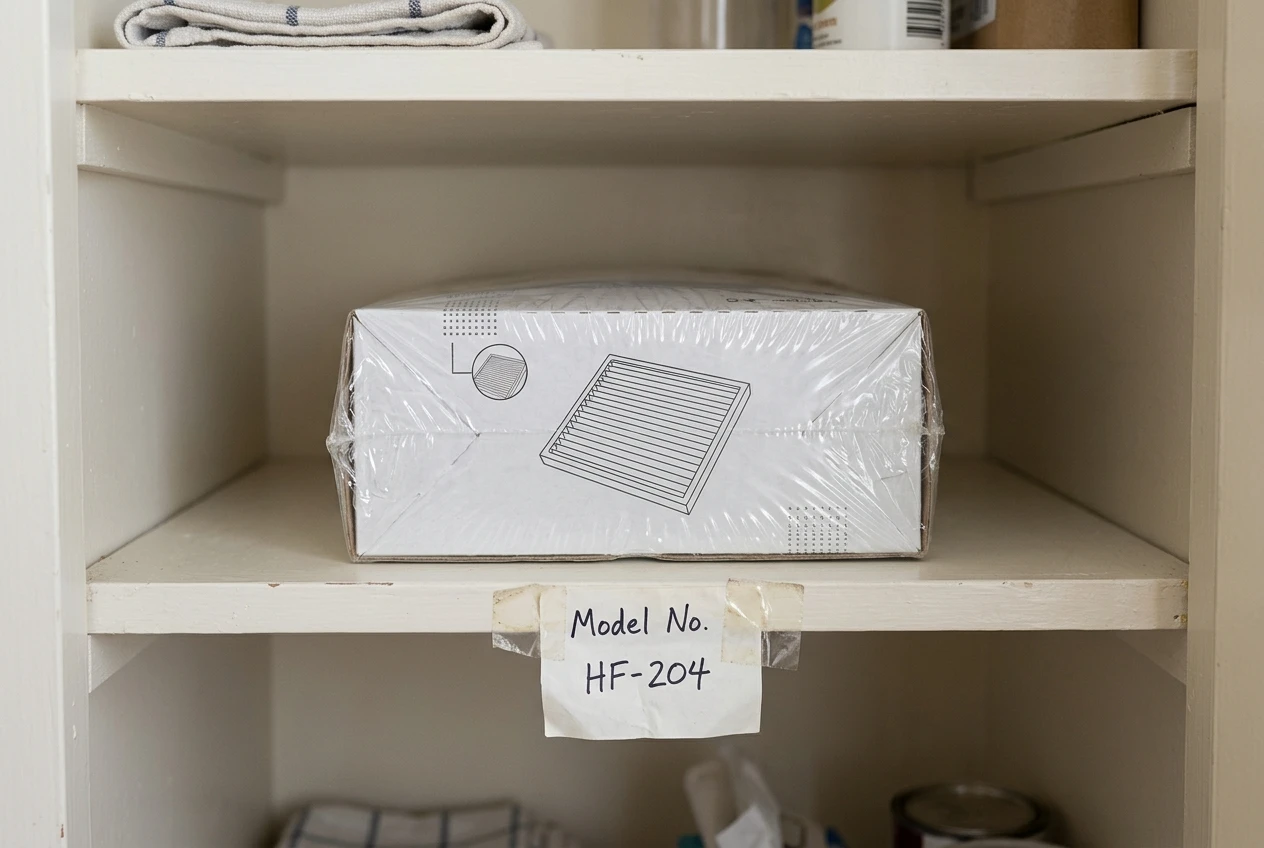
Before buying anything, find the filter model number and keep a note of it. That number is more reliable than the purifier’s name, because brands often sell several similar machines with different filters. When you reorder, match the number rather than trusting a product listing’s compatibility claim, and check the seller’s listing carefully against it.
Model changes are the quiet risk with spares. If a manufacturer replaces a filter with a new version, an old spare may still fit, or it may not. If you are keeping one spare at a time, this is a small problem. If you are keeping four, it is a bigger one.
The same goes for replacing the purifier itself. If you are thinking about an upgrade in the next year or so, run down your spare rather than topping it up. When you do buy a new machine, check what its filters cost and whether they are easy to find, since that shapes what you will spend afterwards. What a smart air purifier really costs over three years is a useful way to compare machines before you buy. Cancel any subscription for the old filter before the new purifier arrives, so a shipment doesn’t land after you have moved on.
How to pause, skip or cancel a subscription without getting caught out
Most problems with subscriptions come from not knowing the rules when it is time to change something. Set aside ten minutes when you sign up and note the following:
- The cutoff date. Many sellers lock in the next shipment a few days before it ships. Changing your subscription after that date may be too late for that order. Find out what the cutoff is and put it in your calendar.
- Where the controls are. Look for a page in your account that lists subscriptions, with options to skip, delay, change frequency or cancel. Note the path to it, because it is not always easy to find later.
- What skipping does. Some sellers let you skip one delivery and keep the schedule. Others reset the frequency or cancel entirely. Check which one your seller does.
- What confirmation looks like. After you pause or cancel, look for a confirmation email. If none arrives, check the account page again, and check your card statement at the next billing date.
- What happens if you change models. If you replace your purifier, update or cancel the subscription before the next cutoff, and make sure it isn’t tied to a filter that no longer fits.
If a shipment arrives that you didn’t want, read the seller’s returns policy before opening the box. Policies differ, and I can’t tell you what yours allows, so check it directly.
A simple habit prevents most of these problems: when you install a filter, check what is scheduled to arrive next and whether it still makes sense.
What to do next
Find your purifier’s filter model number today and set one calendar reminder to check it. Then join the email list for more plain-English maintenance guides that help you spend only on what your room needs.