Smart Air Purifiers • 2026 Predictive AI Buying Guide
Smart purifiers are getting a serious brain upgrade in 2026. The newest models do not just wait for the air to turn bad, flash a warning light, and ramp up the fan after the room already smells like dinner, smoke, pets, or cleaning spray. The best predictive AI air purifiers are learning routines, reading sensor trends, connecting with smart-home systems, and adjusting before air quality becomes a problem.
That sounds futuristic, but the buying decision is still very practical. A purifier can have clever software and still be the wrong choice if it is undersized, noisy, expensive to maintain, weak on odors, or locked into an app you never use.
This guide breaks down what predictive AI purifiers actually do, which smart features are worth paying for, how Matter and Wi-Fi fit into the picture, and how to avoid buying a beautiful device with painful filter costs.
Affiliate disclosure: This article contains affiliate links. If you buy through one of these links, SmartAirPurifiers.com may earn a commission at no extra cost to you. We only recommend filters, IAQ products, and air-purifier buying steps that make sense for real homes, real budgets, and real indoor-air problems.
Quick Answer: What Is a Predictive AI Air Purifier?
A predictive AI air purifier is a smart purifier that uses sensor data, routines, filter status, outdoor air quality information, and smart home automation to clean before indoor air quality noticeably worsens. Instead of reacting only after particles or odors rise, it can pre-boost before cooking, shift to quiet cleaning before bedtime, respond to outdoor smoke alerts, or warn you when filter performance may be slipping.
The important part is this: predictive AI is a control layer. It does not replace strong airflow, proper room sizing, HEPA-style particle filtration, activated carbon for odors, or affordable replacement filters.
If you are comparing models right now, start with our Best Air Purifier for Home 2026 Guide & Reviews, then come back here to decide which smart and AI features are actually worth paying for.
Predictive Purifier Knowledge Check
Before buying a predictive AI purifier, ask yourself these five questions:
- Does the purifier have enough CADR for the room where I will actually use it?
- Does it include a real particle filter and enough activated carbon for odor needs?
- Are the replacement filters easy to find and affordable over a 5-year period?
- Will the app, sensors, and automations change how I use the purifier day-to-day?
- Does the smart-home support match my setup: Wi-Fi, Matter, Alexa, Apple Home, Google Home, or SmartThings?
Best answer: Buy the purifier for clean-air performance first, then pay extra for predictive AI only when it helps you run the unit more consistently and intelligently.
Why Predictive AI Purifiers Are Taking Off in 2026
For years, smart purifiers were mostly app-controlled fans with filter reminders. Useful, yes. Revolutionary, not really.
The 2026 shift is different because air purifiers are becoming more context-aware. A modern smart purifier may track PM2.5, PM10, VOC trends, humidity, temperature, filter life, fan runtime, outdoor AQI, and room routines. When those signals are connected, the purifier can move from simple auto mode to predictive cleaning.
That matters because indoor air quality can change fast. Cooking dinner, opening windows during a smoky afternoon, using a scented cleaner, vacuuming, burning candles, or letting pets jump on furniture can all change what is floating through a room.
The EPA’s Indoor Air Quality (IAQ) resources explain that indoor air problems are often managed through source control, ventilation, and filtration. A predictive purifier fits into that layered approach by helping the filtration part respond sooner and more consistently.
Predictive AI Purifier vs. Regular Smart Purifier
| Feature | Regular Smart Purifier | Predictive AI Purifier | What Buyers Should Know |
|---|---|---|---|
| Basic control | App, timer, manual fan speed, simple auto mode | App, automation, trend-based fan changes, routine-aware control | Predictive features are useful only if the core purifier is strong. |
| Air-quality response | Reacts when onboard sensors detect particles or odors | May react earlier based on patterns, schedules, outdoor AQI, or connected sensors | Helpful for cooking, bedrooms, pets, wildfire smoke, and busy homes. |
| Sensor use | Usually PM2.5, sometimes VOC | May combine PM2.5, VOCs, humidity, temperature, occupancy, AQI, and filter data | Sensor quality matters more than sensor count. |
| Filter reminders | Often based on calendar time or runtime | May consider usage intensity, fan speed, pollution load, or filter status | Better reminders can protect performance and prevent late changes. |
| Smart-home role | Usually brand app plus voice control | More likely to work with routines, scenes, air sensors, thermostats, and Matter support | Best for homes already using smart devices. |
| Best buyer | Someone who wants remote control and simple scheduling | Someone who wants cleaner air with less manual adjustment | Do not pay more unless automation solves a real problem. |
The 2026 Buying Rule: Buy the Lungs Before the Brain
The smartest purifier is not always the best purifier. A predictive AI purifier still has to pull air through a filter, clean it, and send it back into the room. That means the old-school specs still matter.
Featured-snippet answer: To choose a predictive AI air purifier, buy by room size and CADR first, filtration and carbon quality second, replacement-filter cost third, and AI features fourth. A strong purifier with a simple auto mode usually beats a weak purifier with fancy predictive branding.
CADR is especially important because it helps compare how quickly a purifier delivers clean air. AHAM recommends using smoke CADR as a key sizing guide and notes that wildfire-smoke situations may require a smoke CADR equal to the room’s square footage. You can read AHAM’s guidance here: AHAM Air Filtration Standards.
How Your Home “Knows” When to Purify
A predictive AI purifier does not magically understand your home. It makes better decisions by watching patterns. Here is what that looks like in real life.
1. It watches particle spikes
PM2.5 sensors track fine particles that can rise during cooking, smoke events, dusty cleaning, pollen season, or outdoor pollution leaks. For most buyers, PM2.5 is the most important onboard sensor because it connects directly to common particle problems.
2. It notices odor and VOC trends
VOC sensors can show broad changes related to cleaning products, fragrances, new furniture, paints, smoke, and cooking odors. They are useful as trend signals, not as lab reports. If odors are a serious concern, the purifier also needs meaningful activated carbon.
For kitchen-heavy homes, read Smart Purifiers That Remove Cooking Odors in Minutes.
3. It learns household routines
The useful version of AI is not a purifier trying to sound clever. It is a purifier noticing that dinner usually starts around the same time, the bedroom needs cleaning before sleep, the pet zone gets dusty in the afternoon, or the home office needs quiet filtration during work hours.
4. It connects to smart-home triggers
Smart-home integration lets a purifier respond to more than its own sensors. A routine could run the purifier when an outdoor air-quality sensor worsens, when a range hood turns on, when a room becomes occupied, or when your bedtime scene starts.
If you want a deeper smart-home breakdown, start with Smart Air Purifiers Guide: Automation, Sensors & Home Integration.
Which Predictive Features Are Worth Paying For?
| Feature | Worth It? | Best For | Buyer Warning |
|---|---|---|---|
| PM2.5 auto mode | Yes, high priority | Smoke, cooking particles, pollen, dust, outdoor pollution | Look for clear readings and fast fan response. |
| VOC trend detection | Yes, if odors matter | Cooking, cleaners, fragrances, new furnishings | VOC sensors are trend tools, not chemical ID machines. |
| Pre-sleep cleaning routine | Yes | Bedrooms, nurseries, allergy-sensitive sleepers | Noise level on sleep mode matters. |
| Outdoor AQI triggers | Yes | Wildfire-smoke regions, urban pollution, high-pollen days | Still keep windows closed when outdoor air is poor. |
| Filter-life prediction | Yes | Pet homes, smoke exposure, frequent use | Confirm replacement filters are affordable before buying. |
| Occupancy-aware cleaning | Maybe | Large rooms, open spaces, energy-conscious homes | Nice to have, but not more important than CADR. |
| Voice assistant control | Maybe | Hands-free control | Convenient, but not a performance feature. |
| App-only “AI score” | Low priority | Dashboard fans | Do not pay extra for vague scores without clear sensor data. |
Matter vs. Wi-Fi: Which Smart Purifier Path Makes Sense?
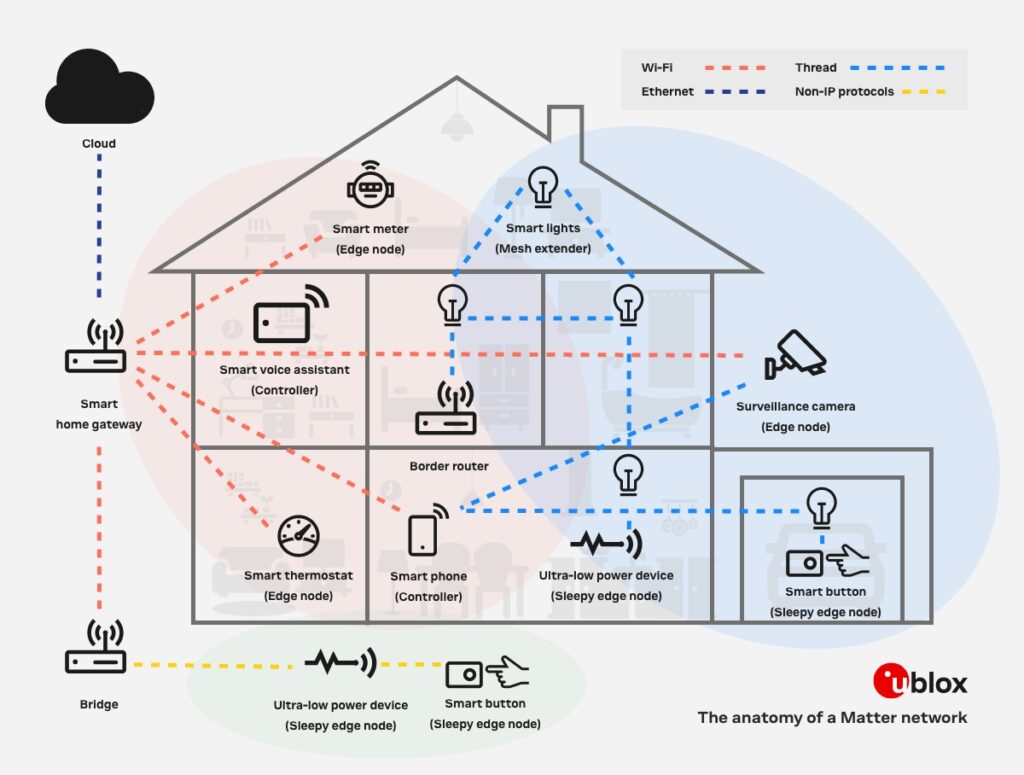
Wi-Fi purifiers are still a practical choice. They are usually easy to set up, work through the brand’s app, and handle basic scheduling well. Matter-compatible purifiers are more interesting if you want your purifier to play nicely with a broader smart-home system.
Matter 1.2 added support for air purifiers and air-quality sensors. The Connectivity Standards Alliance says Matter air purifiers can use air-quality sensing, fan functionality, optional thermostat functionality, and consumable monitoring for HEPA and activated-carbon filters. You can read the Matter 1.2 update here: Matter 1.2 device update.
Still comparing standards? Read Matter vs. Wi-Fi Purifiers: What’s the Difference and Why It Matters? and Are Matter-Compatible Air Purifiers Worth It Yet?.
| Buyer Type | Better Fit | Why |
|---|---|---|
| You want simple app control | Wi-Fi purifier | Easy setup, schedules, remote control, brand app features. |
| You use Apple Home, Google Home, Alexa, or SmartThings heavily | Matter-compatible purifier | Better potential for cross-platform routines and scenes. |
| You rent or move often | Wi-Fi or Matter | Choose the simplest setup with the most reliable app. |
| You already use separate air-quality sensors | Matter or advanced ecosystem support | Sensor-triggered automation becomes more useful. |
| You dislike troubleshooting | Best-reviewed app ecosystem | A stable app beats a promising standard that is poorly implemented. |
Predictive AI Is Most Useful in These Rooms
Not every room needs the most advanced purifier. Predictive features matter most where air changes quickly, where you spend the most time, or where noise and automation really affect daily use.
| Room | Best Predictive Feature | What to Prioritize |
|---|---|---|
| Bedroom | Pre-sleep cleaning and quiet overnight mode | Low noise, reliable PM2.5 sensor, dimmable lights, strong CADR for room size. |
| Kitchen-adjacent living area | Fast particle and odor response | Smoke CADR, activated carbon, rapid auto mode, washable pre-filter. |
| Home office | Occupancy and schedule-based cleaning | Quiet medium speed, app history, efficient daily operation. |
| Nursery or child’s room | Quiet scheduled cleaning | Low noise, no ozone concerns, safe placement, simple controls. |
| Pet zone | Filter-load tracking and dust response | Pre-filter, filter availability, odor control, higher airflow. |
| Wildfire clean room | Outdoor AQI response and high smoke CADR | Smoke CADR, sealed-room strategy, extra filters on hand. |
The Filter Cost Trap: Where Smart Buyers Win
Predictive AI can help a purifier run more intelligently, but it cannot make replacement filters cheap. This is where many buyers get surprised. The purifier price is only the first payment. Filters are the long-term cost.
A lower-priced smart purifier can become expensive if the filters are costly, hard to find, or need frequent replacement. A higher-priced purifier can become the better value if it has stronger airflow, longer filter life, and lower five-year maintenance costs.
Before you buy any predictive AI purifier, compare replacement-filter availability through FiltersFast. Check your exact purifier model number before ordering because filter compatibility matters.
Then use our internal guide, How Much You Really Spend on Filters Over 5 Years, to compare the real cost of ownership.
| Cost Factor | Why It Matters | Buyer Move |
|---|---|---|
| Filter price | Replacement filters can change the true cost of a purifier. | Price filters before buying the unit. |
| Filter interval | Six-month filters cost more over time than annual filters. | Estimate five years, not one year. |
| Carbon filter design | Odor control often depends on carbon quality and replacement frequency. | Check whether carbon is separate or built into the main filter. |
| Pets and smoke | High particle loads can shorten real-world filter life. | Budget for earlier replacements. |
| Off-brand filters | They may save money, but fit and performance can vary. | Compare carefully and review warranty language. |
| Energy use | Daily operation adds to ownership cost. | Look for efficient models and usable low-noise settings. |
Energy Use Matters More Than Buyers Think
A predictive purifier may run for many hours a day. That makes efficiency important. ENERGY STAR says a standard room air cleaner running continuously uses about 394 kWh per year, while ENERGY STAR-certified room air cleaners are more than 50 percent more energy-efficient than standard models. You can review ENERGY STAR’s air cleaner guidance here: ENERGY STAR Air Cleaners.
This is where predictive features can help. If the purifier runs harder only when air quality drops, backs down when the room is cleaner, and uses quiet efficient modes overnight, the smart features may improve both comfort and energy use.
Do Not Ignore Ozone, Ionizers, and Electronic Add-Ons
Some smart purifiers include ionizers, plasma features, or other electronic air-cleaning add-ons. These features deserve careful review. California’s Air Resources Board says portable indoor air cleaning devices sold in California must be CARB-certified, and electronic air cleaners must also be tested for ozone emissions. You can check CARB-certified devices here: CARB-Certified Air Cleaning Devices.
Buyer rule: If a purifier includes an ionizer or electronic air-cleaning feature, make sure it is properly certified, clearly explained, and easy to turn off.
What Predictive AI Purifiers Can Do Better
They can reduce reaction time
A basic auto mode waits for a sensor change. A stronger predictive system may respond when the pattern starts. For example, it may increase fan speed as cooking begins instead of waiting until particles have already spread through the room.
They can clean before sleep
A good bedroom routine can run a stronger cleaning cycle before bedtime, then shift to a quieter setting while you sleep. That is one of the clearest real-world uses for predictive purification.
They can support wildfire-smoke planning
During smoke events, timing matters. The CDC recommends checking local AQI, staying inside when instructed, choosing a room that can be closed off from outside air, and using a portable air cleaner or filter to help keep that room cleaner. Read the CDC’s wildfire smoke guidance here: CDC Wildfire Smoke Safety.
They can make maintenance harder to ignore
Filter reminders are not exciting, but they are valuable. A predictive purifier that tracks runtime, fan speed, and air-quality load can help you replace filters closer to the point where performance actually needs attention.
What Predictive AI Purifiers Still Cannot Do
This is where buyers need a reality check. Air purifiers are not magic. The EPA explains that the most effective indoor-air strategy is reducing or removing pollutant sources and ventilating with clean outdoor air, while filtration can supplement those steps. You can read the EPA’s home air-cleaner guide here: Guide to Air Cleaners in the Home.
| Marketing Claim | Fact-Safe Interpretation |
|---|---|
| “AI removes all pollutants automatically.” | No purifier removes every pollutant. Source control, ventilation, and filtration work together. |
| “Covers 1,500 square feet.” | Check CADR, ceiling height, air changes per hour, and the fan speed used for that claim. |
| “Odor removal included.” | Look for real activated carbon capacity, not just a thin deodorizing layer. |
| “Filter lasts 12 months.” | Real filter life depends on pets, smoke, dust, cooking, fan speed, and usage hours. |
| “Smart sensor means cleaner air.” | A sensor can detect changes. The purifier still needs enough airflow and filtration to respond. |
| “Ion technology makes it better.” | Check ozone certification and whether the feature can be disabled. |
For a broader indoor-air foundation, read Is Your Home’s Air Toxic? Indoor Air Quality Matters.
Portable Predictive Purifier or Whole-Home IAQ Upgrade?
A portable predictive purifier is usually the fastest fix for one room. A whole-home IAQ approach makes more sense when you want filtration, ventilation, humidity control, or air treatment connected to your HVAC system.
For whole-home indoor-air-quality options, you can explore FieldControls. This is especially relevant if you are thinking beyond one bedroom or living room and want IAQ support at the system level.
| Situation | Best Starting Point | Why |
|---|---|---|
| One bedroom or office has poor air | Portable predictive purifier | Fast, targeted, renter-friendly. |
| Cooking odors spread through an open floor plan | High-CADR portable purifier with activated carbon | Local capture helps before odors move through the home. |
| Wildfire-smoke preparation | Portable purifier sized for a clean room | Easier to manage one closed-off room during smoke events. |
| Multiple rooms need baseline support | Whole-home IAQ or HVAC filtration strategy | Better for system-wide planning. |
| You want smart-home routines | Portable purifier plus sensors or Matter integration | Best for scenes, schedules, and room-specific automation. |
| You already have forced-air HVAC | Whole-home IAQ evaluation plus portable units where needed | Layered strategy gives broader coverage and room-level control. |
Best Predictive Features by Buyer Type
| Buyer | Prioritize | Be Careful With | Helpful Guide |
|---|---|---|---|
| Allergy-focused buyer | Strong CADR, HEPA-style filtration, PM2.5 sensor, quiet sleep mode | Vague wellness claims without performance specs | Best Air Purifier for Home 2026 |
| Pet owner | Pre-filter, filter availability, odor control, higher airflow | Small units marketed for large pet spaces | Filter Cost Guide |
| Smart-home user | Matter support, reliable app, automation triggers, sensor compatibility | Closed apps with poor long-term support | Matter vs. Wi-Fi Purifiers |
| Cooking-heavy household | Smoke CADR, fast auto mode, meaningful activated carbon | Thin carbon filters and weak tabletop units | Cooking Odor Purifiers |
| Wildfire-smoke planner | Smoke CADR, sealed-room plan, extra filters, AQI triggers | Oversized room claims without CADR | IAQ Matters |
| Budget buyer | CADR-per-dollar, filter cost, reliable auto mode, ENERGY STAR | Premium AI branding with weak airflow | 2026 Buying Guide |
Are Predictive AI Air Purifiers Worth It in 2026?
Predictive AI air purifiers are worth it in 2026 if you want cleaner air with less manual adjustment, especially in homes with cooking odors, pets, allergy triggers, wildfire smoke risk, smart-home routines, or bedrooms that need quiet scheduled cleaning.
They are not worth paying extra for if the purifier has weak CADR, expensive filters, poor sensor accuracy, a bad app, or vague AI features that do not change how the machine cleans.
In other words, predictive control is valuable when it helps a good purifier run at the right time, in the right room, at the right speed. It is not valuable when it distracts you from poor fundamentals.
The 60-Second Buying Path
Use this simple sequence before choosing a predictive AI purifier:
- Pick the room first. Bedroom, kitchen-adjacent space, office, nursery, pet room, or wildfire clean room.
- Measure the room. Include ceiling height if it is above standard height.
- Match CADR to the room. Use smoke CADR as a serious comparison number.
- Check filtration. Look for strong particle filtration and enough activated carbon for odors.
- Price the filters. Compare long-term replacement costs before buying the machine.
- Choose your smart-home path. Wi-Fi is fine for app control; Matter is better for broader routines.
- Judge AI last. Predictive features should make the purifier easier to use, not just more expensive.
Keep the Purchase Practical
A predictive purifier works best when the unit is properly sized, the filter is correct, and the smart features match your daily routine. Before you buy, compare replacement filters and think about whether you need room-level purification, whole-home IAQ support, or both.
FAQs About Predictive AI Air Purifiers
What does a predictive AI air purifier do?
A predictive AI air purifier uses sensor data, household routines, outdoor air-quality signals, filter status, and smart-home triggers to adjust cleaning before or during air-quality changes. It may increase fan speed before cooking particles spread, clean before bedtime, or respond to outdoor smoke conditions.
Is an AI air purifier better than a regular air purifier?
An AI air purifier is better only if the purifier itself is strong. CADR, filtration quality, activated carbon, filter cost, and noise level matter more than AI branding.
Should I buy a Matter-compatible air purifier?
Buy a Matter-compatible air purifier if you want broader smart-home routines across platforms. A Wi-Fi purifier is usually enough if you only want app control, scheduling, and simple auto mode.
Can a predictive purifier remove cooking odors?
It can help reduce cooking particles and odors if it has enough airflow and activated carbon. For open kitchens, prioritize smoke CADR, carbon quality, and fast auto response.
Can smart purifiers help with wildfire smoke?
Yes, if the purifier is properly sized and used in a closed-off room. Look for strong smoke CADR, keep extra filters available, and monitor outdoor AQI during smoke events.
Do predictive AI purifiers save energy?
They can save energy when they reduce fan speed during cleaner periods or avoid unnecessary high-speed operation. Energy use still depends on motor efficiency, fan speed, room size, and runtime.
What is the most important sensor in a smart purifier?
For most homes, PM2.5 is the most important sensor because it helps detect fine particles from smoke, cooking, dust, pollen, and outdoor pollution.
How often should I replace smart purifier filters?
Follow the manufacturer’s recommendation, but expect real-world timing to vary by pets, smoke, dust, cooking, fan speed, and daily runtime. Always check filter pricing before buying the purifier.
The Bottom Line
Predictive AI is one of the most useful smart-purifier upgrades in 2026 because it changes when and how filtration happens. The best models can respond earlier, run quieter when needed, support smarter routines, and make filter maintenance harder to ignore.
Still, the smartest purchase is not the purifier with the biggest AI promise. It is the purifier that fits your room, has strong CADR, uses serious filtration, offers affordable replacement filters, and connects to your home in a way you will actually use.
Buy the brain after you buy the lungs. Get the clean-air performance right first. Then let predictive AI make that performance easier, quieter, and more automatic.
Start with our Best Air Purifier for Home 2026 Guide & Reviews, compare smart standards between Matter and Wi-Fi Purifiers, and check replacement filter costs through FiltersFast before you commit.
Helpful External References
EPA Indoor Air Quality (IAQ) | EPA Guide to Air Cleaners in the Home | AHAM Air Filtration Standards | Matter 1.2 Smart Home Update | ENERGY STAR Air Cleaners | CARB-Certified Air Cleaning Devices | CDC Wildfire Smoke Safety