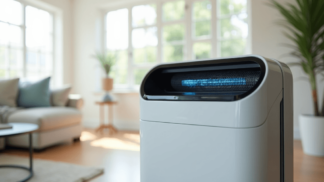
Smart air purifiers under $200 have improved quickly. You can now find models with app control, auto mode, air quality sensors, filter alerts, sleep mode, and voice assistant support without moving into premium pricing.
But budget buying has a catch. A purifier can be smart, affordable, and still be the wrong choice if it is too small for the room, too loud to run, hard to maintain, or weak on the filter type you actually need.

The best smart air purifier under $200 is usually the one that balances CADR, room size, HEPA-style particle filtration, useful smart controls, quiet operation, and affordable replacement filters. For most small bedrooms and home offices, a compact smart purifier can work well. For larger living rooms, choose higher CADR or consider more than one unit.
Budget reality check: Do not buy a purifier just because the coverage claim sounds huge. Compare CADR, room size, filter type, filter cost, and noise level. Also be careful with ozone-producing or ionizer-heavy claims, especially in bedrooms, nurseries, and allergy-sensitive homes.
Budget Smart Purifier Knowledge Check
Before picking a model, test what you know. These questions can save you from buying the wrong purifier.
- Does Wi-Fi make a purifier clean better?
No. Wi-Fi makes control easier, but CADR, filter type, and room size affect cleaning performance more. - Is a $70 purifier enough for a large open living room?
Usually not. Smaller budget models are better for bedrooms, offices, nurseries, and compact spaces. - Should you check replacement filter prices first?
Yes. A cheap purifier can become expensive if filters cost too much or are hard to find. - Does HEPA-style filtration remove odors?
Not very well. HEPA-style filters target particles. Activated carbon is more useful for odors and certain gases. - Is auto mode always accurate?
Not always. Sensor quality varies, so use auto mode as a helpful tool, not perfect proof of indoor air quality.
Can a Smart Air Purifier Under $200 Really Be Worth It?
Yes, but only when your expectations match the room. A budget smart purifier can be a smart buy for a bedroom, nursery, dorm room, home office, small apartment, or pet area. It can help reduce airborne particles such as dust, pollen, pet dander, and smoke particles in the room where it runs.
Where budget models struggle is large open space. A small purifier may claim a large square-foot number based on one air change per hour, but allergy and smoke situations often need more frequent air changes. That is why CADR matters more than a big marketing number.
EPA recommends choosing a portable air cleaner with a CADR large enough for the room or area where it will be used. AHAM’s practical guidance is to look for a smoke CADR that is at least two-thirds of the room’s square footage. That means a 300-square-foot room would call for a smoke CADR of roughly 200 or higher.
That does not mean every small purifier is bad. It means small purifiers should be used in small rooms.
Top Budget-Friendly Smart Air Purifiers Under $200
These models stood out because they combine affordable pricing with smart features, practical filtration, and room-use cases that make sense. Prices change often, so treat the under-$200 category as a current shopping target rather than a permanent guarantee.
| Budget Pick | Best For | Why It Stands Out | Watch Before Buying |
|---|---|---|---|
| Levoit Vital 200S-P | Best overall value under $200 | Strong value for pet homes, bedrooms, and medium rooms. It offers smart controls, pet-focused design, and a stronger room profile than many compact models. | Often under $200, but pricing varies by retailer. |
| Levoit Vital 100S | Best mid-budget smart pick | Levoit lists a CADR of 143 CFM and an ideal 4.8 ACH room size of 222 square feet, making it a practical choice for many bedrooms and offices. | Not a huge open-room purifier. Match it to the right room. |
| Levoit Core 200S | Best small-room budget pick | Levoit lists a 90 CFM CADR, 140 square feet at 4.8 ACH, Wi-Fi/app control, and compact sizing, which fits bedrooms and small offices well. | Too small for large rooms if you expect fast cleaning. |
| Blueair Blue Pure 511i Max | Best small bedroom alternative | Blueair lists smart controls, quiet operation, and a recommended 237-square-foot room for AHAM-style performance. It is often priced near the budget range. | Check current price because it can move above or below $200. |
| GoveeLife Smart Air Purifier Lite | Best low-cost smart option | GoveeLife positions it as a smart HEPA purifier for smaller spaces, and it is often one of the lower-priced connected models. | Best for smaller rooms, not large open layouts. |
| Dreo Smart Air Purifier Macro 505S | Best budget display pick | Often priced aggressively and marketed with smart features, air quality display, and auto mode. | Verify current specs, filter availability, and seller before buying. |
| Winix C545 WiFi | Best refurbished Wi-Fi value | Can be a strong bargain when sold refurbished or on deal, with Wi-Fi control and multi-stage filtration. | Check refurbished condition, warranty, and whether PlasmaWave/ionizer features can be turned off if that matters to you. |
| Levoit PlasmaPro 300S | Best feature-rich budget Levoit | Often available around the upper end of the under-$200 range with app control and stronger specs than tiny room models. | Understand the PlasmaPro feature and confirm whether you want that technology active. |
How to Choose the Right Budget Smart Air Purifier
The best under-$200 purifier is not the one with the longest feature list. It is the one that fits your room and solves your actual air problem.
Start With Room Size
Small budget purifiers are best for bedrooms, nurseries, offices, dorm rooms, and compact apartments. For open-concept spaces, prioritize higher CADR or consider multiple units.
Check CADR
CADR helps show how much filtered air the purifier can deliver. It matters more than vague “up to” room-size claims.
Match the Filter to the Problem
Use HEPA-style filtration for particles like dust, pollen, and dander. Choose activated carbon support if odors, cooking smells, or smoke smells matter.
Levoit’s official specs are a good example of why the details matter. The Core 200S is listed at 90 CFM CADR and 140 square feet at 4.8 air changes per hour, while the Vital 100S is listed at 143 CFM CADR and 222 square feet at 4.8 air changes per hour. That does not make one universally “better.” It means the larger model fits larger rooms more comfortably. :contentReference[oaicite:3]{index=3}
What Smart Features Are Actually Worth Paying For?
Under $200, every feature should earn its place. A smart purifier should make daily use easier, not distract from weak performance.
| Feature | Worth It? | Why It Matters |
|---|---|---|
| App control | Yes, if you use schedules | Helpful for bedtime, work hours, and running the purifier before you enter a room. |
| Filter-life alerts | Yes | One of the most useful smart features because maintenance affects performance. |
| Auto mode | Usually | Useful if the sensor is decent, but it does not replace manual high-speed use during known pollution events. |
| Air quality display | Sometimes | Good for spotting trends, but sensors vary and may not measure every pollutant. |
| Voice assistant support | Optional | Convenient, but not essential for cleaner air. |
| Decorative lights | Low priority | Nice for style, but not a performance feature. |
| UV or ionizer features | Use caution | Understand ozone-related concerns and whether the feature can be turned off. |
If you are choosing between two models, pick the one with better CADR, filter availability, and room fit before picking the one with more app tricks.
Budget Tip: Check Replacement Filters Before You Buy
A purifier under $200 is only a good deal if replacement filters are easy to find and reasonably priced. Before buying, search the exact purifier model number and filter code. If filters are confusing, scarce, or expensive, that low upfront price may not stay low for long.
Partner link. Always confirm brand, model number, filter code, and filter size before ordering.
Best Budget Pick by Room Type
Room type matters because budget purifiers are not all designed for the same job.
Bedroom
Look for quiet operation, sleep mode, dimmable lights, HEPA-style filtration, and filter reminders. The Levoit Core 200S, Blueair 511i Max, and GoveeLife Smart Air Purifier Lite fit this category well.
Pet Area
Prioritize a washable or accessible pre-filter, HEPA-style particle filtration, and activated carbon. The Levoit Vital 100S and Vital 200S-P are stronger budget candidates.
Home Office
Choose a quiet unit with app scheduling and enough airflow for the room. You want a purifier you can run without distraction.
Small Apartment
Focus on flexible placement, moderate CADR, easy filter replacement, and energy efficiency. Avoid expecting one compact unit to clean every corner at once.
Nursery or Kids’ Room
Prioritize quiet operation, stable placement, no ozone-producing features, child-safe controls, and simple filter alerts.
Large Living Room
Be careful under $200. You may need a larger discounted model, a certified refurbished unit, or more than one purifier to cover the area properly.
Where Budget Smart Purifiers Usually Compromise
Budget models can be excellent, but they still make tradeoffs. Knowing those tradeoffs helps you buy with clear expectations.
| Compromise | What It Means | How to Shop Smarter |
|---|---|---|
| Lower CADR | The purifier cleans smaller rooms better than large spaces. | Match the unit to a bedroom or office instead of an open floor plan. |
| Smaller carbon layer | Odor control may be limited. | Choose more carbon if cooking, smoke, or pet odors are a major concern. |
| Basic sensors | Auto mode may not reflect every indoor air problem. | Use sensor readings as trends, not perfect measurements. |
| Higher noise on high speed | Small purifiers may need to run faster to clean the room. | Check decibel ratings and reviews for bedroom use. |
| Filter cost surprises | Low upfront price can be offset by expensive replacements. | Price the filter before buying the machine. |
How to Get Better Performance From a Budget Purifier
A budget purifier works best when you help it. Placement, fan speed, and maintenance can make a real difference.
Keep Airflow Open
Do not hide the purifier behind furniture, curtains, boxes, or bedding. The intake and outlet need breathing room.
Use Higher Speeds When Needed
Run higher speeds during cooking, cleaning, pollen spikes, pet activity, or smoke events. Use lower speeds for sleep or quiet hours.
Replace Filters on Time
A clogged filter reduces airflow. A saturated carbon layer stops helping much with odors.
Close the Room When Practical
A purifier can clean a bedroom more effectively when it is not trying to handle the whole house.
Clean Dust Sources
Vacuum, wash bedding, groom pets, and reduce clutter. Less dust in the room means less filter load.
Check Outdoor AQI
Opening windows can help on clean days, but it can worsen indoor air during pollen, smoke, or high-pollution periods.
Under $200 Does Not Always Mean “Cheap”
The best budget smart purifier is not a disposable gadget. It is a focused room-level air cleaner that helps with specific problems when used correctly.
For allergy sufferers, that may mean running a purifier in the bedroom every night. For pet owners, it may mean placing a stronger unit near the room where the dog sleeps. For home-office workers, it may mean keeping dust and pollen down during long workdays. For parents, it may mean choosing quiet, stable, low-ozone-risk filtration for a child’s room.
Budget purifiers make the most sense when they are targeted. Use the right purifier in the right room and keep the filters fresh. That is where the value shows up.
Internal Reading for Smart Air Purifier Shoppers
If you are comparing budget models, these guides can help you make a cleaner decision.
Feature Priorities
Maintenance Help
Trusted Resources for Smarter Buying
For more technical guidance, these outside resources are useful starting points.
EPA Air Cleaner Guide
ENERGY STAR Air Cleaners
AHAM CADR Standards
FAQs About Smart Air Purifiers Under $200
What is the best smart air purifier under $200?
The best choice depends on your room size and air problem. For many buyers, the Levoit Vital 100S, Levoit Vital 200S-P, Levoit Core 200S, Blueair 511i Max, and GoveeLife Smart Air Purifier Lite are practical places to compare.
Are budget smart air purifiers good for allergies?
They can help reduce airborne particles like pollen, dust, and pet dander in the room where they run. For allergies, focus on HEPA-style filtration, CADR, bedroom use, and filter replacement.
Can a smart purifier under $200 clean a large room?
Some discounted or upper-budget models can handle medium rooms, but large open spaces are harder. Check CADR and room-size guidance before relying on one budget purifier for a big area.
Do I need app control?
App control is convenient, especially for schedules and filter alerts, but it does not improve filtration by itself. CADR, filter type, and room-size match matter more.
Are replacement filters expensive?
They can be. Always check replacement filter price and availability before buying the purifier. Long-term filter cost can change the real value of a budget model.
Should I buy refurbished to stay under $200?
Refurbished can be a good value if the seller is trustworthy, the warranty is clear, filters are available, and the unit condition is disclosed. Be more careful with unknown sellers or missing warranty details.
The Best Budget Smart Purifier Is the One You Can Keep Running
Under $200, the smartest choice is not always the model with the flashiest app. It is the purifier with enough CADR for your room, the right filter type for your air problem, a noise level you can live with, and replacement filters you can actually afford.
Choose the room first. Match the purifier second. Maintain the filters third. That is how a budget smart air purifier becomes a real clean-air upgrade.