Smart air purifiers can look impressive. They promise app control, auto mode, air quality sensors, voice assistant support, filter reminders, sleep settings, and real-time air readings. But not every smart feature improves the air you breathe.
The features that matter most are the ones that affect performance, daily use, and long-term maintenance: CADR, room-size fit, filter type, noise level, energy use, sensor usefulness, and replacement filter availability.
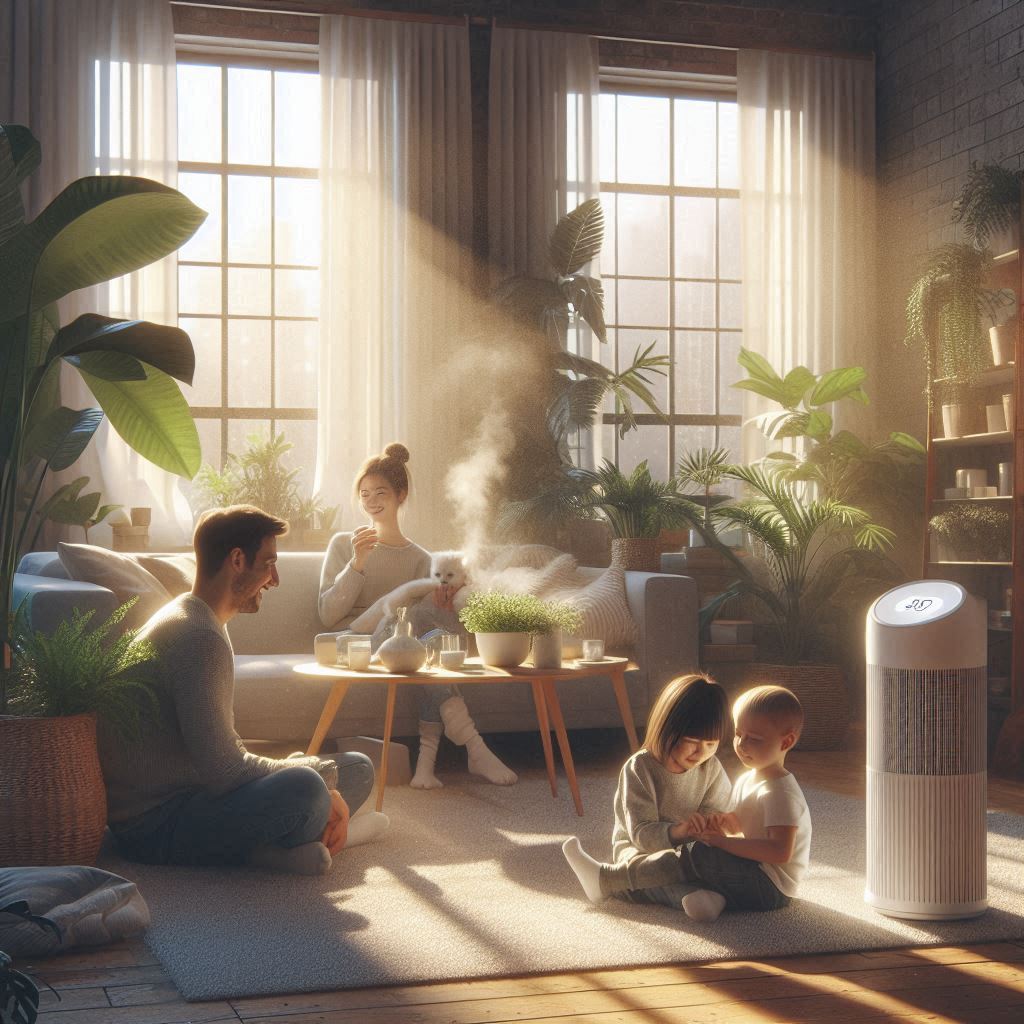
The most important smart air purifier features are CADR, correct room sizing, HEPA-style particle filtration, activated carbon when odors or gases matter, quiet operation, energy efficiency, reliable filter alerts, and replacement filter availability. App control, voice assistant support, and real-time displays are useful, but they should not matter more than filtration performance and maintenance.
Reality check: A smart purifier is still an air purifier first. A sleek app cannot overcome weak airflow, an undersized unit, a clogged filter, poor placement, or a filter that does not match the pollutant you are trying to reduce.
Smart Air Purifier Knowledge Check
Before paying extra for smart features, test what you already know about clean-air performance.
- Does Wi-Fi make an air purifier clean better?
No. Wi-Fi helps with control and convenience, but CADR, filter type, and room size affect cleaning performance more. - Is a purifier with auto mode always better?
Not always. Auto mode is useful, but sensor quality and placement matter. - Should you check replacement filter cost before buying?
Yes. Filters are one of the biggest long-term costs of owning a purifier. - Does HEPA filtration remove odors?
Not well. HEPA-style filters target particles. Activated carbon is more relevant for odors and certain gases. - Can a small smart purifier clean a large open room?
Usually not. The purifier still needs enough CADR for the space.
What Makes an Air Purifier “Smart”?
A smart air purifier is a portable air cleaner with connected or automated features. That may include Wi-Fi, Bluetooth, app control, air quality sensors, filter-life alerts, schedules, auto mode, voice assistant compatibility, or smart home integration.
Those features can make a purifier easier to use. They can remind you to replace a filter, turn the unit on before bedtime, run a stronger fan speed during cooking, or monitor air quality trends from your phone.
However, smart features do not automatically mean better filtration. A non-smart purifier with strong CADR and good filters can outperform a connected purifier that is too small for the room. The “smart” part should support the cleaning system, not distract from it.
The Smart Air Purifier Features That Matter Most
If you are comparing smart purifiers, rank the features in this order. The first few affect clean-air performance the most. The later ones are useful, but they are more about convenience.
| Feature | How Much It Matters | Why It Matters |
|---|---|---|
| CADR | Very high | Clean Air Delivery Rate helps show how much filtered air the purifier can deliver for particles such as smoke, dust, and pollen. |
| Room-size match | Very high | An undersized purifier may run constantly and still underperform. |
| Filter type | Very high | HEPA-style filters target particles. Activated carbon helps with some odors and gases. |
| Replacement filter availability | Very high | A purifier becomes frustrating if filters are expensive, hard to find, or confusing to match. |
| Noise level | High | A purifier that is too loud often gets turned down or turned off. |
| Energy efficiency | High | Many purifiers run for hours each day, so energy use matters over time. |
| Filter-life alerts | High | Useful reminders help keep airflow and filtration from dropping. |
| Air quality sensors | Medium to high | Sensors can spot patterns, but they vary by model and do not measure every pollutant. |
| Auto mode | Medium | Helpful for hands-off use when sensor readings are reliable. |
| App control | Medium | Convenient for schedules, remote control, and tracking trends. |
| Voice control | Low to medium | Nice to have, but it does not improve air cleaning by itself. |
| Decorative lights and display effects | Low | Helpful for user experience, but not a core clean-air feature. |
Feature 1: CADR Is More Important Than App Control
CADR stands for Clean Air Delivery Rate. It helps show how quickly a purifier can clean particles from a room. You may see separate CADR ratings for smoke, dust, and pollen.
This matters because a purifier can have a beautiful app and still be too weak for your space. If the CADR is too low, the unit may not move enough filtered air to make a meaningful difference in the room.
A practical sizing rule from AHAM is to look for a smoke CADR that is at least two-thirds of the room’s square footage. For a 300-square-foot room, that points toward a smoke CADR of about 200 or higher. For wildfire smoke, AHAM recommends a smoke CADR closer to the room’s square footage.
That is why CADR belongs at the top of the feature list. Smart controls help you use the purifier. CADR helps determine whether the purifier can clean the room.
Feature 2: The Right Filter for the Right Pollutant
Filter type matters because not all indoor air problems are the same. Pollen, dust, smoke particles, pet dander, and mold spores are particle problems. Cooking odors, smoke smells, pet odors, and some VOC concerns are gas-and-odor problems.
HEPA-Style Filtration
Best for particles such as pollen, dust, pet dander, mold spores, and smoke particles.
Activated Carbon
Best for some odors and certain gases, depending on how much carbon the filter contains.
Pre-Filter
Helps catch larger dust, lint, hair, and pet fur before they reach the main filter.
Most homes benefit from a purifier that includes both HEPA-style particle filtration and activated carbon. The HEPA-style filter handles airborne particles. The carbon layer supports odor and gas reduction. Just remember that carbon can become saturated, and a thin carbon sheet may not be enough for heavy odor problems.
Feature 3: Replacement Filters Are a Big Deal
Replacement filters may not be exciting, but they are one of the most important parts of owning a purifier. A clogged HEPA-style filter can reduce airflow. A saturated carbon filter can stop helping with odors. A poorly fitted replacement can allow air to bypass the filter.
Before buying a smart purifier, check the replacement filter price, model number, availability, and replacement schedule. A purifier that seems affordable upfront may become expensive if the filters are costly or hard to find.
This is also where many homes can save money. If your current purifier still works but no longer feels effective, it may not need to be replaced. It may simply need the correct fresh filter.
Need Replacement Filters for Your Smart Purifier?
Before replacing a working purifier, check the filter. A fresh, correctly fitted replacement filter can restore airflow and help the purifier perform closer to its intended design.
Partner link. Always confirm your exact purifier brand, model number, filter code, and filter size before ordering.
Feature 4: Noise Level Determines Whether You Actually Use It
A purifier only helps when it runs. That makes noise level a real buying factor, especially for bedrooms, nurseries, offices, and shared living spaces.
Many purifiers advertise quiet sleep modes, but the lowest setting may not clean the room quickly. Compare noise across multiple fan speeds if possible. A good purifier should be quiet enough for normal use but strong enough on medium or high speed to handle pollen spikes, cooking particles, smoke events, or heavy dust.
If a purifier sounds annoying, people often turn it down or shut it off. That turns a performance feature into a real-world failure.
Feature 5: Energy Efficiency Matters More Than You Think
Air purifiers often run for long stretches, especially during allergy season, wildfire smoke events, pet shedding, or high-use indoor periods. That means energy use matters.
ENERGY STAR certified room air cleaners are designed to use energy more efficiently than standard models. When comparing models, look for energy information, CADR per watt, annual energy estimates, and whether the purifier has useful scheduling or eco modes.
Energy efficiency should not replace performance, but it can help make daily purifier use easier to justify.
Feature 6: Air Quality Sensors Are Helpful, But Not Perfect
Air quality sensors are one of the features that make a purifier feel smart. They can show particle changes, trigger auto mode, and help you notice patterns. For example, a sensor may spike when you cook, vacuum, open a window during pollen season, or burn a candle.
That is useful. But built-in sensors have limits. Many focus on particles and may not detect every gas, odor, or VOC. Sensor accuracy also varies by model, and placement can affect readings.
Use sensors as trend tools. If a room spikes every evening during cooking, improve kitchen ventilation. If a bedroom spikes after the dog jumps on the bed, look at pet dander habits. If readings stay high even after filter replacement, the purifier may be undersized or poorly placed.
Feature 7: Auto Mode Can Be Useful — With One Catch
Auto mode lets the purifier adjust fan speed based on sensor readings. That can be helpful when pollution levels change throughout the day. It can also reduce noise and energy use when the air is cleaner.
The catch is that auto mode depends on the sensor. If the sensor only measures certain particles, the purifier may not respond to odors or gases. If the sensor is dusty or poorly placed, readings may not reflect the whole room.
Auto mode is a good feature, but it should not be your only strategy. During known events such as cooking, cleaning, high pollen, smoke, or heavy pet activity, manually increasing fan speed may still make sense.
Feature 8: App Control Is Convenient, Not Essential
App control can be genuinely useful. You can schedule the purifier, check filter status, adjust fan speed, dim the display, monitor air quality trends, and turn the unit on before you get home.
For busy households, app control can make purifier use more consistent. For bedrooms, a schedule can run the purifier before sleep. For home offices, it can turn the purifier on before work begins. For pet owners, it can increase airflow during high-shedding times.
Still, app control should not be the deciding factor if performance is weak. A connected purifier with low CADR is still a low-CADR purifier.
Feature 9: Smart Home Compatibility Is Nice, But Secondary
Voice assistant and smart home compatibility can be helpful if your home already runs on Alexa, Google Home, Apple Home, or another smart platform. You may be able to control the purifier with routines, voice commands, or automation.
For example, you could run the purifier higher during bedtime, lower it after midnight, or turn it on with a “good morning” routine. That is convenient.
But compatibility should come after core performance. Do not choose a weaker purifier just because it connects to your preferred smart assistant.
Smart Features Worth Paying For vs. Skipping
Use this table to separate meaningful smart purifier features from nice extras.
| Feature | Worth Paying For? | Why |
|---|---|---|
| Strong CADR | Yes | Directly affects how much clean air the purifier can deliver. |
| HEPA-style filtration | Yes | Important for particles like dust, pollen, dander, and smoke particles. |
| Activated carbon | Yes, if odors matter | Helpful for some odors and certain gases. |
| Filter-life alerts | Yes | Helps keep maintenance on track. |
| Quiet sleep mode | Yes | Important for bedrooms and nurseries. |
| ENERGY STAR certification | Often yes | Useful for long daily runtime and lower energy waste. |
| Auto mode | Usually | Helpful when sensors are reliable and the purifier is properly sized. |
| App control | Sometimes | Great for convenience, but not a replacement for performance. |
| Voice assistant support | Optional | Convenient, but rarely essential. |
| Decorative lights | Usually no | They may look nice, but they do not clean the air. |
Which Features Matter Most by Room?
The best smart purifier feature set depends on where the unit will run. A bedroom, kitchen-adjacent living room, nursery, and home office have different needs.
Bedroom
Prioritize quiet operation, enough CADR, sleep mode, dimmable lights, filter alerts, and no ozone-producing features.
Living Room
Prioritize higher CADR, room coverage, activated carbon for odors, app scheduling, and easy filter replacement.
Nursery or Kids’ Room
Prioritize quiet operation, stable placement, child lock, no ozone, clear filter reminders, and simple controls.
Home Office
Prioritize quiet medium-speed performance, app control, scheduling, low distraction, and dust reduction.
Pet Area
Prioritize pre-filter access, HEPA-style filtration, activated carbon for odors, and affordable replacement filters.
Open-Concept Space
Prioritize high CADR, larger room coverage, lower noise at higher speeds, and possibly multiple units.
Features to Be Careful With
Some purifier features deserve extra scrutiny because they can sound more impressive than they are.
Ionizers
Be cautious with ionizer-heavy marketing. Check whether the product emits ozone and whether the feature can be turned off.
UV-C Claims
UV-C may sound powerful, but design, exposure time, and maintenance matter. It should not replace filtration, ventilation, or cleaning.
Vague Room Coverage
Some coverage numbers are based on fewer air changes per hour. Compare CADR, not just the biggest square-foot claim.
Thin Carbon Layers
A thin carbon sheet may help lightly with odors, but it may disappoint in homes with strong odor or VOC concerns.
Proprietary Filters
Proprietary filters are not automatically bad, but check cost and availability before committing to the purifier.
Medical-Sounding Claims
Be careful with claims that sound like treatment promises. A purifier supports cleaner air but does not replace medical care.
The Filter-First Buying Strategy
One of the smartest ways to shop for a smart purifier is to start with the replacement filter, not the device.
Ask these questions before you buy:
Can I easily find the filter?
If replacement filters are hard to locate now, ownership may become frustrating later.
Is the filter affordable long term?
A cheaper purifier can become expensive if filters cost too much or need frequent replacement.
Does the filter include carbon?
Some replacements include a carbon layer. Others require a separate carbon filter.
Does the filter fit exactly?
A poor fit can allow air to leak around the filter instead of passing through it.
This is also why a working purifier should not always be replaced. If the motor and fan still work, a fresh filter may be the best upgrade.
Common Mistakes Smart Purifier Buyers Make
The biggest mistakes usually happen when shoppers pay for convenience before performance.
| Mistake | Why It Hurts | Better Move |
|---|---|---|
| Buying for app features first | The purifier may be too weak for the room. | Start with CADR, room size, and filter type. |
| Ignoring replacement filters | Filters may be expensive, unavailable, or confusing to match. | Check replacement filter options before buying. |
| Trusting vague “large room” claims | Coverage claims are not always comparable. | Compare CADR and air changes per hour. |
| Expecting HEPA to remove odors | HEPA-style filters target particles, not gases. | Choose meaningful activated carbon if odors matter. |
| Leaving it on low all the time | Low speed may not clean the room quickly enough. | Use higher speeds during pollution spikes, then lower it later. |
| Placing it behind furniture | Blocked airflow reduces performance. | Keep intake and outlet areas open. |
Internal Reading for Smarter Air Purifier Decisions
If you are comparing smart air purifier features, these related guides can help you go deeper.
Maintain Your Purifier
Compare Filter Types
Comparing HEPA vs. Activated Carbon Filters in Smart Purifiers
Choose the Right Purifier
The Ultimate Guide to Choosing the Right Air Purifier for Your Home
Trusted Resources for Smart Purifier Research
For more technical reading, these outside resources are useful starting points.
EPA Air Cleaner Guide
ENERGY STAR Air Cleaners
AHAM CADR Guidance
FAQs About Smart Air Purifier Features
What is the most important feature in a smart air purifier?
CADR and room-size match are the most important performance features. Smart controls are useful, but they do not matter much if the purifier is undersized or has weak filtration.
Are smart air purifiers better than regular air purifiers?
They can be more convenient because of app control, schedules, filter alerts, and auto mode. However, a regular purifier with stronger CADR and better filtration can outperform a smart purifier that is too small for the room.
Do air quality sensors measure everything?
No. Built-in sensors vary by model and often focus on particles. They may not detect every gas, odor, VOC, or pollutant. Use them as trend tools, not perfect indoor air reports.
Is activated carbon necessary in a smart purifier?
Activated carbon is useful if odors, smoke smells, cooking smells, pet odors, or certain gases are a concern. If your main problem is pollen, dust, or dander, HEPA-style particle filtration and CADR matter more.
Should I choose an ENERGY STAR air purifier?
It is often a smart choice because air purifiers may run for many hours a day. Energy-efficient models can help reduce electricity use while still delivering filtered air.
Do I need voice control?
Voice control is convenient but not essential. It should not matter more than CADR, filter type, noise level, room-size fit, and replacement filter availability.
The Smartest Feature Is the One That Keeps Working
The best smart air purifier is not the one with the flashiest display. It is the one with enough CADR for the room, the right filters for your air problem, a noise level you can live with, energy use that makes sense, and replacement filters you can actually find.
Smart features should make clean air easier to manage. They should never distract from the basics that make the purifier work.