Air purifiers can help improve indoor air quality, but they are often surrounded by confusing claims. Some people expect one small machine to clean an entire home. Others think a smart sensor means the air is automatically safe. The truth is more useful than the hype: the right purifier, used the right way, can make your breathing space cleaner, calmer, and easier to manage.
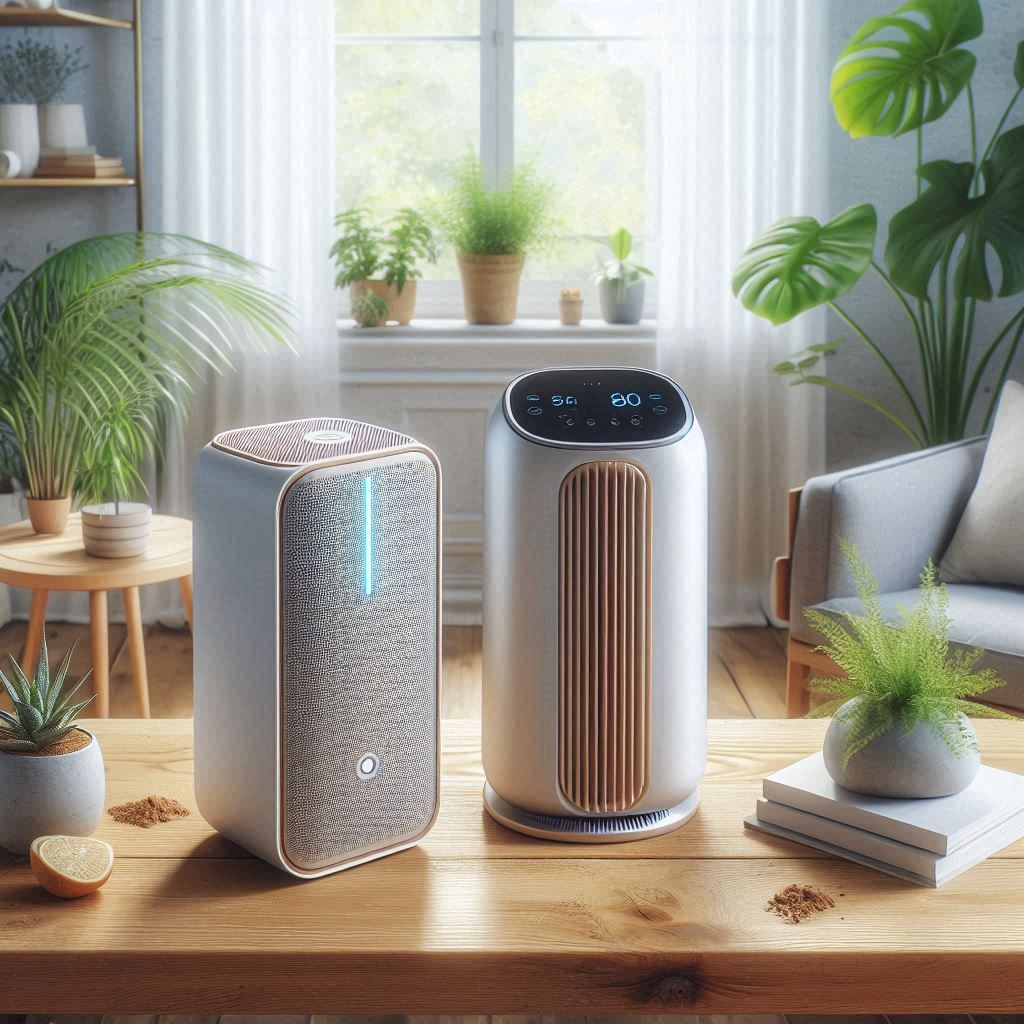
Do air purifiers really work?
Yes, air purifiers can work when they are properly sized, properly placed, and properly maintained. A quality purifier can reduce airborne particles such as dust, pollen, smoke particles, pet dander, and some mold-related particles. With the right filter design, it may also help reduce certain odors and gases.
However, an air purifier is not a magic box. It cannot fix a moisture problem behind a wall. It cannot replace cleaning. It cannot make smoking, burning candles, harsh chemicals, or poor ventilation harmless. Think of it as one strong layer in a cleaner-air plan.
Air purifier knowledge check: what do you really know?
Before buying or upgrading, test your assumptions. These quick questions help separate marketing claims from practical indoor-air decisions.
- Does a HEPA filter remove odors by itself, or does it mainly capture particles?
- Is the purifier sized for the room where you will actually use it?
- Can you easily find replacement filters before you buy the machine?
- Does the purifier intentionally generate ozone, ions, or “fresh air” as a selling point?
- Will you run it long enough and fast enough to clean the air when it matters?
Why air purifier myths are so common
Air is invisible, so indoor air quality is easy to misunderstand. You can see dust on a shelf, but you cannot always see fine particles from cooking, wildfire smoke, pollen, pet dander, or outdoor pollution that slips inside. That gap creates room for bold claims.
Modern smart purifiers add another layer. App controls, air-quality rings, automatic modes, and digital particle readings can be genuinely helpful. Still, smart features do not replace the basics: CADR, filter type, placement, run time, room size, and maintenance.
For a deeper technology breakdown, you can also read our guide to HEPA, activated carbon, and air purifier technology.
Myth #1: “Any air purifier will work in any room”
A small purifier on a nightstand can clean a large living room, open floor plan, or basement.
The truthRoom size matters. A purifier needs enough airflow to move air through the filter repeatedly. This is where CADR, or Clean Air Delivery Rate, becomes important. CADR helps show how much filtered air a purifier can deliver for particle pollutants such as smoke, dust, and pollen.
A purifier that is too small may still run, light up, and make noise, but it may not clean the room quickly enough to matter. Large rooms, high ceilings, open layouts, and connected spaces often need a stronger unit or more than one purifier.
| Room situation | What to check | Common mistake |
|---|---|---|
| Bedroom | Noise level, sleep mode performance, filter cost, CADR for room size | Buying only for quiet operation, then running it too low to clean effectively |
| Living room | Open floor plan size, ceiling height, smoke/dust CADR | Using a small bedroom purifier in a large shared space |
| Pet area | Pre-filter access, HEPA-style particle capture, odor carbon layer | Expecting a purifier to replace vacuuming and grooming |
| Kitchen-adjacent room | Particle filtration plus meaningful activated carbon | Expecting a basic particle filter to remove cooking odors and gases |
Myth #2: “HEPA removes everything”
If a purifier says HEPA, it handles dust, odors, VOCs, smoke, chemicals, germs, and everything else in the air.
The truthHEPA filtration is excellent for many particles. That includes dust, pollen, pet dander, many smoke particles, and other fine particles. But gases and odors are different. For many smells, chemical vapors, and VOC concerns, you need activated carbon or another filter material designed for gases.
This is why many stronger home air purifiers combine a pre-filter, a particle filter, and an activated carbon layer. The pre-filter catches larger debris, the HEPA or HEPA-type filter targets particles, and the carbon layer helps with certain odors and gases.
Myth #3: “Smart sensors tell the whole air-quality story”
If the app says the air is good, the room must be perfectly clean.
The truthSmart sensors are helpful, but they are not all the same. Many consumer purifiers focus mainly on particles. Some may detect certain gases or odors, but not every model measures the same pollutants. A green light can mean the purifier’s sensor is satisfied, not that every possible indoor air issue has disappeared.
Smart features are best used as a convenience layer. Auto mode can help the unit respond when particle levels rise. App controls can help you run the purifier before bedtime or during cooking. Filter alerts can remind you when maintenance is due. But the core performance still depends on the filter system, airflow, and room match.
For connected-home shoppers, our guide to smart air purifier automation, sensors, and home integration explains which features are genuinely useful and which ones are mostly convenience extras.
Myth #4: “Ozone smells clean, so it must be cleaning the room”
Ozone, ionizers, plasma features, and “fresh air” technologies are automatically better than plain filtration.
The truthBe careful with any air cleaner that intentionally produces ozone. Ozone is a lung irritant, and cleaner air should not require adding a respiratory irritant to your home. Some electronic air-cleaning technologies may also produce ozone as a byproduct, depending on design and testing.
If you are comparing models with ionizers, UV, plasma, photocatalytic oxidation, or other electronic features, look for clear safety testing and certification. Many households are better served by strong mechanical filtration: a good fan, a good particle filter, and the right carbon support when odors or gases are part of the problem.
Myth #5: “Opening a window does the same thing”
Fresh air always beats filtration.
The truthVentilation can be very useful when outdoor air is clean. It can dilute indoor pollutants from cooking, cleaning, building materials, and everyday activity. But opening a window is not always the right move. During wildfire smoke, heavy pollen, high outdoor pollution, or poor weather, outdoor air may make indoor air worse.
The better approach is flexible. Ventilate when outdoor air is good. Filter when outdoor air is poor or when indoor particle levels rise. Use kitchen exhaust when cooking. Reduce pollution at the source whenever possible.
For local outdoor conditions, check AirNow.gov before opening windows during smoky or high-pollution days.
Myth #6: “Air purifiers solve mold problems”
If a room smells musty, an air purifier can fix the problem.
The truthAn air purifier may capture some airborne mold-related particles and may reduce some musty odor if it has enough carbon. But it cannot solve the moisture problem causing mold growth. If water is entering the home, humidity is too high, or a leak is hidden behind a wall, filtration only treats part of the symptom.
For mold concerns, start with moisture control. Fix leaks, improve drying, reduce humidity, clean contaminated surfaces properly, and seek professional help when the affected area is large or hidden.
Myth #7: “Filter replacement is optional”
As long as the purifier turns on, the filter is still doing its job.
The truthFilters load up over time. A dirty filter can restrict airflow, reduce performance, and make the purifier less effective. In homes with pets, smoke exposure, heavy dust, cooking particles, or wildfire seasons, filters may need attention sooner than the basic schedule suggests.
Before buying a purifier, check the replacement filter cost, availability, and compatibility. A cheap purifier can become expensive if filters are hard to find or cost more than expected.
What experts actually want you to look for
Instead of chasing the flashiest purifier, focus on the handful of details that affect real-world performance.
CADR helps estimate particle-cleaning performance. A higher CADR can serve a larger room or clean a smaller room faster.
For dust, pollen, pet dander, and smoke particles, prioritize HEPA or high-efficiency particle filtration.
For cooking smells, smoke smell, and some VOC concerns, look for activated carbon or another gas-targeting filter.
A purifier only keeps working well when filters are changed on schedule. Check filter cost before buying.
If the unit is too loud, you may not run it. A quieter purifier that runs longer can be more useful than a powerful one you keep off.
Avoid intentional ozone generation. For electronic features, check credible certifications and manufacturer documentation.
Air purifier technology comparison
| Technology | Best for | Limits to understand | BestSmartPurifiers verdict |
|---|---|---|---|
| HEPA or high-efficiency particle filter | Dust, pollen, pet dander, many smoke particles, fine particles | Does not remove many gases or odors by itself | Strong foundation for most homes |
| Activated carbon | Some odors, gases, smoke smell, certain VOCs | Performance depends on carbon amount, quality, and saturation | Important if odors or gases are part of the problem |
| UV-C | Some microbial concerns inside controlled device chambers | Not a substitute for strong airflow and filtration; effectiveness varies by design | Consider secondary, not the main buying reason |
| Ionizer or plasma feature | Marketed for particle charging or added cleaning | May create ozone or byproducts depending on design | Use caution and verify safety testing |
| Smart sensors and app controls | Automation, reminders, remote control, usage insights | Sensor readings vary; not all pollutants are measured | Helpful convenience layer, not proof of total air safety |
Where smart purifiers fit in 2026 homes
Smart purifiers are becoming part of a larger home-health routine. Many families now look at indoor air quality the way they look at sleep, hydration, cleaning habits, and home comfort. The best smart features make that routine easier.
Auto mode can increase fan speed when particle levels rise. Scheduling can run the purifier before bedtime. App alerts can remind you to change filters. Voice control can help people who want hands-free operation. In some smart homes, purifiers can work with sensors, thermostats, and other devices.
Still, the “smart” label should never distract from the basics. A connected purifier with weak airflow is still weak. A beautiful app cannot fix an undersized unit. A glowing air-quality ring cannot replace a filter that needs changing.
If you are comparing connected ecosystems, read our breakdown of Matter vs. Wi-Fi smart purifier systems.
FAQ: air purifier myths answered clearly
Do air purifiers help with allergies?
They can help reduce airborne particles that trigger symptoms for some people, including pollen, dust, pet dander, and fine particles. Results vary by person, room, purifier size, filter quality, and cleaning habits. For allergy-heavy homes, use the purifier in the room where the sensitive person spends the most time.
Can an air purifier remove pet smells?
A purifier with enough activated carbon may help reduce some pet odors, while the particle filter can capture dander and hair-related debris. However, it cannot replace washing pet bedding, vacuuming, grooming, and cleaning litter or accident areas.
Can an air purifier remove cooking odors?
Some cooking particles can be captured by a particle filter, and some odors may be reduced by activated carbon. For best results, use kitchen exhaust, ventilate when outdoor air is safe, and run a purifier with meaningful carbon support nearby.
Should I run my air purifier all day?
Many people get better results by running the purifier for long periods, especially during allergy season, wildfire smoke, pet shedding, or high indoor activity. Use a fan speed that balances cleaning power and noise. Auto mode can help, but it may not always run aggressively enough during short pollution spikes.
Is a bigger purifier always better?
Not always. A larger purifier can clean faster, but it may cost more, take up more space, use larger filters, and be louder on high settings. The goal is not simply “biggest.” The goal is enough CADR for your room with filters you can maintain.
Do air purifiers remove VOCs?
Particle filters alone are not designed for most gases or VOCs. For VOC concerns, look for activated carbon or other gas-phase filtration, and reduce the source whenever possible. Avoid over-relying on any purifier for chemical exposure problems.
Do I need one purifier for every room?
Portable purifiers are usually designed for a single room or specific area. You may move one between rooms, but it only cleans well where it is running. Bedrooms, home offices, nurseries, and main living areas are often the highest-priority spaces.
What is the biggest air purifier mistake?
The biggest mistake is buying for looks, brand name, or app features before checking room size, CADR, filter type, filter cost, and ozone safety. A simple purifier with strong filtration can outperform a flashy unit that is too small for the space.
The practical buying checklist
Before you buy a purifier, answer these questions in order:
| Question | Why it matters |
|---|---|
| What room will this purifier actually serve? | Portable purifiers clean best in the room where they are operating. |
| What is the room size and ceiling height? | CADR and coverage claims often assume standard ceiling height. |
| Is your main issue particles, odors, gases, or all three? | Particles need HEPA-style filtration. Odors and gases need carbon or gas-phase filtration. |
| Can you afford the replacement filters? | Long-term cost matters more than the sale price. |
| Does it avoid intentional ozone generation? | Cleaner air should not come with added ozone exposure. |
| Will you actually run it? | Noise, placement, and convenience affect real-world use. |
Expert advice: the clean-air stack that works best
The best indoor-air strategy is layered. Do not ask one machine to solve every problem alone.
First, reduce pollution at the source. Avoid indoor smoking. Use kitchen exhaust. Choose lower-odor cleaning products when possible. Control moisture. Keep dust and pet debris from building up.
Second, ventilate when outdoor air is clean. Fresh outdoor air can dilute indoor pollutants, but only when outdoor conditions are safe.
Third, filter the room where cleaner air matters most. Bedrooms are a smart starting point because you spend many hours there. Living rooms, home offices, nurseries, and pet-heavy areas may also deserve dedicated filtration.
Finally, maintain the system. Clean pre-filters when the manufacturer allows it. Replace filters on schedule. Keep airflow clear. Do not shove the purifier behind furniture, under curtains, or tight against a wall unless the manufacturer specifically says that placement is safe.
Helpful external resources
For readers who want to verify the science and safety guidance, these independent resources are useful starting points:
EPA Guide to Air Cleaners in the Home
AHAM Verifide air cleaner testing and directory
American Lung Association air cleaning guidance
California Air Resources Board certified air cleaning devices
ENERGY STAR air cleaners
Final verdict: air purifiers are useful, but only when expectations are realistic
Air purifiers are not a cure-all. They do not erase every pollutant, fix hidden mold, or make bad indoor habits harmless. But when you choose the right size, match the filter to the problem, avoid ozone-producing devices, and replace filters on time, a good purifier can become one of the most useful wellness upgrades in your home.
The smartest choice is not always the most expensive purifier. It is the purifier you can run consistently, maintain affordably, and trust for the room where cleaner air matters most.
Ready to make a smarter choice?
Start with your room size, then match your biggest air-quality concern to the right filter system. If you already own a purifier, do not forget the part that keeps it working: the replacement filter.
Hello!
This post does an excellent job of debunking common myths about air purifiers and giving practical advice for selecting the right one. I was surprised to learn that not all air purifiers are noisy and expensive, as that’s a big misconception I’ve had. The breakdown of different types of filters and their benefits, like HEPA for allergies and carbon for odors, really helped clarify what to look for.
I also appreciate the tips on considering room size, noise levels, and energy usage—these factors are often overlooked but make a big difference in choosing the right unit. Overall, this guide is super helpful for anyone looking to improve their indoor air quality.
Maksim V 🙂
Hi, Maksim. We appreciate you taking the time to share your thoughts! You’re right; those misconceptions about noise and cost can significantly hinder people. We’re always happy to help folks understand that affordable and quiet options exist. We’ve reviewed a few great models on our site that fit that bill—feel free to check them out! If you have further questions as you explore air purifiers, don’t hesitate to ask!