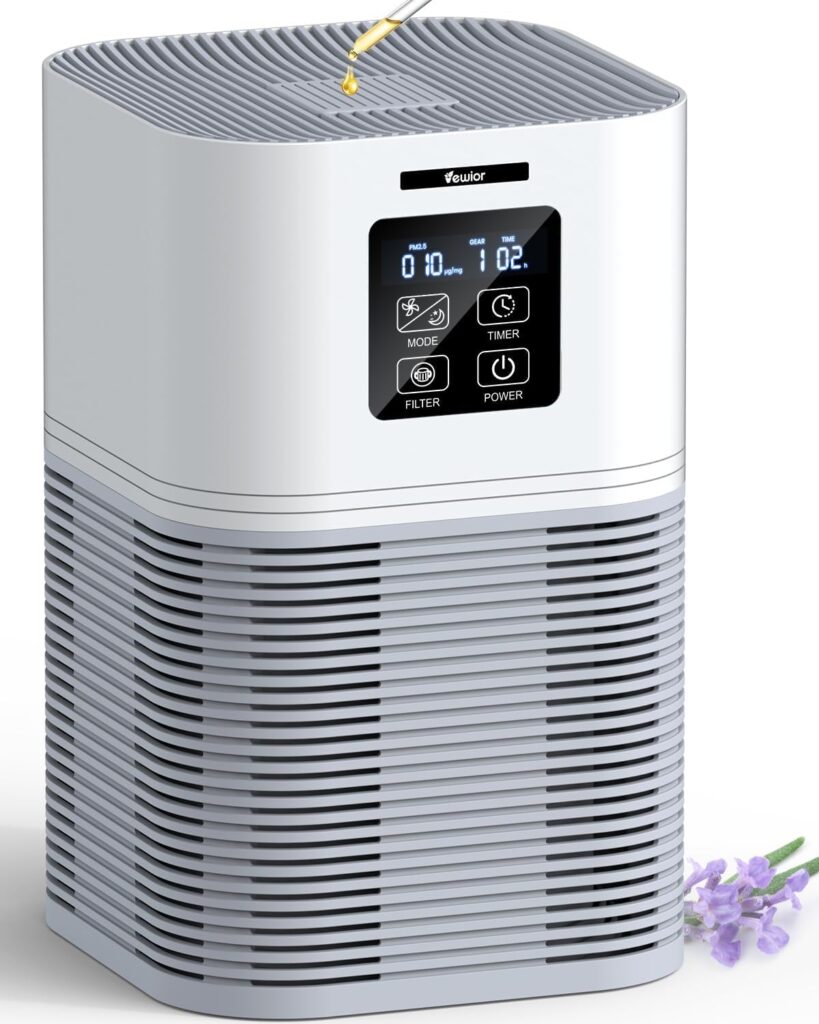
A smart air purifier is not a one-time purchase. The real cost includes replacement filters, electricity, room-size mistakes, maintenance habits, and how often the unit needs to run. Here is the plain-English breakdown before you buy.
Quick Answer: What Does a Smart Purifier Really Cost?
The true cost of owning a smart purifier is the purchase price plus replacement filters, electricity, and basic maintenance. A small bedroom purifier may cost less upfront, but a large-room smart purifier with higher CADR, multiple filters, and 24/7 use can cost much more over three years. The smartest buy is usually not the cheapest unit. It is the purifier that is properly sized, uses efficient power, has reasonably priced filters, and fits the way you actually live.
Air-Quality Knowledge Check: What Do You Really Know Before Buying?
Before looking at prices, test the assumptions that often lead people to overspend or underbuy.
- 1. Do you know your room’s square footage? A purifier that is too small may run harder, clean slower, and feel disappointing.
- 2. Did you check CADR, not just “room coverage” marketing? CADR helps show how quickly filtered air is delivered.
- 3. Do you know the yearly filter cost? A low purchase price can be wiped out by expensive filter sets.
- 4. Will the purifier run all day, only at night, or only during allergy and smoke events? Runtime changes the electricity cost.
- 5. Can you easily find replacement filters? A purifier is only useful if you can maintain it without guesswork.
The Purchase Price Is Only the Beginning
Most shoppers compare smart purifiers by sticker price. That is understandable, but it is also where the ownership-cost trap begins. A purifier can look affordable on the shelf and become expensive once you add replacement filters, electricity, and maintenance parts over several years.
A smarter way to compare models is to look at the full ownership picture. Ask what the purifier costs today, what the filter set costs each year, how much power it uses, and whether it is correctly sized for the room. That final point matters because an undersized purifier often needs to work harder and may still not deliver the clean-air performance you expected.
The price you pay for the purifier itself. Smart features, sensors, larger motors, and bigger filters can raise this number.
Replacement filters, electricity, prefilter cleaning, and occasional accessories create the long-term cost.
The biggest hidden cost is buying the wrong size, then running the unit harder without getting the result you wanted.
Estimated 3-Year Smart Purifier Cost by Use Case
The numbers below are realistic planning ranges, not promises. Exact costs vary by brand, filter design, local electricity rate, dust level, pets, smoke exposure, and how often the purifier runs. Use this table as a buyer’s worksheet before you commit to a model.
| Purifier Type | Typical Upfront Price | Estimated Filter Cost Per Year | Estimated Energy Cost Per Year | Estimated 3-Year Ownership Range |
|---|---|---|---|---|
| Small bedroom smart purifier Best for sleep spaces, nurseries, and small offices. |
$70–$180 | $25–$70 | $25–$55 | $220–$555 |
| Mid-size living room purifier A common choice for apartments, bedrooms, and family rooms. |
$150–$350 | $40–$120 | $35–$90 | $375–$980 |
| Large-room smart purifier Designed for bigger rooms, open layouts, and heavier particle loads. |
$300–$700 | $80–$220 | $70–$150 | $750–$1,810 |
| Premium connected purifier Often includes stronger sensors, app controls, larger filters, and quiet automation. |
$450–$1,000+ | $100–$300 | $80–$180 | $990–$2,440+ |
Filter Replacement Is the Sleeper Cost
Filters are where many smart purifier owners feel the real cost. A purifier may use a prefilter, a particle filter, an activated carbon filter, or a combined filter cartridge. Some models need one replacement piece. Others need multiple parts on different schedules.
Homes with pets, cooking particles, dust, pollen, wildfire smoke, or frequent high-speed operation may go through filters faster. Smart filter-life reminders can help, but they should not replace common sense. If airflow drops, the purifier smells musty, the filter looks packed, or the unit struggles to move air, it may be time to inspect the filter even if the app still says you have life remaining.
Before buying, check these filter details
- The exact replacement filter code for your purifier model.
- The typical replacement interval from the manufacturer.
- The current cost of a full filter set, not just one part.
- Whether the carbon filter is separate or built into the main filter.
- Whether compatible filters are easy to find from trusted sellers.
Need replacement filters?
Check your purifier’s model number and filter code first. Then compare partner filter options carefully before ordering. Compatibility matters more than speed.
Energy Cost: The Quiet Line Item That Adds Up
Air purifiers are often designed to run for long stretches. That is good for consistent filtration, but it means wattage matters. A purifier that runs all day can use much more energy than a device you only switch on occasionally.
Watts ÷ 1,000 × hours used × electricity rate = estimated electricity cost
For example, a 45-watt purifier running 24 hours a day uses about 394 kWh per year. At an example electricity rate of 17.65 cents per kWh, that would be about $70 per year. A more efficient model, a lower fan setting, or smart auto mode can reduce that cost. A stronger large-room model running on high for long periods can cost more.
| Average Power Draw | Daily Runtime | Estimated Annual Use | Estimated Annual Cost at 17.65¢/kWh |
|---|---|---|---|
| 25 watts | 24 hours/day | 219 kWh | About $39/year |
| 45 watts | 24 hours/day | 394 kWh | About $70/year |
| 60 watts | 24 hours/day | 526 kWh | About $93/year |
| 90 watts | 24 hours/day | 788 kWh | About $139/year |
Your actual electric bill may be higher or lower because electricity prices vary by location, plan, season, and utility fees. Still, the pattern is clear: efficient models matter most when the purifier runs every day.
Smart Features Can Save Money, But Only If You Use Them Correctly
Smart features are not automatically worth paying for. They become valuable when they help the purifier run only as hard as needed, remind you to maintain the unit, and make air-quality changes easier to understand.
Smart features that can help reduce waste
- Auto mode: Adjusts fan speed based on sensor readings, which may reduce unnecessary high-speed runtime.
- Filter-life reminders: Helps prevent running a purifier with a clogged or overdue filter.
- Scheduling: Lets you run the purifier harder before sleep, during cooking recovery, or when pollen is high.
- Air-quality history: Helps you spot patterns from cooking, cleaning, pets, outdoor air, or open windows.
- Remote control: Lets you adjust the purifier without leaving it running on high all day.
Smart features that may not be worth extra money
A flashy app does not make a weak purifier strong. A built-in sensor does not replace proper room sizing. Voice control does not matter if replacement filters are expensive or hard to find. Before paying extra for connected features, make sure the core purifier is right first: CADR, filter availability, noise level, energy use, and room fit.
Maintenance Costs Are More Than Filters
Most smart purifier maintenance is simple, but skipping it can shorten filter life, reduce airflow, and make the purifier work harder. The good news is that many maintenance tasks cost little or nothing.
If your model has a washable or vacuumable prefilter, clean it on schedule. This helps protect the main filter.
Do not crowd the purifier against curtains, furniture, corners, or piles of laundry. Blocked airflow wastes performance.
Dusty sensors may misread air quality. Follow the manual before cleaning any sensor opening.
Also check the manual for reset steps after changing filters. Some purifiers use a timer-based filter light, while others estimate filter life from use. Either way, the reminder should be treated as a guide, not a guarantee.
The Biggest Hidden Cost: Buying the Wrong Size
A purifier that is too small for the room can be frustrating. It may run loudly, stay on high, and still clean the room slower than expected. That does not mean the purifier is broken. It may simply be underpowered for the space.
CADR is one of the most useful numbers to compare because it relates to how quickly the purifier delivers filtered air. As a practical rule, look for a smoke CADR that is at least about two-thirds of the room’s square footage. For smoke-heavy situations, stronger CADR may be helpful. Rooms with high ceilings, open layouts, or connected spaces may also need more capacity than a basic square-footage estimate suggests.
How to Lower the True Cost Without Buying the Cheapest Purifier
The goal is not to buy the least expensive purifier. The goal is to buy the purifier that costs the least to own while still doing the job well.
- Size the purifier correctly. This protects performance and may reduce noisy high-speed operation.
- Check filter prices before buying. Search the filter code before you buy the purifier.
- Look for efficient models. Energy use matters when a purifier runs daily.
- Use auto mode wisely. Let the purifier respond to real air-quality changes when the sensor is reliable.
- Clean prefilters on schedule. This can help extend the life of the main filter.
- Reduce pollution at the source. Ventilate when outdoor air is safe, use kitchen exhaust when cooking, and avoid unnecessary indoor smoke or heavy fragrances.
When a Cheap Smart Purifier Becomes Expensive
A cheap purifier can make sense in a small, low-dust room when filters are affordable and easy to find. But it becomes expensive when it is undersized, noisy, filter-hungry, or hard to maintain.
Watch for these warning signs before buying:
- The purifier advertises a huge room size but gives weak or unclear CADR numbers.
- Replacement filters cost nearly as much as the unit.
- Filters are difficult to find from reliable sellers.
- The app looks impressive, but the purifier lacks strong basic performance data.
- The model uses a proprietary filter that may become difficult to source later.
- The purifier is too loud to run at the speed needed for your room.
BestSmartPurifiers Takeaway
The true cost of owning a smart purifier is not just the price on the box. It is the cost of clean air over time. Filters, electricity, maintenance, and room sizing all matter.
For most homes, the best value is a properly sized purifier with a clear CADR rating, reasonable filter availability, efficient energy use, and smart features that make daily operation easier. The wrong purifier may be cheaper today, but the right purifier is usually cheaper to trust.
FAQs About Smart Purifier Ownership Costs
How much does it cost to run a smart purifier every day?
It depends on wattage, runtime, and your local electricity rate. A 45-watt purifier running all day uses about 394 kWh per year. At 17.65 cents per kWh, that is about $70 per year. Smaller or more efficient models may cost less, while larger high-speed models may cost more.
Are replacement filters the biggest long-term cost?
Often, yes. For many owners, replacement filters cost more over time than electricity. Before buying a purifier, check the price of the correct filter set and how often it must be replaced.
Do smart purifiers save money compared with regular air purifiers?
They can, but only when the smart features are useful. Auto mode, scheduling, and filter reminders may reduce waste. However, a smart purifier with weak CADR, expensive filters, or poor sizing may still be a poor value.
Should I buy genuine filters or cheaper compatible filters?
Start with the manufacturer’s guidance. Some compatible filters may work, but fit, airflow, carbon amount, and filtration quality can vary. Always confirm the exact model number and filter code before buying.
What is the easiest way to avoid overspending?
Measure the room, check CADR, look up filter prices, review energy use, and confirm filter availability before buying. This five-minute check can prevent years of frustration and unnecessary cost.
Before You Replace a Filter, Confirm the Fit
A purifier is only as good as the filter inside it. Match the model number, filter code, and dimensions before ordering. When in doubt, compare carefully instead of guessing.