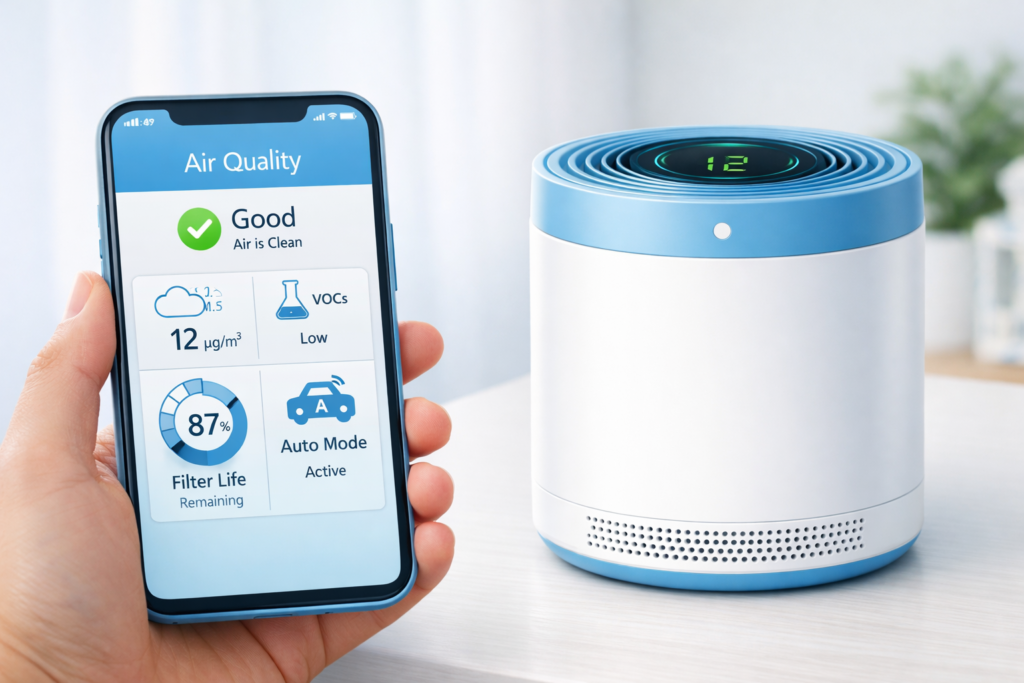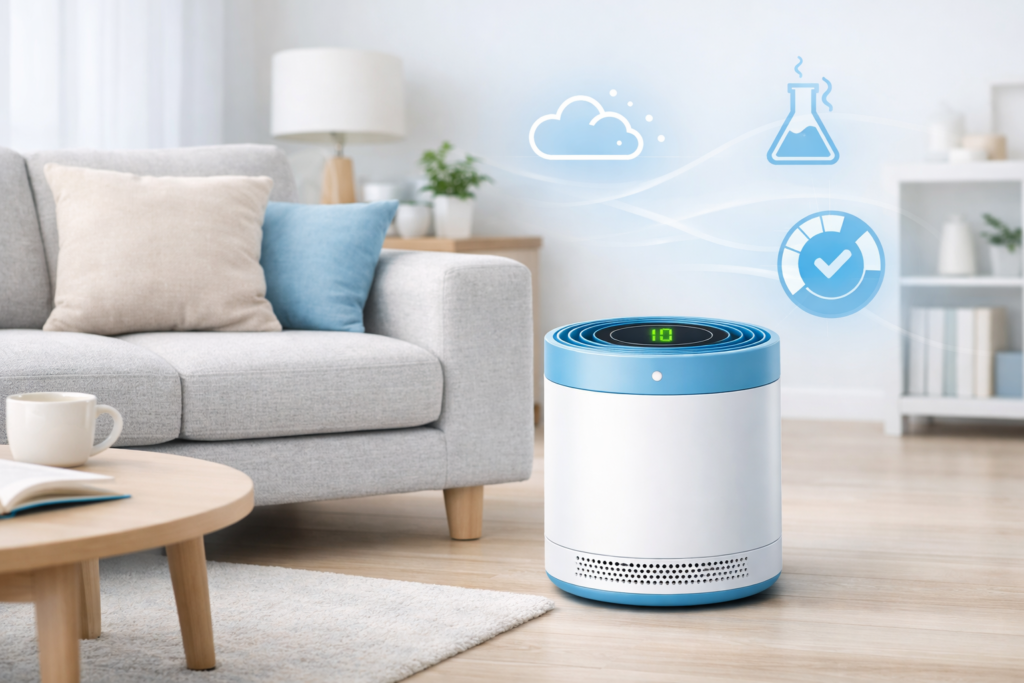
Air quality is becoming one of the quietest wellness signals in the modern home. Smart purifiers are not medical devices, and they should never be treated like doctors. Still, in 2026, the best models are helping families see, understand, and respond to indoor air changes before the room starts to feel stale, dusty, smoky, or uncomfortable.
Why is air quality being treated like a wellness signal in 2026?
Air quality is being treated like a wellness signal because people are finally realizing that the air inside a home changes all day. Cooking, pets, dust, candles, outdoor smoke, pollen, cleaning products, humidity swings, and clogged filters can all affect how a room feels. Smart purifiers make those changes visible through sensors, color indicators, app alerts, filter reminders, and automatic fan adjustments.
That does not mean a purifier can diagnose a health condition. It means a smart purifier can help you notice patterns. If your bedroom air spikes every night, your kitchen air jumps after dinner, or your living room filter needs replacing sooner than expected, that information can help you make better home decisions.
Before You Shop, What Do You Actually Know?
Use this quick self-check before buying or upgrading a smart purifier. The best choice is usually not the fanciest model. It is the model that matches your room, your air problem, and your maintenance habits.
- Do you know whether your main concern is dust, smoke, pollen, pet dander, odors, VOCs, or general stale air?
- Do you know the size of the room where the purifier will run most often?
- Do you know whether the purifier shows PM2.5, VOCs, AQI color changes, or only a generic air-quality light?
- Do you know how much replacement filters cost and how easy they are to find?
- Do you know whether the app is helpful enough to use, or whether you will mostly rely on auto mode?
From “Clean Air” to “Air Awareness”
For years, air purifiers were sold with one basic promise: turn them on and they clean the air. That is still the foundation. A purifier must move air through an effective filter system. It must be sized correctly. It must be maintained. It must run long enough to matter.
But the 2026 shift is bigger than simple filtration. The new conversation is about air awareness. People want to know what is happening inside the home. They want to know when air gets worse. They want to know whether auto mode is reacting. They want to know when the filter is tired. They want to understand why one room feels stuffy while another room feels fresh.
That is why air quality is starting to feel like a “vital sign” for the home. A vital sign is not the whole story, but it gives you a signal worth watching. Indoor air quality works the same way. A sensor reading is not a diagnosis. A color light is not a lab test. Yet those signals can still help you build cleaner routines.
The EPA’s indoor air guidance continues to point toward a practical combination of source control, ventilation, and filtration. That matters because no purifier should be treated as a magic box. If smoke, moisture, cleaning fumes, pet dander, or dust sources keep building up, filtration alone may not solve everything. The smartest 2026 approach is a system: reduce the source, improve airflow when appropriate, and use a properly sized purifier to help reduce airborne particles.
For a deeper official overview, readers can review the EPA’s Guide to Air Cleaners in the Home and ENERGY STAR’s room air cleaner criteria.
The 4 Features Turning Air Purifiers Into Wellness Tools
1. They sense changes faster
Modern smart purifiers commonly use particle sensors, air-quality lights, app readings, or auto mode to react when pollution rises. This helps during cooking, cleaning, pet activity, wildfire smoke days, and pollen-heavy seasons.
2. They respond without nagging you
Auto mode is one of the most useful wellness features because it reduces decision fatigue. Instead of constantly changing fan speeds, the purifier can raise or lower airflow based on detected conditions.
3. They remind you when maintenance matters
A purifier with an exhausted filter is like a fitness tracker with a dead battery. Smart filter-life alerts help prevent the common mistake of running a purifier long after the filter needs attention.
4. They show patterns over time
App data can help you notice repeat problems. Maybe your PM2.5 spikes after cooking. Maybe your bedroom improves when the purifier runs before bedtime. Maybe your living room needs a larger unit. Patterns are where smart purification becomes useful.
5. They fit into the wider smart home
Matter support for air purifiers and air quality sensors points toward a future where indoor air data can work across smart home ecosystems. That may eventually make it easier to connect sensors, purifiers, fans, HVAC systems, and routines.
The Smart Purifiers Leading the 2026 Wellness Shift
The “leaders” in this shift are not just the most expensive purifiers or the models with the most dramatic marketing. The real leaders are the models and ecosystems that make indoor air easier to understand. They combine filtration, feedback, automation, and maintenance guidance in a way normal households can actually use.
Here are the smart purifier names and categories worth watching in 2026.
| Smart purifier or ecosystem | Why it fits the wellness shift | Best-fit reader | Watch carefully |
|---|---|---|---|
| Levoit Core 600S-P and VeSync-connected models | Real-time air updates, app control, auto mode, and large-room positioning make Levoit a strong mainstream option for readers who want smart features without a luxury price point. | Families, bedrooms, living rooms, allergy-aware homes, and budget-conscious smart home users. | Confirm room size, filter cost, and whether the specific model includes the sensor features you want. |
| Coway Airmega smart models | Coway’s smart app ecosystem and real-time air-quality feedback fit readers who want a cleaner balance of design, automation, and visible indoor air status. | Readers who want proven purifier-style design with Wi-Fi features and easy visual feedback. | Not every Coway model has the same smart feature set, so compare model names carefully. |
| Blueair smart models and Blue Pure Max-style systems | Blueair’s app features, scheduling, real-time air insights, and filter alerts support the “set it, watch it, learn from it” wellness approach. | People who value simple controls, clean design, and app-based routines. | Make sure the model you choose has the specific particle or VOC readings you care about. |
| Dyson Purifier Formaldehyde and Big+Quiet-style models | Dyson leans hard into premium sensing, app feedback, formaldehyde detection claims on select models, and real-time air diagnosis. | Tech-forward buyers, design-focused homes, and readers who want detailed air feedback in a premium package. | Pricing is often higher, so compare the wellness value against room size, filter costs, and actual use habits. |
| Matter-ready air quality sensors and connected purifier setups | Matter support is moving air quality toward broader smart home interoperability, especially when sensors and purifiers can work together across platforms. | Smart home users who want future-friendly automation instead of a single app-only experience. | Matter support varies by device, bridge, platform, and feature. Always verify compatibility before buying. |
The Air-Quality Signals Worth Watching
Smart purifiers can display different kinds of air feedback. Some show simple color lights. Some show app-based readings. Some show PM2.5. Others may show VOC trends, filter life, humidity, or outdoor air-quality data. The key is understanding what the signal can and cannot tell you.
PM2.5
PM2.5 refers to fine particles that can come from smoke, cooking, combustion, outdoor pollution, and other sources. Many smart purifier buyers watch PM2.5 because it can change quickly and is often connected to the everyday moments people notice: cooking fumes, smoke, dust, and seasonal air events.
PM10
PM10 refers to larger inhalable particles. Dust, pollen, and some household particles may appear in this range. If your purifier or sensor separates PM2.5 and PM10, it may help you understand whether the issue looks more like fine smoke-like particles or larger dust and pollen-type particles.
VOCs
VOCs, or volatile organic compounds, can come from cleaning products, paints, furniture, fragrances, and other household materials. A purifier with activated carbon may help with certain gases and odors, but carbon capacity varies widely. A VOC reading should be treated as a helpful signal, not a complete chemical analysis.
CO2
Most portable air purifiers do not remove carbon dioxide in the way they remove particles. However, a separate CO2 sensor can be useful because rising CO2 may suggest a room needs better ventilation. This is one reason air-quality monitoring and ventilation planning are becoming part of the same wellness conversation.
Filter life
Filter-life tracking may be the most practical smart feature of all. Clean air habits often fall apart when filters get old, expensive, or hard to find. A good alert system helps readers replace filters before performance drops too far.
Need replacement filters or routine maintenance supplies?
A smart purifier only helps if the filter is maintained. If your unit is showing a filter alert, reduced airflow, stale odors, or longer cleaning times, it may be time to check replacement options.
Partner availability varies by brand and model. Always confirm filter compatibility before ordering.
How to Choose a Smart Purifier for Wellness in 2026
The best smart purifier is not the one with the longest feature list. It is the one that fits your room, your pollutant concern, your budget, and your willingness to maintain it.
Start with room size
Room size comes first. A small purifier in a large open room may look smart in the app while still struggling to move enough air. Check the manufacturer’s room-size guidance and compare it with independent buying guidance where possible.
Look for CADR clarity
CADR, or clean air delivery rate, helps describe how quickly a purifier can reduce certain particles in a test setting. It is not the only factor, but it is one of the better shopping signals for comparing room air cleaners.
Match the filter to the problem
Particle filters help with dust, pollen, smoke particles, and pet dander. Activated carbon can help with some odors and gases, but carbon quality and quantity matter. Do not assume every purifier handles every pollutant equally.
Check the smart features you will actually use
App control, schedules, auto mode, voice control, and filter alerts can be helpful. But if you never open the app, a clear air-quality light and strong auto mode may matter more than advanced charts.
Price the filters before buying
A purifier can be affordable on day one and expensive by year two. Check filter cost, expected replacement frequency, and whether compatible replacement filters are easy to find.
Think about noise
A purifier that is too loud will not run often enough. Bedroom buyers should pay close attention to sleep mode, low-speed noise, display dimming, and whether the unit can run quietly overnight.
Where Smart Purifiers Make the Biggest Wellness Difference
The bedroom
The bedroom is often the most important room because people spend long, uninterrupted hours there. A smart purifier with quiet sleep mode, dimmed lights, and reliable filter alerts can support a cleaner sleep environment without turning the room into a noisy machine corner.
The kitchen-adjacent living area
Cooking can create noticeable air-quality changes, especially in open floor plans. A smart purifier near the living area may help reduce airborne particles that drift after cooking, although ventilation and source control still matter.
The home office
Many people judge air quality by how focused or comfortable they feel. A purifier cannot promise better productivity, but a cleaner, fresher-feeling workspace can make long work sessions more comfortable.
The nursery or child’s room
Parents often like smart purifiers because they can check status, monitor filter life, and run quiet schedules. Choose models carefully, avoid ozone-producing devices, and prioritize low noise, safe placement, and easy maintenance.
The pet zone
Homes with pets may need stronger particle filtration, consistent runtime, and filter replacement discipline. A purifier with filter alerts and auto mode can help keep maintenance from becoming guesswork.
What Smart Purifiers Can and Cannot Do
Smart purifiers are useful, but they are often over-marketed. A responsible 2026 wellness approach keeps the promise realistic.
| Smart purifier claim | Fact-safe interpretation |
|---|---|
| “Monitors your air.” | It may detect certain particles or air-quality changes, depending on the sensor. It is not a professional indoor air audit. |
| “Improves wellness.” | Cleaner indoor air can support a healthier home environment, but a purifier should not be presented as a treatment or cure. |
| “Removes odors.” | Odor reduction depends heavily on activated carbon design, pollutant type, airflow, and filter age. |
| “Works automatically.” | Auto mode can be very helpful, but sensor placement, room airflow, and filter condition still affect performance. |
| “Smart home compatible.” | Compatibility varies by platform, model, region, firmware, bridge, and standard. Check the current spec before buying. |
The Quiet Reason Smart Purifiers Feel Different in 2026
The biggest change is emotional, not technical. People do not just want a purifier humming in the corner. They want reassurance. They want proof that the air changed after cooking. They want to know whether wildfire smoke slipped indoors. They want to see whether the bedroom is calmer at night. They want fewer invisible worries.
That is why air quality is entering the same daily wellness conversation as sleep, hydration, movement, and stress. It is not replacing those things. It is joining them. The home is becoming a feedback system, and the air purifier is becoming one of its most visible instruments.
In the past, a dusty room stayed a mystery. In 2026, a smart purifier can show a spike, adjust the fan, send a reminder, and help the homeowner learn what happened. That feedback loop is the real shift.
FAQs About Smart Purifiers and Air Quality Wellness
Can a smart air purifier really measure my health?
No. A smart air purifier can measure or estimate certain indoor air conditions, depending on its sensors. It cannot measure your personal health, diagnose symptoms, or replace medical advice. Think of it as a home-environment signal, not a medical vital sign.
Is PM2.5 the most important number to watch?
PM2.5 is one of the most useful everyday signals because fine particles can rise during cooking, smoke events, outdoor pollution, and other common situations. However, it is not the only air-quality factor. VOCs, humidity, ventilation, allergens, odors, and filter condition may also matter.
Do I need a smart purifier, or is a regular purifier enough?
A regular purifier can still be very effective if it is properly sized, has strong filtration, and runs consistently. A smart purifier adds feedback, automation, app control, filter reminders, and sometimes better routine-building. The smart features are most useful if they help you run and maintain the purifier more consistently.
Are smart purifier sensors always accurate?
No consumer sensor is perfect. Placement, dust buildup, airflow, humidity, and sensor type can affect readings. Use smart purifier data as a helpful trend indicator rather than a certified lab measurement.
What should I check before buying a smart purifier in 2026?
Check room size, CADR, filter type, carbon capacity if odors matter, replacement filter cost, noise level, app quality, privacy settings, and smart home compatibility. Also confirm that the exact model includes the features shown in the marketing material.
Should I replace my purifier filter on a schedule or wait for the app alert?
Use both. App alerts are helpful, but heavy smoke, pets, dust, renovation work, or daily high-speed use may shorten filter life. If airflow drops, odors return, or the unit looks dirty, inspect the filter even if the app has not warned you yet.
Final Takeaway: The Best Smart Purifier Is the One That Changes Your Habits
Air quality is becoming one of the most important wellness signals in the home because it affects the space you breathe in every day. The smartest purifiers in 2026 do more than clean quietly in the corner. They teach. They alert. They respond. They remind. They help you connect your home’s invisible air patterns to real daily habits.
Choose a purifier that fits your room, gives you understandable feedback, uses filters you can actually replace, and makes cleaner air easier to maintain. That is where the 2026 wellness shift becomes practical.
Editorial note: This article is for general indoor air-quality education only. It is not medical advice. For health symptoms, asthma concerns, respiratory conditions, or suspected hazardous exposure, consult a qualified professional.