Real-time AQI displays on smart air purifiers can be helpful, but the numbers are often misunderstood. Learn what AQI means, what purifier sensors can and cannot detect, and how to use the readings wisely.
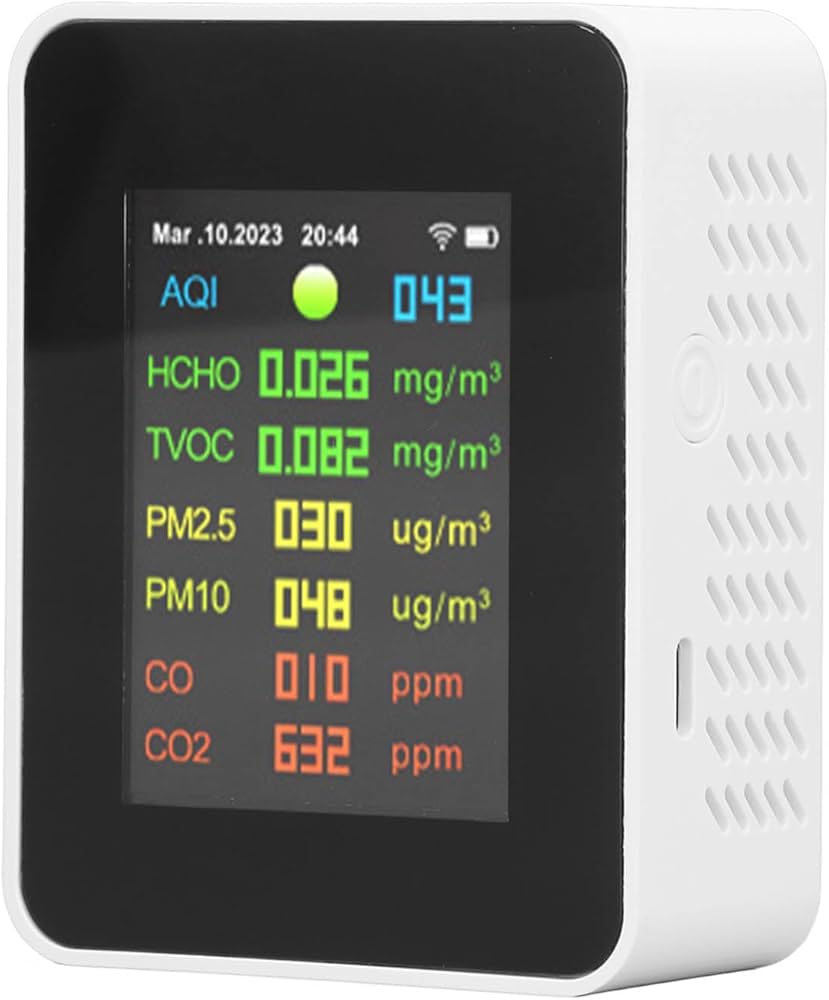
A real-time AQI display can make a smart air purifier feel almost magical. One minute the screen glows green. Then someone starts cooking, a candle burns nearby, the dog runs through the room, or outdoor smoke drifts in through a leaky window. Suddenly the number jumps, the fan speeds up, and your purifier looks like it knows exactly what is happening.
That number is useful. However, it is not always as simple as “low means safe” and “high means dangerous.” On many smart purifiers, the display is a sensor-based estimate of particles near the machine, not a complete lab-grade reading of every pollutant in your home.
Quick Answer: What Does a Real-Time AQI Number Mean?
A real-time AQI number is a simplified air-quality score that helps you understand whether the air around a sensor is relatively clean, moderate, or concerning. Official outdoor AQI systems use a standardized scale tied to pollutants such as ozone, particle pollution, carbon monoxide, sulfur dioxide, and nitrogen dioxide. Smart air purifiers usually focus more narrowly on indoor sensor readings, especially fine particles such as PM2.5.
In plain English, a low number usually means the sensor is seeing fewer particles. A rising number means the purifier has detected a change. A high number means it may be time to reduce the pollution source, increase filtration, improve ventilation when outdoor air is clean, or leave the purifier on a higher setting until the number settles.
The number is a shortcut
AQI turns complex pollution data into a simple reading. That makes it easier to act quickly, but it also hides details.
The sensor has limits
Most purifier displays are strongest at detecting particles. Some units also estimate VOCs, but not every pollutant is measured equally.
The trend matters most
A number jumping from 12 to 85 tells a story. The direction, speed, and recovery time often matter more than one isolated reading.
The AQI Scale: What the Colors and Numbers Mean
In the United States, the public AQI scale commonly runs from 0 to 500. The higher the number, the greater the level of health concern. AirNow groups the scale into color-coded categories so people can quickly understand the level of concern in their area. You can compare your local outdoor reading through AirNow’s AQI Basics.
| AQI Range | Category | What It Generally Means | How to Think About It Indoors |
|---|---|---|---|
| 0–50 | Good | Air quality is generally considered satisfactory. | Your purifier sensor is likely seeing low particle levels near the unit. |
| 51–100 | Moderate | Air quality is acceptable for many people, though unusually sensitive people may pay closer attention. | Watch the trend. Cooking, dust, pets, or outdoor air may be nudging levels upward. |
| 101–150 | Unhealthy for Sensitive Groups | People with greater sensitivity may need to reduce exposure. | Run the purifier more aggressively and look for the source of the spike. |
| 151–200 | Unhealthy | More people may begin to experience effects, especially during longer exposure. | Close pollution entry points, reduce indoor sources, and use high filtration where appropriate. |
| 201–300 | Very Unhealthy | Health alert conditions are more serious. | Treat the reading seriously, especially during wildfire smoke, heavy outdoor pollution, or strong indoor particle events. |
| 301+ | Hazardous | Emergency-level concern in outdoor AQI reporting. | A purifier display alone is not enough. Check official guidance, reduce exposure, and use appropriate emergency precautions. |
That scale is helpful, but here is where homeowners get tripped up: the AQI number on an outdoor app and the number on your purifier may not match. They may be measuring different air, different pollutants, different time windows, and different sensor locations.
Why Your Purifier AQI Display May Not Match Your Weather App
Your weather app may show the outdoor AQI for your city or neighborhood. Your smart air purifier may show what its onboard sensor is detecting in your living room, bedroom, kitchen, basement, or office. Those are not the same environments.
Official AQI reporting also uses established pollutant categories and averaging methods. Real-time AQI reporting can use approaches such as NowCast, which estimates current air quality from recent monitoring data. A purifier, by contrast, may be reacting to short-term changes right beside the machine. That can make it feel faster, but not always broader or more complete.
Example: Your outdoor AQI says 42, but your purifier says 118
This does not automatically mean one reading is wrong. It may mean the outdoor air is relatively clean, but your indoor air just changed. Common indoor triggers include frying food, burning candles, vacuuming, sanding, running a fireplace, opening a door during pollen season, or shaking out dusty fabric near the purifier.
This is why smart purifier displays are most useful when you watch the pattern. Did the number spike after cooking? Did it drop after the fan increased? Did it stay high after the source was removed? Those clues tell you whether the purifier is responding well or whether your room needs a better setup.
What Smart Purifiers Usually Measure
Most real-time purifier displays are built around sensors that detect particles in the air. Better smart purifiers often use laser particle sensors to estimate fine particulate matter, commonly shown as PM2.5. Some also include VOC sensors, humidity readings, temperature readings, or filter-life tracking.
| Reading | What It Tells You | What It May Miss | Practical Takeaway |
|---|---|---|---|
| PM2.5 | Fine particles from smoke, cooking, combustion, dust, and outdoor pollution. | Not every gas, odor, or chemical vapor. | Very useful for smoke, cooking particles, and many allergy-related particle events. |
| PM10 | Larger particles such as dust, pollen, and some debris. | Fine gases and many VOCs. | Helpful for dust-heavy homes, pets, and seasonal pollen tracking. |
| VOC estimate | Possible chemical vapor changes from cleaning products, paints, fragrances, or cooking. | Exact chemical identity and concentration. | Useful as a warning signal, but not the same as lab testing. |
| Filter life | Estimated remaining filter usefulness based on time, usage, airflow, or sensors. | Some models still rely heavily on timers. | Helpful, but you should still inspect filters and follow manufacturer guidance. |
| CO2, CO, radon, mold | Usually not measured by standard purifier AQI displays. | Major safety and building-health concerns. | Use proper dedicated detectors or professional evaluation when needed. |
For a deeper look at how connected purifiers use sensors and automation, read our internal guide: Smart Air Purifiers Guide: Automation, Sensors & Home Integration. You may also like our related breakdown, The Truth About AQI Sensors: How Smart Purifiers Track Your Air in Real Time.
The Most Important Rule: AQI Is Not the Same as “Everything Is Safe”
A low purifier reading can be reassuring, but it does not prove that your indoor air is free from every possible concern. A purifier display may not detect carbon monoxide, radon, hidden mold, excess moisture, or every gas released by cleaning products, paint, furniture, or smoke-damaged materials.
Use the number as one layer of awareness. Then pair it with common-sense source control, cleaner habits, proper ventilation when outdoor air is safe, and the right filtration for your room.
How to Read the Number Like a Smart Homeowner
The best way to use a real-time display is not to panic over every jump. Indoor air changes constantly. A smart purifier gives you a live window into those changes, but the goal is to notice patterns and respond intelligently.
Learn what your room looks like on a normal clean-air day. A bedroom might sit lower than a kitchen. A basement may behave differently from a living room.
Pay attention to what happened before the number jumped. Cooking, cleaning, pets, candles, outdoor smoke, and open windows are common triggers.
A good purifier setup should bring particle readings down over time. If the number stays elevated, the room may need stronger airflow, better placement, or source control.
If readings climb more often or recover slowly, your filter may be loaded, clogged, undersized, or past its useful life.
If your filter schedule is already a guessing game, our internal article Smart Filters That Track Their Own Lifespan: Are They Worth It? explains how filter tracking can reduce maintenance confusion. You can also compare connected and manual models in Smart Purifiers vs. Traditional Models: Is the Upgrade Worth It?.
Why the Number Spikes During Cooking
Cooking is one of the easiest ways to make a purifier display jump. Frying, searing, toasting, and high-heat cooking can release fine particles. If your purifier is close enough to detect the change, the display may rise quickly and the fan may shift into a higher mode.
This does not mean your purifier is malfunctioning. In many cases, it means the sensor is doing its job. The smarter question is how fast the number drops after the source stops. If it recovers quickly, your purifier placement and airflow may be working well. If it stays high, you may need stronger kitchen ventilation, a better room-size match, or a larger purifier for open-concept spaces.
For homes where cooking odors are a frequent concern, particle filtration alone may not be enough. Odors and gases often call for activated carbon or another gas-phase filtration method. Read more here: Smart Purifiers That Remove Cooking Odors in Minutes.
Why the Number Spikes During Wildfire Smoke or Outdoor Pollution
Outdoor pollution can move indoors through open windows, leaky doors, gaps, vents, attached garages, and normal air exchange. During wildfire smoke, heavy traffic pollution, or poor outdoor air days, your purifier may detect higher particle levels even when nothing unusual is happening inside.
This is where comparing readings helps. Check your purifier display, then compare it with your local outdoor AQI at AirNow.gov. If outdoor AQI is elevated and your indoor reading is rising too, close obvious entry points, run filtration continuously, and avoid bringing in more outdoor air until conditions improve.
EPA’s indoor-air guidance emphasizes that source control, ventilation, and filtration work together. However, ventilation should be used carefully when outdoor air itself is polluted. During smoke or high outdoor pollution events, filtration and reducing air leaks may matter more than opening windows.
Why Filter Condition Changes the Story
A purifier can only respond well if air can move through it properly. When the filter is clogged, airflow drops. When airflow drops, cleaning speed drops. That means your display may take longer to recover after a spike, even if the purifier motor is still running.
This is one reason smart filter alerts matter. They are not just convenience features. They help protect performance. A fresh, properly fitted filter can help the purifier move air as designed. An overdue filter can make even a strong purifier feel weak.
For replacement filter shopping, BestSmartPurifiers.com may reference partner-based filter sources when relevant. You can compare compatible replacement options through FiltersFast. For broader air-quality hardware and whole-home solutions, you can also explore FieldControls air solutions.
What a Smart Purifier Can Do Automatically
The real power of a real-time AQI display is not the display itself. It is what the purifier does with the information. In auto mode, many smart purifiers use sensor readings to adjust fan speed. When particles rise, the unit speeds up. When air improves, it slows down.
That matters because most people do not want to babysit a purifier all day. They want the machine to respond when the dog shakes off dust, when dinner hits the pan, when pollen comes in through the door, or when traffic pollution creeps in during rush hour.
Some newer models also use app trends, schedules, and machine-learning-style prediction to prepare for repeat patterns. For a deeper explanation, read How Air Purifiers Use Machine Learning to Predict Pollution Spikes.
What the Number Does Not Tell You
A purifier AQI number can be helpful, but it is not a full indoor environmental report. It does not tell you everything about your air, your building, or your health risk. This is especially important for families with asthma, heart conditions, respiratory sensitivity, infants, older adults, or anyone who has been advised to manage air exposure carefully.
| Hidden Issue | Why AQI May Not Catch It | What to Use Instead |
|---|---|---|
| Carbon monoxide | Standard purifier displays are not CO alarms. | Install certified carbon monoxide detectors where required and recommended. |
| Radon | Radon is not measured by typical purifier particle sensors. | Use a radon test kit or professional radon testing. |
| Excess humidity | A particle reading may look normal while moisture problems continue. | Use a humidity monitor and address moisture sources. |
| Hidden mold growth | Airborne particles may vary, but the source can remain hidden. | Fix moisture, inspect affected areas, and seek professional help when needed. |
| Chemical gases | Some VOC sensors are broad estimates, not chemical-specific lab tools. | Reduce sources, ventilate when appropriate, and choose filtration designed for gases when needed. |
For a wider look at common household pollutants, read Top 10 Air Pollutants in Your Home. For official indoor-air guidance, EPA’s Guide to Air Cleaners in the Home is a helpful starting point.
BestSmartPurifiers Takeaway
A real-time AQI display is most valuable when it helps you change behavior. It can tell you when cooking is creating particles, when outdoor pollution is leaking in, when your purifier is recovering slowly, or when a filter may deserve attention.
But the number is not the whole story. The smartest approach is to combine sensor awareness with source control, proper filter replacement, room-size matching, and trusted outdoor AQI guidance.
Simple Home Routine: What to Do When the AQI Number Rises
When your purifier display climbs, use a simple three-step response instead of guessing.
Did someone cook, clean, vacuum, light a candle, open a window, run a fireplace, or bring in dusty items?
Stop the activity when possible, use a range hood, close windows during poor outdoor air, or remove the pollution source.
Let the purifier run on a stronger setting until the number drops and stays stable.
If recovery is slow, inspect the filter and confirm the purifier is correctly sized and placed.
Important: If you smell gas, suspect carbon monoxide, experience serious symptoms, or face emergency outdoor pollution conditions, do not rely on a purifier display alone. Follow official safety guidance and use dedicated safety detectors where appropriate.
Final Verdict: The Number Is Useful, but the Trend Is Smarter
Real-time AQI displays are one of the best features in modern smart air purifiers because they turn invisible air changes into something you can actually see. They help you notice patterns, compare rooms, respond to spikes, and understand whether your purifier is doing meaningful work.
Still, the number should be treated as a guide, not a guarantee. The most useful question is not simply, “What does the display say right now?” The better question is, “What caused the number to change, and how quickly does my home recover?”
When you read the display that way, your smart purifier becomes more than another connected gadget. It becomes a practical clean-air feedback system for everyday life.