Low-energy smart purifiers are gaining attention because homeowners want cleaner indoor air without running another power-hungry device all day. The new buying question is no longer just, “Does it clean the air?” It is also, “How efficiently does it clean the air while fitting into the way my home actually works?”
For years, air purifiers were sold mostly on one promise: cleaner air. That still matters. But the home environment has changed. Families are watching utility bills more closely. Smart homes are becoming more common. Wildfire smoke, seasonal allergies, cooking odors, pet dander, dust, and indoor pollutants have pushed air quality into everyday conversation.
That is why low-energy smart purifiers are having a moment. They sit at the intersection of health, comfort, sustainability, and practical budgeting. A purifier that runs quietly in the background, adjusts itself when the air changes, and avoids wasting energy when the room is already clean feels different from the older “turn it on and hope for the best” machines.
The eco-shift is not about buying the fanciest purifier on the shelf. It is about choosing a cleaner-air system that can do its job without becoming another hidden drain on the home.
Quick Knowledge Check: Are You Buying for Clean Air or Just Buying a Box With a Fan?
Before you compare models, test what you already know. These questions help separate useful purifier features from marketing noise.
- Do you know the square footage of the room where the purifier will run most often?
- Have you checked the purifier’s CADR rating, not just its advertised “coverage area”?
- Do you know whether the unit has an automatic mode that responds to real air-quality changes?
- Have you compared filter replacement cost along with the purchase price?
- Does the purifier clean particles, odors, or both?
If you answered “not sure” more than once, you are not alone. Most buyers start with brand names and room-size claims. Smarter buying starts with airflow, efficiency, filters, and maintenance.
Why Energy Use Suddenly Matters More
An air purifier is not like a toaster or coffee maker that runs for a few minutes and shuts off. Many people run purifiers for long stretches, especially during allergy season, wildfire smoke events, cold and flu season, or when pets are in the home. That makes energy efficiency more than a nice bonus.
Even a modest difference in wattage can matter over time. A purifier that runs 12 to 24 hours a day becomes part of the home’s baseline energy load. If it is oversized, poorly matched to the room, or left on high when the air is already stable, it can waste power without giving you a better result.
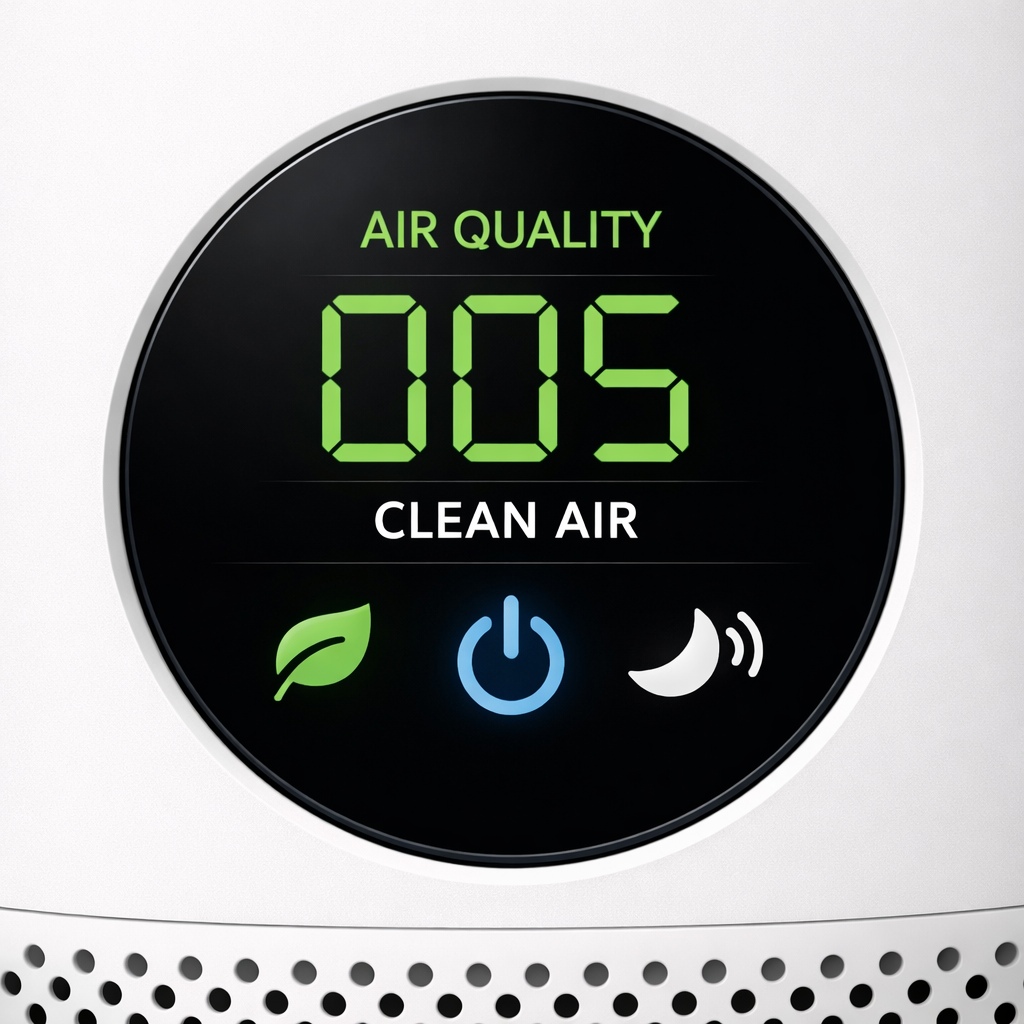
This is where newer smart purifiers have an advantage. Instead of forcing you to guess the right fan speed all day, many use particle sensors, auto modes, timers, scheduling, sleep modes, and app-based controls to match cleaning power to real conditions. That does not guarantee savings in every home, but it gives the purifier a better chance of running with purpose instead of running blindly.
ENERGY STAR also now plays a bigger role in this conversation. ENERGY STAR states that certified room air cleaners are more than 50% more energy-efficient than standard models, with estimated annual energy savings depending on unit size and use. For shoppers, that makes the ENERGY STAR label a useful starting filter when comparing efficient air cleaners.
The New Eco-Friendly Air Purifier Buyer
The low-energy purifier trend is not only about environmental concern. It is about a more practical kind of eco-awareness. People want cleaner air, but they also want less waste, quieter operation, fewer unnecessary filter changes, and devices that fit smoothly into daily life.
That buyer may be a parent trying to reduce dust and allergens in a child’s bedroom. It may be a remote worker trying to keep a home office fresh without listening to a loud fan all day. It may be a pet owner dealing with dander and odor. It may be someone who already owns smart thermostats, smart plugs, energy monitors, or connected lighting and now expects air quality to join the same ecosystem.
In other words, smart purifiers are no longer seen only as allergy gadgets. They are becoming part of the modern home’s comfort system. The best low-energy models support that shift by cleaning efficiently, communicating clearly, and helping the user avoid waste.
Health-aware
Buyers want help with dust, pollen, smoke particles, pet dander, and everyday indoor air concerns.
Budget-aware
Energy use, filter cost, and long-term maintenance now matter almost as much as the sticker price.
Home-aware
Smart controls, schedules, sensors, and quiet modes make purifiers easier to live with every day.
What Makes a Smart Purifier “Low-Energy”?
A low-energy smart purifier is not simply a small purifier. In fact, choosing a weak purifier for a large room can backfire because it may need to run harder for longer. The better question is how much clean air the purifier delivers for the energy it uses.
That is why CADR-per-watt matters. CADR stands for Clean Air Delivery Rate. It helps describe how quickly a purifier can deliver filtered air for specific particles such as smoke, dust, or pollen. When you pair CADR with wattage, you get a clearer picture of efficiency.
A strong low-energy purifier usually has several things working together: an efficient fan motor, a well-designed airflow path, properly sealed filters, useful sensors, and controls that prevent unnecessary runtime. The smartest models do not simply run less. They run better.
| Feature | Why It Matters | What to Watch For |
|---|---|---|
| ENERGY STAR certification | Helps identify models designed for better energy efficiency. | Compare certified models by room size, CADR, and annual energy use. |
| CADR rating | Shows how much clean air the purifier can deliver. | Match CADR to the room instead of trusting vague coverage claims. |
| Auto mode | Lets the purifier raise or lower fan speed based on detected particles. | Sensor quality varies. Auto mode should respond quickly and sensibly. |
| Sleep mode | Reduces noise and power draw overnight. | Make sure it still provides enough airflow for the room. |
| Filter life tracking | Helps avoid replacing filters too early or too late. | Look for usage-based reminders when possible, not only calendar reminders. |
| App scheduling | Can reduce wasted runtime when rooms are empty. | Scheduling should be simple enough that you actually use it. |
The CADR Trap: Why Bigger Is Not Always Greener
One of the biggest mistakes in air purifier shopping is assuming that the biggest advertised coverage number is automatically the best choice. A large purifier can be a smart buy for an open living space, but it may be unnecessary for a small bedroom. A tiny purifier can be efficient on paper, but it may struggle in a large room and end up running on high too often.
AHAM’s widely used sizing guidance recommends choosing a smoke CADR equal to at least two-thirds of the room’s square footage. For example, a 150-square-foot bedroom would generally call for a smoke CADR of at least 100. For wildfire smoke, AHAM recommends a higher smoke CADR equal to the room’s square footage.
This matters because the greenest purifier is not always the one with the lowest wattage. It is the one that is properly matched to the job. A well-sized unit can clean effectively at moderate speeds. A poorly sized one may either waste energy or fail to clean the room well enough.
Why Smart Sensors Are Driving the Eco-Shift
Smart sensors are one of the biggest reasons low-energy purifiers feel different from older models. A basic purifier waits for you to change the fan speed. A smart purifier can detect a rise in particles and respond.
That matters during real life. Cooking can spike particles. Outdoor smoke can slip indoors. Vacuuming can stir up dust. A pet running across the room can change the air faster than you expect. A good auto mode can increase airflow when needed, then settle back down when the room improves.
This is where energy savings may happen. The purifier does not need to stay on high all day just because the air was bad for 30 minutes. It can work harder during a spike and then return to a quieter, lower-power mode.
Still, sensors are not magic. Some consumer purifier sensors are better at detecting particles than gases or odors. Many odor problems need activated carbon, not just a particle sensor. That is why smart features should support good filtration, not replace it.
The Filter Side of Sustainability
Energy use gets most of the attention, but filters are part of the eco-shift too. A purifier with expensive, hard-to-find, or frequently replaced filters may cost more over time and create more waste than buyers expect.
Good maintenance also protects performance. A clogged pre-filter or overdue main filter can reduce airflow, strain the fan, and make the purifier work harder to move the same amount of air. That can hurt both cleaning performance and energy efficiency.
The best approach is simple: choose a purifier with a clear filter replacement path before you buy. Check the replacement filter cost. Look for washable pre-filters when available. Confirm that the filter type matches your main problem, whether that is dust, pollen, pet dander, smoke particles, or odors.
Filter Maintenance That Supports Cleaner Air
For particle pollution, a high-quality mechanical filter is usually the core of the system. For odors and gases, activated carbon becomes more important. For homes with HVAC-based filtration, whole-home filter upgrades may also help when matched correctly to the system.
If you are comparing replacement filters or HVAC filtration options, you can browse options through FiltersFast. For readers interested in whole-home indoor air quality support, HVAC accessories, or ventilation-related solutions, FieldControls is also worth reviewing. Always confirm compatibility with your purifier model, furnace, or HVAC system before ordering.
Why Low-Energy Purifiers Fit the Smart Home Movement
Smart home devices used to feel separate. A thermostat controlled temperature. A smart plug controlled power. A speaker answered questions. A purifier cleaned the air. Now the better systems are starting to feel connected around one larger goal: a healthier, more efficient home.
A low-energy smart purifier fits that movement because it can respond to the home instead of operating in isolation. It can run on a schedule. It can shift to quiet mode at night. It can send filter reminders. Some connected models can work with app routines or voice assistants. Others can be paired with smart plugs or energy monitors for better visibility.
The future is not just “a purifier with Wi-Fi.” The future is air cleaning that responds to occupancy, outdoor conditions, indoor particle levels, and energy goals. That is the eco-shift in plain English: cleaner air with less guessing.
| Old Buying Question | Smarter 2026 Question |
|---|---|
| How big is the purifier? | Is the CADR right for my room? |
| Does it have Wi-Fi? | Do the smart features actually reduce waste and improve control? |
| Is it quiet? | Is it quiet at the fan speed needed to clean my room? |
| Is the filter HEPA? | Does the filter system match my real problem: particles, odors, smoke, pets, or dust? |
| Is it cheap? | What is the total cost after energy use and replacement filters? |
Low-Energy Does Not Mean Low-Performance
One concern buyers often have is that energy-saving means weaker cleaning. That can happen with underpowered models, but it is not the goal of a well-designed efficient purifier.
A strong low-energy purifier should deliver useful clean air without wasting power. Think of it like a fuel-efficient car. The goal is not to avoid movement. The goal is to move efficiently. In purifier terms, that means strong airflow, low resistance, smart fan control, and good filter design.
This is why you should avoid judging a purifier by watts alone. A 25-watt purifier that barely moves air may not be better than a 45-watt purifier that cleans the room quickly and then drops into a lower mode. Efficiency is about output per unit of energy, not just the lowest number on the box.
Where Low-Energy Smart Purifiers Make the Most Sense
Low-energy smart purifiers are especially useful in rooms where clean air matters and runtime is high. Bedrooms are a perfect example. A purifier may run every night for sleep comfort, allergies, pet dander, or general dust control. Quiet operation and low energy use both matter there.
Home offices are another strong fit. Many people spend hours in one room with closed windows, electronics, dust, and inconsistent ventilation. A smart purifier can keep the air moving without becoming a noisy distraction.
Nurseries, kids’ rooms, family rooms, and pet areas can also benefit from efficient continuous cleaning. The key is matching the unit to the room and using the right mode. Running a purifier on high all day in a small room is not automatically better. Letting a properly sized unit run steadily at a moderate speed may be more comfortable and efficient.
Bedrooms
Look for quiet sleep modes, low light pollution, solid CADR, and affordable replacement filters.
Home Offices
Look for app scheduling, auto mode, low noise, and enough airflow for closed-door work sessions.
Family Spaces
Look for higher CADR, washable pre-filters, odor support, and simple maintenance reminders.
The SmartAirPurifiers Low-Energy Buying Checklist
Use this checklist before you buy a low-energy smart purifier. It will help you avoid overpaying for flashy features while still choosing a unit that can do the job.
| Checklist Item | Why It Matters |
|---|---|
| Measure the room first. | Room size determines how much clean air you need. |
| Check smoke CADR. | Smoke CADR is especially useful for fine particles and general sizing. |
| Look for ENERGY STAR certification. | It gives you a stronger starting point for energy efficiency. |
| Compare annual energy use. | Some certified models list estimated kWh per year, which helps long-term planning. |
| Review filter replacement cost. | A cheap purifier can become expensive if filters are costly or hard to find. |
| Check noise at normal speeds. | A quiet low setting is not enough if the room needs medium speed to clean well. |
| Confirm odor support if needed. | Odors usually require activated carbon, not only a particle filter. |
| Avoid ozone-producing gimmicks. | For most homes, mechanical filtration is the safer, simpler starting point. |
The Mistake That Wastes the Most Energy
The most common energy mistake is using the wrong purifier in the wrong room. A small unit in a big room may run hard and still underperform. A huge unit in a small room may cost more than necessary. A purifier with poor filter maintenance may lose airflow and become less effective over time.
The second mistake is ignoring auto mode and scheduling. If your purifier has smart controls, use them. Set schedules around sleep, work, cooking, cleaning, or known allergy triggers. Let the purifier work harder when the room needs it, then settle down when it does not.
The third mistake is treating a purifier as the only indoor air solution. EPA guidance is clear that portable air cleaners and HVAC filters can help reduce indoor air pollution, but they do not remove every pollutant or fix the source of a problem. Source control, ventilation when outdoor air is clean, moisture control, and proper cleaning habits still matter.
Cleaner Air Should Not Feel Wasteful
The best low-energy smart purifier is not the one with the longest feature list. It is the one that fits your room, runs efficiently, uses filters you can actually maintain, and helps your home feel cleaner without wasting power.
Internal Reading Suggestions
To build a stronger indoor air strategy, continue with these related SmartAirPurifiers.com guides:
FAQs About Low-Energy Smart Purifiers
Are low-energy smart purifiers powerful enough?
They can be, but only if they are properly sized. Do not judge by wattage alone. Compare CADR, room size, noise, filter design, and efficiency. A well-sized efficient purifier can outperform an underpowered “energy-saving” unit that has to run on high constantly.
Does auto mode really save energy?
Auto mode can reduce unnecessary high-speed runtime by lowering the fan when particle levels drop. Actual savings depend on the purifier, sensor accuracy, room conditions, and how often the air quality changes.
Should I leave my purifier on all day?
Many people do during allergy season, smoke events, or in rooms where they spend a lot of time. The smarter approach is to use the right fan speed, schedule, or auto mode for the room instead of running every unit on high all day.
What matters more: HEPA or energy efficiency?
Both matter. A strong filter helps capture particles, while energy efficiency helps control long-term operating cost. The best choice balances filtration, CADR, wattage, filter replacement cost, and room size.
Can a smart purifier fix mold, moisture, or musty smells?
No purifier fixes the source of a moisture problem. A purifier may reduce some airborne particles and some odors, but mold and musty smells require moisture control, cleanup, and prevention.
Final Takeaway
The eco-shift in air purification is not a passing trend. It reflects a smarter kind of buying. People want cleaner indoor air, but they also want lower energy waste, better filter planning, quieter operation, and devices that respond to real life.
Low-energy smart purifiers are surging because they make that promise feel possible. They can clean when the air changes, quiet down when the room stabilizes, remind you when maintenance matters, and fit into a home that is already becoming more connected and efficiency-minded.
Start with the room. Check CADR. Look for efficient performance. Plan for filter cost. Then choose the purifier that gives you cleaner air without making your home work harder than it needs to.
Helpful Authority Sources
For deeper research before buying, review these official and industry resources: