A nursery humidifier can be a comfort tool when indoor air gets dry. It may help soften dry air, support a more comfortable sleep space, and ease common dry-air annoyances such as dry skin, scratchy throats, and stuffy-feeling air.
But the best humidifier for a nursery is not just the cutest one. It should be cool mist, easy to clean, safely placed, quiet enough for sleep, and used with a humidity gauge so the room does not become damp. For many families, the Crane Adorable Ultrasonic Cool Mist Humidifier is a nursery-friendly option worth considering because it blends child-friendly design with practical features.
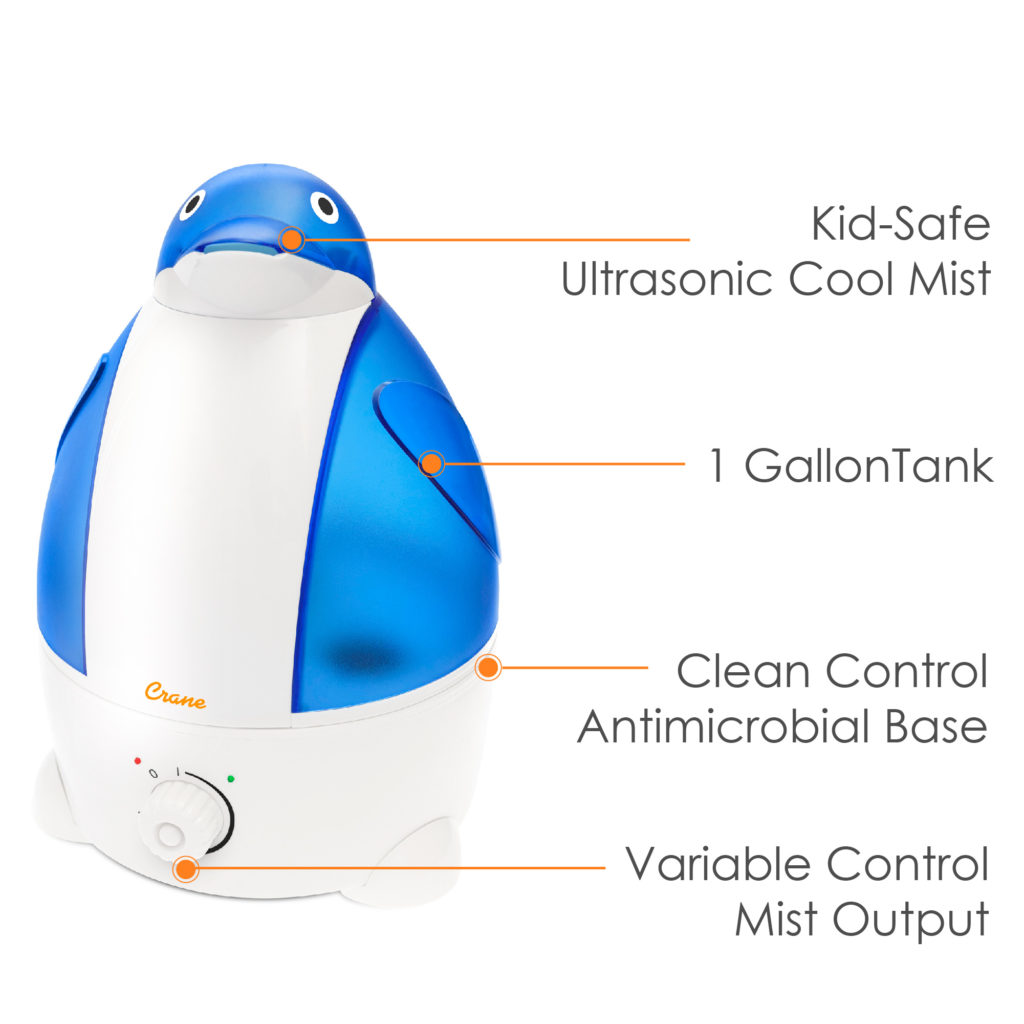
What is the best humidifier for a nursery?
The best nursery humidifier is usually a cool-mist humidifier that is quiet, easy to clean, properly sized for the room, stable on a safe surface, and simple enough for tired parents to maintain. Warm-mist or steam units are generally less attractive for nurseries because hot water and steam can create burn risks.
The Crane Adorable Ultrasonic Cool Mist Humidifier stands out because it is designed for children’s spaces, uses a playful animal shape, runs quietly, has adjustable mist output, includes an automatic shut-off feature, and uses a 1-gallon tank. It is not perfect for every family, but it is a strong fit for parents who want nursery comfort without a complicated control panel.
Nursery humidity knowledge check
Before buying a humidifier for a baby’s room, ask yourself these safety-first questions.
- Do you have a humidity gauge for the nursery?
- Can you clean the tank and water-contact parts often enough?
- Will you use distilled water if your tap water leaves white dust?
- Can the humidifier and cord be placed fully out of your child’s reach?
- Will the mist avoid crib bedding, walls, carpet, curtains, and furniture?
Why parents use humidifiers in nurseries
Winter heating, dry climates, and tightly sealed homes can make indoor air feel dry. When nursery air is too dry, some babies and children may seem more uncomfortable because dry air can irritate noses, throats, lips, and skin.
A humidifier adds moisture back into the air. Used carefully, it can make the room feel more comfortable during dry seasons. However, more moisture is not always better. Too much humidity can encourage mold, dust mites, and damp surfaces.
Our nursery pick: Crane Adorable Ultrasonic Cool Mist Humidifier
The Crane Adorable line is popular because it does not look like a plain appliance. The Penguin model, often listed as EE-0865, is shaped for a child’s room while still offering features parents actually need.
Cool mist avoids the burn concerns tied to hot steam and boiling water.
The penguin design feels more natural in a nursery or child’s bedroom than a medical-looking unit.
A nursery humidifier should not become the loudest object in the room. Quiet mist output is a major advantage.
Variable output helps parents lower the mist when the room approaches the desired humidity range.
The unit shuts off when the tank runs out, which is helpful for overnight use.
It can run without a filter, while an optional demineralization filter may help in homes with mineral-heavy water.
Crane Adorable nursery humidifier: feature breakdown
| Feature | Why it matters in a nursery | BestSmartPurifiers note |
|---|---|---|
| Cool mist | Helps avoid steam and hot-water burn risks | Cool mist is generally the safer nursery direction. |
| 1-gallon tank | Supports longer use between refills | Empty and refresh water regularly instead of letting it sit. |
| Up to 24-hour runtime | May support overnight operation on lower settings | Runtime depends on mist setting and room conditions. |
| Up to 500 sq. ft. coverage claim | Can handle many nursery or child-room sizes | Use a hygrometer to avoid over-humidifying smaller rooms. |
| 360-degree mist lid | Helps direct mist away from crib, walls, and furniture | Never aim mist directly at a baby, bedding, or soft surfaces. |
| Filter-free design | Reduces recurring filter cost | Distilled water may reduce mineral dust and buildup. |
| Optional demineralization filter | May help in hard-water homes | Still follow cleaning and water-quality guidance. |
| Auto shut-off | Turns unit off when the tank is empty | Useful, but not a replacement for safe placement and cleaning. |
Why cool mist matters in a baby’s room
Nurseries are different from adult bedrooms. Babies become mobile quickly. Toddlers pull cords, touch objects, climb, and explore. That makes hot steam, hot water, and unstable placement bigger concerns.
A cool-mist humidifier avoids the steam-burn issue. That does not mean it is maintenance-free. Ultrasonic humidifiers can mist minerals, bacteria, or mold if the tank is dirty or the water is mineral-heavy. That is why cleaning and water choice matter so much.
The humidity target parents should know
Comfortable nursery humidity usually sits in the same practical range recommended for homes: roughly 30% to 50% relative humidity. Below that, air may feel dry. Above that, moisture can start encouraging mold, dust mites, and damp materials.
The easiest way to manage this is to buy a small hygrometer. Place it in the nursery away from direct mist. Check it during use, especially at night and during winter heating season.
Where to place a nursery humidifier
Placement can make or break nursery humidifier safety. The unit needs open airflow, a stable surface, and enough distance from the crib so the mist does not dampen bedding or blow directly toward the baby.
Place the humidifier on a flat, waterproof surface that cannot be easily tipped.
Cords should never hang near the crib, changing table, or child-accessible furniture.
Point mist away from the crib, mattress, curtains, stuffed animals, walls, and carpet.
If bedding, carpet, or curtains feel damp, the output is too high or the unit is too close.
You should be able to refill, empty, and clean it easily without awkward handling.
A humidifier needs space for mist to disperse rather than collect on nearby surfaces.
Cleaning matters more than most parents expect
A humidifier adds water to indoor air. That is helpful only when the water path stays clean. A neglected humidifier can become a source of bacteria, mold, minerals, and unpleasant odors.
For nursery use, daily habits matter. Empty old water. Let parts dry when not in use. Clean according to the manufacturer’s instructions. If the manufacturer gives no specific disinfecting guidance, EPA notes that water-contact surfaces can be cleaned with a 3% hydrogen peroxide solution, followed by thorough rinsing so cleaning chemicals are not dispersed into the air.
| Maintenance step | How often | Why it matters |
|---|---|---|
| Empty leftover water | Daily when used | Prevents old water from sitting in the tank. |
| Rinse and dry tank | Daily or per manual | Helps reduce buildup and stale water odors. |
| Deep clean water-contact surfaces | Every few days or per manual | Helps control bacteria, mold, and mineral buildup. |
| Use distilled water if possible | Each refill | Reduces mineral dust and scale in ultrasonic units. |
| Inspect for slime, odor, or buildup | Before use | Do not run a unit that looks or smells dirty. |
| Dry fully before storage | End of season | Prevents trapped moisture from turning into mold or odor. |
Distilled water vs. tap water in a nursery humidifier
Tap water often contains minerals. In ultrasonic humidifiers, those minerals can become fine white dust that settles around the room. That dust is not something most parents want floating through a nursery.
Using distilled water can reduce mineral buildup and white dust. It may also make cleaning easier over time. If distilled water is not practical every night, watch for white dust, scale, cloudy residue, or reduced mist output. Those are signs that water quality and cleaning need attention.
Hard water tip
If your home has hard water, consider distilled water and check whether the manufacturer offers a compatible demineralization cartridge or filter. Always confirm model compatibility before ordering accessories.
What we like about the Crane Adorable Humidifier
The Crane Adorable Penguin model works well as a nursery recommendation because it balances design and simplicity. Parents do not always need a complicated humidifier with app controls, a large display, or advanced programming. In a nursery, simple can be a strength.
The penguin design blends into a child’s room better than a plain utility-style humidifier.
Low operating noise matters when a child is sleeping.
Parents can reduce output when the room is already near the ideal humidity range.
This adds convenience when the tank runs empty.
Fewer routine filter purchases can lower ongoing cost, though water quality still matters.
For tired parents, straightforward controls can be more useful than advanced features.
What to consider before buying it
No nursery humidifier is perfect. The Crane Adorable is cute, practical, and parent-friendly, but it still requires regular cleaning and humidity monitoring. Its filter-free design can be convenient, but if you use mineral-heavy tap water, you may see white dust or buildup.
| Possible drawback | Why it matters | How to handle it |
|---|---|---|
| White dust from hard water | Ultrasonic mist can carry minerals into the room | Use distilled water or a compatible demineralization filter. |
| Cleaning commitment | Nursery humidifiers need consistent hygiene | Empty, rinse, dry, and clean on a schedule. |
| No built-in humidity display | You may not know the room humidity | Use a separate hygrometer. |
| Can over-humidify small rooms | Too much moisture encourages mold and dust mites | Turn down output and stop if surfaces get damp. |
| Child curiosity | The cute design may attract toddlers | Place it fully out of reach with the cord secured. |
Nursery humidifier buying guide
If you are comparing the Crane Adorable model with other nursery humidifiers, focus on safety and upkeep before design. A cute humidifier that is hard to clean is not a good nursery choice.
Cool mist avoids hot steam and boiling-water burn risks.
Wide openings, removable parts, and simple tank design make cleaning easier.
A humidity gauge helps prevent over-humidifying the nursery.
Distilled water can reduce mineral dust in ultrasonic humidifiers.
Automatic shut-off adds convenience when the tank runs dry.
Essential oils and fragrances are not ideal for most baby rooms unless your pediatrician says otherwise.
Humidifier vs. air purifier in a nursery
A humidifier and an air purifier do different jobs. A humidifier adds moisture to dry air. An air purifier removes airborne particles by pulling air through filters.
If the nursery air is dry, a humidifier may help comfort. If the nursery has dust, pollen, pet dander, smoke particles, or other airborne particles, a properly sized air purifier with HEPA-style filtration may be more relevant. Some families may benefit from both, but they should not be placed so close together that mist blows directly into the purifier intake.
| Nursery concern | Humidifier helps? | Air purifier helps? | Best first step |
|---|---|---|---|
| Dry air | Yes | No direct moisture benefit | Use a cool-mist humidifier with a hygrometer. |
| Dust | No | Yes | Use HEPA-style filtration and clean surfaces. |
| Pet dander | No | Yes | Use filtration, cleaning, grooming, and washable fabrics. |
| Dry skin comfort | May help when air is dry | No direct moisture benefit | Track humidity and talk to your pediatrician if irritation persists. |
| Mold risk | Can worsen if overused | May capture some airborne particles only | Control moisture first. |
| Smoke particles | No | Yes | Source control and HEPA-style filtration matter most. |
For the filtration side of nursery air, read our guide to understanding HEPA filters.
Who should consider the Crane Adorable Penguin humidifier?
This humidifier makes the most sense for parents and caregivers who want a simple, quiet, child-friendly cool-mist humidifier for dry nursery air. It is especially appealing if design matters and you want the unit to feel like part of the room instead of a medical appliance.
Parents who want a cute, quiet, cool-mist humidifier for seasonal dry air comfort.
You are willing to clean it regularly and use a humidity gauge.
You want built-in smart controls, a built-in humidity display, or no cleaning commitment.
FAQs about nursery humidifiers
Is a humidifier good for a nursery?
A humidifier can help when nursery air is dry, especially during winter heating season or in dry climates. It should be used with a humidity gauge, cleaned often, and placed safely away from the crib and child’s reach.
Should I choose cool mist or warm mist for a baby’s room?
Cool mist is generally preferred for nurseries because it avoids hot water and steam burn risks. Warm-mist units may be less suitable around babies and toddlers.
What humidity level is best for a nursery?
A practical home target is usually between 30% and 50% relative humidity. Avoid going above 50%, and stop or reduce use if you notice condensation or damp surfaces.
Can a nursery humidifier grow mold?
Yes, if it is not cleaned properly or if the room becomes too humid. Empty old water, clean the unit often, dry it between uses when possible, and do not let nearby surfaces become damp.
Should I use distilled water in an ultrasonic humidifier?
Distilled water is often a better choice for ultrasonic humidifiers because it can reduce mineral dust and scale buildup. This is especially helpful in hard-water areas.
Can I put essential oils in a nursery humidifier?
Do not add essential oils, vapor rub, fragrance, or medicine unless the manufacturer and your pediatrician specifically say it is safe. Many humidifiers are not designed for oils, and baby-room air should stay simple.
How close should a humidifier be to the crib?
It should be far enough away that mist does not blow directly on the baby, crib, bedding, curtains, carpet, walls, or furniture. Keep the unit and cord fully out of reach.
Does a humidifier replace an air purifier?
No. A humidifier adds moisture. An air purifier filters airborne particles. They solve different problems and can sometimes be used together with careful placement.
Helpful external resources
For readers who want to verify nursery humidifier safety and indoor humidity guidance, these resources are useful starting points:
HealthyChildren.org: Make Baby’s Room Safe
EPA: Use and Care of Home Humidifiers
EPA: Care for Your Air
Crane USA: Adorable Penguin Cool Mist Humidifier
Children’s Hospital Colorado: Humidifier Safety
Final verdict: is the Crane Adorable the best humidifier for the nursery?
For many families, the Crane Adorable Ultrasonic Cool Mist Humidifier is a strong nursery pick because it checks the boxes that matter most: cool mist, quiet operation, child-friendly design, adjustable output, automatic shut-off, and simple everyday use.
Its biggest requirement is responsible maintenance. Use a humidity gauge. Avoid over-humidifying. Keep the unit and cord out of reach. Clean it often. Use distilled water when mineral dust is a concern. Do those things, and this little penguin becomes more than cute nursery decor; it becomes a practical dry-air comfort tool.
Ready to compare nursery comfort options?
Start with safety, cleaning, and humidity control. Then choose the humidifier that fits your nursery, your routine, and your comfort goals.
This review covers all the essential aspects of the Crane Adorable Ultrasonic Cool Mist Humidifier, but I have a couple of questions: How does the humidifier perform in particularly dry climates or during winter months when the air is exceptionally dry? Also, regarding the maintenance, is there a recommended frequency for replacing the optional filter if used?
The comparison with other models is insightful! I’d love to hear more about how the 360-degree mist lid performs in larger rooms—does it evenly distribute the mist, or are there limitations in coverage at the edges of its range? Overall, this is a great discussion about a product that combines functionality with aesthetic appeal, especially for families with young children!
Hello Herman! Answers to Your Questions about the Crane Adorable Ultrasonic Cool Mist Humidifier
1. Performance in Dry Climates or Winter Months : The Crane Adorable Ultrasonic Cool Mist Humidifier is perfect for tackling dry air, whether you’re in a dry climate or dealing with chilly winter months. It helps keep the humidity just right in medium-sized rooms, which means you can say goodbye to issues like dry skin, irritated sinuses, and pesky respiratory discomfort!
2. Filter Replacement Frequency : Good news! This humidifier doesn’t need a filter to work. Still, if you decide to use the optional demineralization filter, it’s best to change it out every 1-2 months, depending on your water’s hardness and how often you use it. Also, don’t forget to give the humidifier a little TLC with regular cleaning to keep it running smoothly and avoid any mineral buildup.
3. 360-Degree Mist Lid in Larger Rooms The 360-degree mist lid does a great job of spreading mist evenly in medium-sized rooms (up to about 500 square feet). If you have a larger space, you might notice that the mist doesn’t quite reach every corner, especially in rooms with high ceilings or less airflow. To get the best results, try placing the humidifier in the center of the room or consider using a couple of units if needed.
If you have more questions or need anything else, just let me know—I’m here to help!