HEPA filters are one of the most trusted tools in home air purification because they are built to capture tiny airborne particles. Dust, pollen, pet dander, smoke particles, mold-related particles, and many fine pollutants can all become easier to manage when the right HEPA-equipped purifier is sized correctly for the room.
But HEPA is not magic. It is excellent for particles, not every air-quality problem. Odors, gases, VOCs, carbon monoxide, and radon require different solutions. The smartest cleaner-air setup starts by understanding what HEPA does well, what it does not do, and when it should be paired with activated carbon or other safety steps.
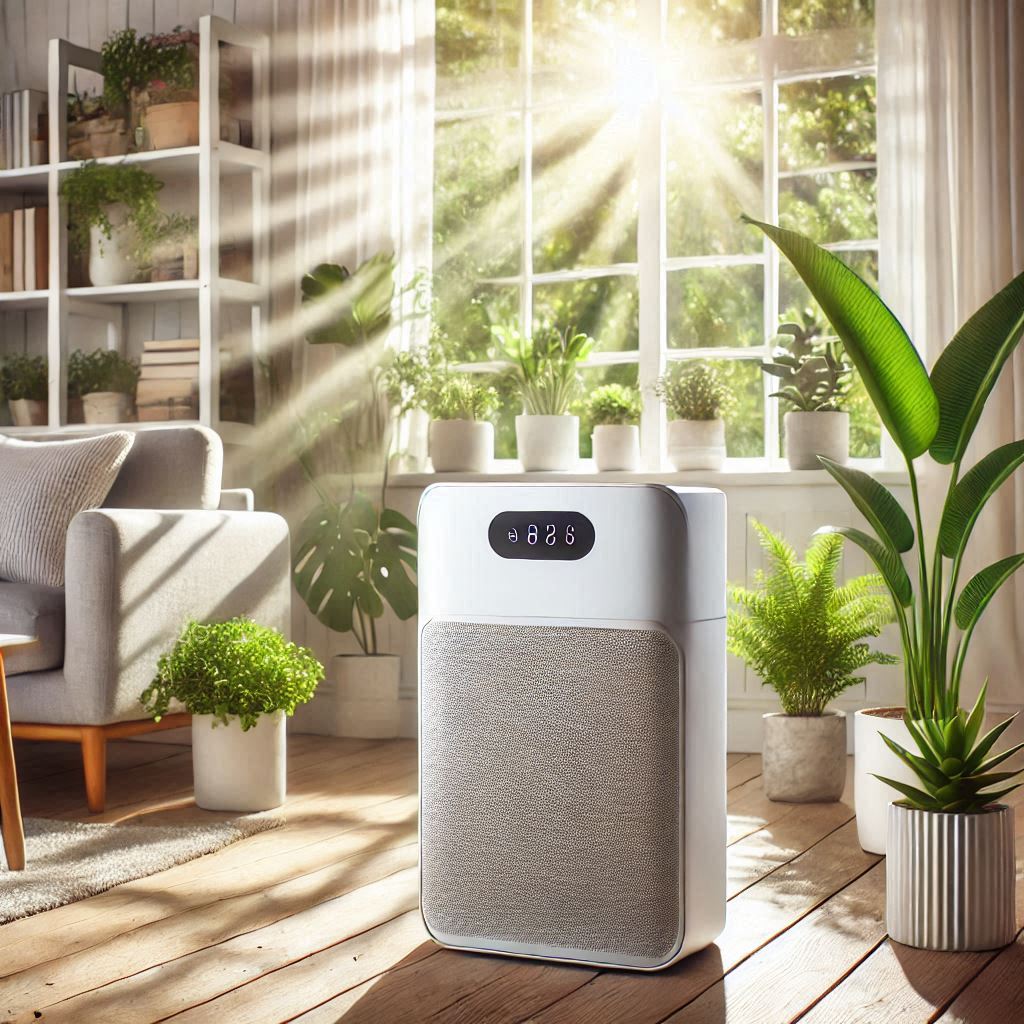
What is a HEPA filter?
HEPA stands for high-efficiency particulate air. A HEPA filter is a pleated mechanical air filter designed to capture airborne particles as air passes through dense layers of fine fibers.
In simple terms, HEPA filters are particle filters. They are especially useful for common indoor air concerns such as dust, pollen, pet dander, smoke particles, and fine airborne debris. They are not designed to remove most gases or odors by themselves.
HEPA filter knowledge check
Before choosing an air purifier, test what you already know about HEPA filtration.
- Does HEPA mainly remove particles or gases?
- Can a HEPA filter remove cooking odors by itself?
- Does CADR matter when choosing a HEPA air purifier for a room?
- Should you wash a HEPA filter unless the manufacturer clearly says it is washable?
- Can a dirty filter reduce airflow and performance?
Why HEPA filters matter for indoor air quality
Most homes have a constant mix of airborne particles. Dust moves when people walk through a room. Pollen comes in on clothing, pets, shoes, and open windows. Pet dander collects on furniture and becomes airborne again. Cooking, candles, fireplaces, and outdoor smoke can add fine particles to the air.
HEPA filtration matters because it gives those particles a place to go. Instead of staying suspended in the room, particles are pulled into the purifier and trapped in the filter media.
For allergy-sensitive homes, pet households, bedrooms, home offices, nurseries, and rooms affected by smoke or dust, a properly sized HEPA-equipped purifier can be one of the most practical air-quality upgrades.
For a broader pollutant breakdown, read our guide to the top 10 air pollutants in your home.
How HEPA filters work
A HEPA filter is not just a screen with tiny holes. It uses a dense web of fibers to capture particles in several ways as air moves through the filter.
Larger particles crash into filter fibers because they cannot easily follow the airflow path around them.
Mid-sized particles follow the airflow but pass close enough to a fiber that they stick to it.
Very small particles move in a more random pattern, increasing the chance they will contact and stick to fibers.
This multi-method capture is why HEPA filters can be effective across a wide range of particle sizes. The 0.3-micron rating is often discussed because that size is especially difficult to capture. Particles larger or smaller than that can be trapped efficiently by different mechanisms.
What HEPA filters can help remove
| Airborne concern | Can HEPA help? | What to remember |
|---|---|---|
| Dust | Yes | Filtration helps airborne dust, but cleaning surfaces still matters. |
| Pollen | Yes | Keep windows closed during high-pollen periods when possible. |
| Pet dander | Yes | Pair filtration with grooming, vacuuming, and washable pet bedding. |
| Smoke particles | Yes | Choose strong smoke CADR and run the purifier long enough. |
| Mold-related airborne particles | Some support | Fix moisture problems first. A filter does not solve mold growth. |
| Some bacteria or particle-bound microbes | Possible support | Do not treat a purifier as a complete infection-control solution. |
What HEPA filters do not remove well
This is where many buyers get confused. HEPA filters are excellent for particles, but gases and odors behave differently. If your main concern is cooking odor, smoke smell, chemical odor, new furniture smell, or VOCs, a HEPA filter alone is not the right tool.
| Concern | Is HEPA enough? | Better support |
|---|---|---|
| Cooking odors | No | Kitchen exhaust, ventilation when safe, and activated carbon |
| Pet odors | No | Cleaning, source control, and activated carbon support |
| VOCs | No | Source reduction, ventilation, and gas-phase filtration |
| Carbon monoxide | No | Carbon monoxide alarms and appliance/combustion safety |
| Radon | No | Radon testing and mitigation |
| Active mold growth | No | Moisture control, cleanup, and remediation when needed |
HEPA vs. activated carbon: why many purifiers need both
HEPA and activated carbon are often placed inside the same purifier, but they do different jobs.
HEPA captures particles. Activated carbon helps adsorb some gases and odors. If you are dealing with dust, pollen, dander, and smoke particles, HEPA matters most. If you are dealing with cooking smells, pet odors, smoke odor, or some VOC concerns, carbon becomes important.
| Filter type | Best for | Limits | Buyer tip |
|---|---|---|---|
| HEPA or HEPA-style particle filter | Dust, pollen, pet dander, smoke particles, fine particles | Does not remove many gases or odors by itself | Check CADR and room size before buying. |
| Activated carbon | Some odors, smoke smell, cooking smells, and certain gases | Gets used up over time and varies by carbon amount | Look for meaningful carbon, not just a thin deodorizing sheet. |
| Pre-filter | Hair, lint, larger dust, visible debris | Does not replace the main HEPA filter | Clean it regularly if the manufacturer allows it. |
For a deeper guide, read Understanding Air Purifier Technology: HEPA, Activated Carbon, and Beyond.
True HEPA, HEPA-type, and HEPA-like: what shoppers should know
Air purifier marketing can get messy. Some products use terms like “True HEPA,” “HEPA-type,” “HEPA-grade,” or “HEPA-like.” These phrases do not always mean the same thing.
A real HEPA claim should be backed by clear performance information. If a product only says “HEPA-like” or “HEPA-style” without explaining efficiency, testing, or particle size, treat that as a reason to look closer.
CADR: the number that helps size a HEPA air purifier
A strong HEPA filter still needs enough airflow. That is where CADR, or Clean Air Delivery Rate, matters. CADR helps estimate how much filtered air a purifier can deliver for particles such as smoke, dust, and pollen.
If a purifier is too small for the room, the filter may be good, but the room may not get cleaned quickly enough. This is especially important for bedrooms, large living rooms, open-concept spaces, pet-heavy rooms, and wildfire smoke days.
Look for a purifier sized for the actual room, not just a vague “up to” claim.
Higher CADR or multiple purifiers may be needed, especially in open layouts.
Smoke CADR matters because wildfire smoke and combustion particles can be a major indoor concern.
HEPA filter maintenance: what keeps performance strong
A HEPA filter works by collecting particles. Over time, that filter gets loaded. A dirty filter can reduce airflow, make the purifier work gets loaded. A dirty filter harder, and weaken real-world performance.
Most users should follow the manufacturer’s replacement schedule, then adjust based on home conditions. Pets, smoke exposure, heavy dust, wildfire seasons, construction nearby, or frequent cooking particles may shorten filter life.
Many filters are replaced every few months to a year, depending on model and use.
If your purifier has a washable or vacuumable pre-filter, maintain it as directed.
Only wash a HEPA filter if the manufacturer clearly says that exact filter is washable.
Do not block intake or outlet vents with furniture, curtains, plants, or walls.
Match by brand, model number, filter code, size, and manufacturer guidance.
If odors return quickly, the carbon layer may be saturated even if the particle filter still looks clean.
Where HEPA filters make the biggest difference
HEPA-equipped purifiers are most useful where people spend the most time or where pollutant exposure is most noticeable.
| Room or situation | Why HEPA helps | Extra advice |
|---|---|---|
| Bedroom | Many people spend 7 to 9 hours there each night | Balance CADR, quiet operation, and display-light controls. |
| Pet room or living room | Helps capture airborne dander and dust | Pair with vacuuming, grooming, and washable fabrics. |
| Home office | Supports cleaner air during long work sessions | Choose a unit quiet enough to run while working. |
| Nursery or child’s room | Can help reduce airborne dust and pollen | Choose ozone-safe filtration and keep cords secure. |
| Wildfire smoke season | Can reduce fine smoke particles indoors | Look for strong smoke CADR and keep windows closed. |
| Allergy season | Can reduce airborne pollen and dust particles | Run consistently and reduce pollen entry from clothing and open windows. |
Smart HEPA purifiers: useful features, but not the whole story
Smart HEPA purifiers can make cleaner air easier to manage. App controls, air-quality sensors, auto mode, schedules, and filter reminders can all help people run their purifier more consistently.
Still, smart features do not replace the basics. A connected purifier that is too small for the room is still too small. A beautiful app cannot fix a dirty filter. A sensor light does not measure every pollutant in the room.
When comparing smart HEPA purifiers, check the fundamentals first: CADR, room size, filter type, carbon support, ozone safety, noise level, energy use, and replacement filter cost.
For connected-home guidance, read our Smart Air Purifiers Guide: Automation, Sensors & Home Integration.
Ozone warning: cleaner air should not add a lung irritant
HEPA filtration is mechanical. It does not need to create ozone to work. Be careful with devices marketed as ozone generators, “activated oxygen” machines, or air cleaners that rely heavily on a fresh-after-a-storm smell.
How to choose the right HEPA air purifier
Choosing a HEPA purifier is easier when you start with the room and the pollutant instead of the brand.
Know the square footage and consider ceiling height, open doors, and connected spaces.
Use CADR to judge how much filtered air the purifier can deliver for particles.
Use HEPA for particles. Add carbon support for odors, smoke smell, or VOC-related concerns.
Replacement filter cost can matter more than the sale price over time.
A purifier only helps when you run it. Choose one you can tolerate at useful fan speeds.
Prioritize strong fan-and-filter design over “activated oxygen” or ozone-based claims.
Replacement filter reminder
If your current purifier is not performing like it used to, the next upgrade may be the correct HEPA or combination filter installed on schedule.
FAQs about HEPA filters
What does HEPA stand for?
HEPA stands for high-efficiency particulate air. It refers to a type of pleated mechanical filter designed to capture airborne particles.
Are HEPA filters good for allergies?
They can help reduce airborne allergy particles such as pollen, dust, pet dander, and some mold-related particles. Results depend on room size, purifier CADR, placement, run time, and filter maintenance.
Do HEPA filters remove odors?
No, not by themselves. HEPA filters capture particles. For many odors and gases, look for activated carbon or another gas-phase filter.
Can HEPA filters remove smoke?
HEPA-style filtration can help capture smoke particles, especially when the purifier has strong smoke CADR. Smoke odor and gases usually require meaningful activated carbon support.
Can I wash a HEPA filter?
Only if the manufacturer clearly says that exact filter is washable. Washing a non-washable HEPA filter can damage the fibers and reduce performance.
How often should I replace a HEPA filter?
Follow the manufacturer’s schedule. Homes with pets, smoke exposure, heavy dust, wildfire smoke, or constant purifier use may need more frequent replacement.
Is a HEPA purifier enough for VOCs?
No. VOCs are gases, and HEPA is a particle filter. Reduce the source, ventilate when outdoor air is safe, and consider activated carbon or other gas-phase filtration.
Does a smart purifier need a HEPA filter?
Smart features are helpful, but filtration still matters. For particle control, look for strong particle filtration, enough CADR for the room, and affordable replacement filters.
Helpful external resources
For readers who want to verify HEPA and air-cleaner guidance, these official and independent resources are useful starting points:
EPA: What Is a HEPA Filter?
EPA Guide to Air Cleaners in the Home
AHAM Verifide Air Cleaner Testing
ENERGY STAR Air Cleaners
AirNow Outdoor Air Quality Index
Final takeaway: HEPA is powerful, but it works best as part of a smarter system
HEPA filters are one of the best tools for reducing airborne particles in a home. They can help with dust, pollen, pet dander, smoke particles, and other fine airborne debris when the purifier is properly sized, placed, and maintained.
But HEPA is not the complete answer to every indoor air problem. Odors, VOCs, carbon monoxide, radon, active mold growth, and moisture issues need different solutions. The strongest cleaner-air plan uses HEPA for particles, activated carbon for many odors and gases, source control for pollution prevention, and regular filter replacement to keep performance from fading.
Build a stronger cleaner-air setup
Start with the room. Match the filter to the pollutant. Replace filters on schedule. That is how HEPA becomes more than a label; it becomes a practical cleaner-air tool.
After reading your detailed article on HEPA filters, I have a much clearer understanding of their vital role in improving indoor air quality. The way he explains how these filters capture particles as small as 0.3 microns—and why that size is especially important—really highlights just how effective they are at cleaning the air. I also appreciate how you dive into the science behind how HEPA filters work, using a mix of mechanisms like interception, diffusion, and impaction to trap pollutants.
It’s clear that HEPA filters aren’t just beneficial for homes and hospitals but are essential in a range of industries, from healthcare to electronics manufacturing and even space exploration. Their versatility is impressive!
However, it’s also important to consider their limitations, especially when it comes to removing gases and odors, which I hadn’t thought much about before. The need for regular maintenance is another key point you bring up replacing filters every six to twelve months is something I’ll have to keep in mind if I decide to use them in my own home.
All in all, this article is a great reminder of the value of clean air and how investing in HEPA filters, along with maintaining them properly, can improve overall health and well-being. It’s definitely got me thinking about how I can use them more effectively at home!
Hi Ryan,
Thank you so much for your thoughtful comment! I’m genuinely glad to hear that you found the article helpful in understanding how HEPA filters work and their vital role in enhancing air quality. It’s truly impressive how these filters can capture particles as small as 0.3 microns, highlighting their strength in helping us breathe cleaner air.I love that you’re considering their versatility as well—they are indeed used across various industries, and it’s fascinating to think about their contributions, from healthcare settings to space exploration.You’ve raised an important point about the limitations of HEPA filters regarding gases and odors, which are often overlooked. It’s great to know that you’re thinking about solutions like pairing them with activated carbon filters to fill those gaps. And absolutely, regular maintenance is key to ensuring they remain effective—something I constantly remind myself about, too!I truly appreciate you sharing your perspective, and it’s wonderful to hear that the article has sparked your interest in using HEPA filters at home. If you have any specific questions or need recommendations, please don’t hesitate to reach out. I’m here to help!