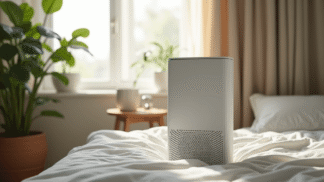
Energy-smart purifiers are changing the way homeowners think about clean air. The best 2026 models do not just move air through a filter. They use better motors, smarter sensors, cleaner automation, and more efficient airflow design to help clean the room without quietly turning into another expensive appliance.
How Do 2026 Energy-Smart Purifiers Cut Bills?
Energy-smart purifiers cut operating costs by delivering more clean air per watt, using air-quality sensors to avoid running at full speed all day, offering schedules and sleep modes, and reminding owners when clogged filters are forcing the fan to work harder. The smartest choice is not always the lowest-watt model. It is the purifier that gives your room enough clean air without wasting power.
That is the key idea many shoppers miss. A tiny purifier may use less electricity, but if it cannot clean the room properly, it may run harder for longer and still deliver disappointing results. A better 2026 buying strategy is to look at room size, CADR, energy certification, filter cost, and smart-control behavior together.
Energy-Smart Purifier Knowledge Check
Before you buy another purifier, run through these five quick questions. They reveal whether your next upgrade will actually save energy or simply add another connected device to the house.
- Do you know the square footage of the room where the purifier will run most often?
- Do you know the purifier’s CADR, or are you only looking at the brand name and room-size claim?
- Do you know how many watts it uses on low, medium, high, and sleep mode?
- Do you know how much replacement filters cost and how often they need to be changed?
- Do you know whether the model uses a real air-quality sensor or simply cycles through fan speeds on a timer?
If you answered “no” to two or more, you are not alone. Most people shop for air purifiers by room size and price. In 2026, the smarter move is to shop by clean-air performance, power use, filter cost, and automation.
Why Energy Use Matters More in 2026
Air purifiers are different from many small appliances because they are often designed to run for long stretches. A toaster runs for minutes. A purifier may run for hours, overnight, or all day during allergy season, wildfire-smoke events, pet dander problems, or heavy cooking days.
That constant use is exactly why energy efficiency matters. A purifier that seems inexpensive at checkout can become more expensive over time if it uses more power, needs pricey filters, or has weak automation that keeps the fan running high when the room air is already clean.
The good news is that modern purifiers are improving. Many 2026 devices use DC motors, better fan curves, particle sensors, app schedules, sleep modes, eco settings, and filter-life tracking. These features are not just convenience extras. Used correctly, they help the purifier clean when it needs to clean and ease back when it does not.
What Makes a Purifier “Energy-Smart”?
An energy-smart purifier is not simply a purifier with Wi-Fi. It is a device that balances cleaning power with power use. The best models pay attention to the room, the air, the filter, and the fan speed.
1. Strong CADR Per Watt
CADR stands for Clean Air Delivery Rate. It estimates how quickly a purifier can deliver filtered air. A more efficient purifier delivers more clean air for each watt it uses.
2. Better Auto Mode
A useful auto mode responds to particle levels instead of guessing. When air quality improves, the fan can slow down instead of wasting energy on high speed.
3. Filter Awareness
A clogged filter can restrict airflow. Good filter reminders help you maintain performance before the purifier starts working harder for less clean air.
The 2026 buyer should think in terms of clean air per watt. That phrase matters because low energy use by itself does not guarantee good air cleaning. The point is to clean the right-size room efficiently.
The Simple Math: What Does a Purifier Cost to Run?
You do not need a complicated calculator to estimate purifier energy cost. Use this formula:
Energy Cost Formula
Watts ÷ 1,000 × hours used × electricity rate = estimated cost
Example: A purifier using 35 watts for 24 hours uses 0.84 kWh per day. At $0.18 per kWh, that is about 15 cents per day, or roughly $55 per year if it ran that way every day.
Electricity rates vary by state, utility, season, and plan, so use your own electric bill for the best estimate. The examples below use $0.18 per kWh as an easy working number.
| Purifier Power Use | Daily Runtime | Annual Energy Use | Estimated Annual Cost at $0.18/kWh | What It Means |
|---|---|---|---|---|
| 15 watts | 24 hours/day | About 131 kWh/year | About $24/year | Common for efficient low or medium operation in smaller rooms. |
| 35 watts | 24 hours/day | About 307 kWh/year | About $55/year | A realistic middle example for steady use in many rooms. |
| 70 watts | 24 hours/day | About 613 kWh/year | About $110/year | This may happen with larger models or frequent high-speed use. |
| 70 watts | 4 hours/day | About 102 kWh/year | About $18/year | Short high-speed cleaning sessions can be affordable when used intentionally. |
Important: these are examples, not promises. Your actual cost depends on the model, fan setting, local electricity rate, room conditions, filter condition, and how often the purifier ramps up.
The Hidden Cost: A Cheap Purifier Can Waste Energy
A low-price purifier can look like the budget winner, but that is not always true. If it is too small for the room, it may run constantly, struggle to lower particle levels, and push you to use higher fan speeds. That means more noise, more frustration, and sometimes more wasted energy.
On the other hand, an oversized purifier is not automatically perfect either. A large unit can clean quickly, but it may use more electricity than needed if it lacks a good low-speed mode or smart auto control.
The sweet spot is a purifier that is properly sized for the room and efficient enough to run quietly most of the time. For bedrooms, offices, nurseries, and living rooms, that balance matters more than a flashy app screen.
The 2026 Energy-Smart Purifier Buying Checklist
Use this checklist before buying a smart purifier, especially if you plan to run it daily.
- Look for ENERGY STAR certification. It gives you a useful starting point for energy-efficient models.
- Compare CADR, not just room-size marketing. CADR helps you understand cleaning performance more clearly.
- Check the wattage at different fan speeds. A purifier may be efficient on low but expensive on turbo.
- Look for verified performance claims. AHAM Verifide listings can help shoppers compare tested performance information.
- Check filter replacement cost before buying. Filters are part of the real ownership cost.
- Choose real automation, not gimmicks. A useful sensor-based auto mode can reduce unnecessary high-speed runtime.
- Avoid ozone-producing shortcuts. Choose safe, mechanical filtration whenever possible and verify safety certifications.
- Make sure the purifier fits your daily life. A quiet, efficient unit you actually run will usually beat a powerful unit you avoid using.
Smart Modes That Can Lower Energy Use
Smart features only matter when they solve a real problem. In energy-smart purifiers, the best features help control runtime, fan speed, and maintenance.
Auto Mode
Auto mode can be useful when it responds to changing particle levels. For example, the purifier may run faster after cooking, cleaning, vacuuming, or opening windows. Then it can slow down after the air improves. That is a smarter pattern than running high all day.
Sleep Mode
Sleep mode usually lowers fan speed and dims lights. It can save energy and reduce noise, but it also lowers cleaning power. In a bedroom, that may be fine if the purifier is properly sized. In a smoky, dusty, or high-allergen situation, sleep mode may not be enough.
Scheduling
Scheduling is one of the most practical energy-saving features. You might run the purifier higher before bedtime, during cooking cleanup, or when pets are active, then let it ease down later.
Eco Mode
Eco mode may pause or reduce fan speed when the purifier believes the air is clean. This can save power, but use it wisely. In homes with ongoing pollutant sources, pets, dust, or outdoor smoke, you may want steady low-speed filtration instead of long pauses.
Filter-Life Alerts
Filter reminders are not just about convenience. When filters are overdue, airflow can drop. That can reduce cleaning performance and make the purifier less efficient. Always confirm the correct replacement filter by model number before ordering.
The Biggest Mistakes That Raise Purifier Costs
Energy waste often comes from setup problems, not the purifier itself. These mistakes are common and easy to fix.
| Mistake | Why It Costs You | Better Move |
|---|---|---|
| Buying too small | The purifier may run harder and still underperform. | Match CADR to the room size and ceiling height. |
| Running turbo all day | High speed uses more power and creates more noise. | Use high speed for short cleanup bursts, then return to auto or medium. |
| Blocking airflow | The fan works harder and the room gets less clean air. | Keep the intake and outlet clear of curtains, walls, and furniture. |
| Ignoring filter changes | A loaded filter can reduce airflow and performance. | Check filters regularly and replace them with the correct model. |
| Trusting vague “fresh air” claims | Some features sound impressive but do little for particle removal. | Focus on mechanical filtration, CADR, energy use, and safety certifications. |
Clean Air Per Watt Beats “Lowest Wattage”
Here is the most important point in the whole article: the lowest-watt purifier is not always the most efficient purifier for your home.
Imagine two devices. One uses 10 watts but barely moves enough filtered air for the room. The other uses 28 watts but cleans the same room much faster and can then settle into a lower speed. The second purifier may be the smarter long-term choice because it delivers more useful cleaning for the energy consumed.
That is why 2026 shoppers should look beyond wattage. You want the relationship between airflow, filtration, fan speed, and room size. In plain English, you want the purifier to do the job without working harder than necessary.
Old Purifier vs. 2026 Energy-Smart Purifier
Not every older purifier needs to be replaced. However, if your current unit is loud, filter-hungry, underpowered, or always stuck on high, a newer energy-smart model may be worth comparing.
| Feature | Older Basic Purifier | Energy-Smart 2026 Purifier |
|---|---|---|
| Fan control | Manual low, medium, high | Sensor-based auto mode, schedules, sleep mode, sometimes eco mode |
| Energy awareness | Often unclear | More shoppers can compare energy use, CADR, and certification data |
| Filter tracking | Basic timer or no reminder | App reminders, filter status, and model-specific alerts |
| Smart home fit | Often isolated | May connect with apps, voice assistants, sensors, schedules, and supported smart-home ecosystems |
| Best use | Simple rooms with predictable needs | Homes where air quality changes throughout the day |
Where Matter, Sensors, and Automation Fit In
Smart-home standards are slowly making air purifiers easier to connect with other devices. Matter 1.2 added support for air purifiers, air-quality sensors, fan controls, and filter-status monitoring. That does not mean every purifier works perfectly with every platform. It does mean the category is moving toward better interoperability.
For homeowners, the energy benefit is simple. A purifier that can respond to real air-quality information, schedules, and filter status may be easier to run only when and how it is needed.
For example, a smart setup might increase fan speed when a sensor detects elevated particles after cooking. Later, it may return to a quieter low-speed setting. That is more useful than turning the purifier on high and forgetting about it.
Still, do not buy based on the word “smart” alone. Buy based on whether the smart features help the purifier clean the room efficiently.
Filter Cost Is Part of Energy-Smart Ownership
A purifier’s energy cost is only one part of ownership. Replacement filters matter too. A device with low electricity use but expensive filters may not be the best value. A device with affordable filters but weak cleaning power may not be the best value either.
Before buying, check three things:
- The exact replacement filter model number.
- The typical replacement interval for your use case.
- Whether the filter includes activated carbon if odors, cooking smells, or VOC concerns matter to you.
For many homes, a HEPA-style particle filter plus a meaningful activated carbon layer gives a better balance for dust, pollen, pet dander, smoke particles, and common household odors. Just remember that carbon becomes less effective as it gets used, especially in odor-heavy rooms.
A Practical 24-Hour Strategy for Cleaner Air and Lower Bills
You do not have to choose between clean air and energy awareness. The better goal is to use the purifier with intention.
Morning
Run the purifier on auto or medium while the home gets active. Movement, pets, bedding, carpets, and open doors can stir up particles.
Cooking or Cleaning
Use a higher fan speed for a short burst. This is when the purifier can work harder with purpose. If odors are the problem, make sure your purifier has a real carbon filter, not just a thin deodorizing sheet.
Afternoon
If the room is stable, let auto mode or low speed maintain air movement. This is where efficient motors and good sensors can help.
Night
Use sleep mode only if it still gives you enough cleaning for the room. For allergy-sensitive sleepers, a steady low or medium setting may be better than the quietest possible mode.
The Best Rooms for Energy-Smart Purifiers
Some rooms benefit more from efficient, smart purification than others. Start where you spend the most time or where the air changes most often.
Bedrooms
Quiet efficiency matters here. Look for low noise, strong low-speed cleaning, dimmable lights, and filter reminders.
Living Rooms
Open spaces need careful sizing. A weak purifier may look affordable but struggle with larger square footage.
Kitchens Nearby
Cooking particles and odors can spike quickly. Use ventilation first, then purifier support with carbon when appropriate.
Pet Rooms
Pet dander and hair can load pre-filters faster. Washable pre-filters and easy maintenance can protect performance.
Home Offices
A small, efficient purifier can help maintain cleaner air while staying quiet enough for calls and focused work.
Nurseries
Quiet operation, no ozone-producing features, stable airflow, and safe placement matter more than flashy controls.
A Safety Note About Ozone Claims
Some air-cleaning products use words that sound powerful, such as ionizing, activated oxygen, plasma, or ozone. Shoppers should be careful. Ozone is not something you want to add to indoor air casually.
For most homes, the safer and more practical path is mechanical filtration: a well-sized purifier with a quality particle filter, proper airflow, safe operation, and regular filter changes. If a device includes electronic air-cleaning features, check safety certifications and look for CARB compliance where applicable.
When Should You Replace an Older Purifier?
You do not need to replace a purifier just because a new model exists. Replace it when the current unit no longer fits the room, uses too much power for the cleaning it delivers, lacks available filters, has become too noisy, or no longer supports your household needs.
A good older purifier with available filters and solid airflow may still be useful. A newer energy-smart purifier makes more sense when you want quieter daily operation, better automation, stronger clean-air efficiency, lower long-term energy use, or improved filter tracking.
The Bottom Line: Buy the Purifier You Can Afford to Run
Energy-smart purifiers are not just about saving a few dollars. They are about building a cleaner-air routine that you can actually maintain.
The best 2026 purifier for your home should be properly sized, energy efficient, quiet enough to use daily, safe to operate, and affordable to maintain. It should clean the air without forcing you to choose between comfort, noise, filter cost, and the electric bill.
That is the real promise of energy-smart purification. Not magic. Not hype. Just better clean-air performance with fewer wasted watts.
FAQs About Energy-Smart Purifiers
Do air purifiers use a lot of electricity?
Some do, especially larger models running on high speed for long periods. Many efficient models use far less power on low or medium settings. The best way to estimate cost is to check the wattage, multiply by runtime, and apply your local electricity rate.
Is it cheaper to run an air purifier all day or only when needed?
It depends on the room and the air problem. For bedrooms, pet rooms, and allergy-sensitive spaces, steady low-speed operation can be practical. For cooking odors or short pollution spikes, a higher-speed burst followed by auto or low mode may be more efficient.
Does sleep mode clean the air well?
Sleep mode is quieter and often uses less energy, but it usually lowers fan speed. That means less clean air delivered per hour. It can work well in a properly sized bedroom, but it may not be enough during smoke, heavy dust, or high-allergen conditions.
What should I look for besides wattage?
Look at CADR, room size, ENERGY STAR certification, filter cost, noise level, safety certifications, and whether the purifier has useful auto mode. Low wattage only helps if the purifier still cleans the room well.
Can a dirty filter increase energy waste?
Yes. A dirty or clogged filter can reduce airflow and make the purifier less effective. Follow the manufacturer’s filter schedule and check filters more often in homes with pets, smoke, dust, or heavy use.
Are smart purifiers always more energy efficient?
No. A smart purifier is only more efficient if its sensors, schedules, and fan controls help reduce unnecessary runtime without sacrificing needed cleaning. Always compare performance and energy data, not just app features.
Helpful Source Links for Readers
For readers who want to verify the technical side, these resources are useful starting points:
- ENERGY STAR: Air Cleaners
- ENERGY STAR Certified Room Air Cleaner Product Finder
- AHAM Verifide Air Cleaner Directory and Guidance
- California Air Resources Board: Air Cleaners and Ozone
- Connectivity Standards Alliance: Matter 1.2 Air Purifier Support
- U.S. Energy Information Administration: Electricity Price Table