Yes—smart air purifiers can measurably improve indoor air quality, but only when their sensors, filters, and room coverage are properly matched. Built-in PM2.5 and AQI sensors often show rapid particle reduction, while VOC readings depend heavily on sensor type and calibration.
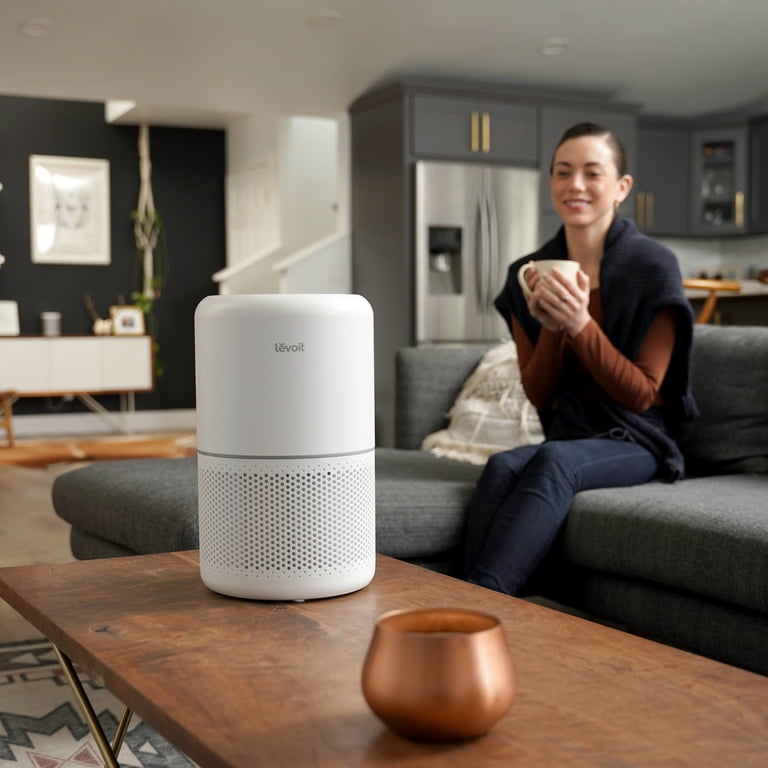
Do smart air purifiers actually clean your air? See what PM2.5, VOC, and AQI sensors reveal, with fact-safe comparisons and expert guidance.
Why “Smart” Purifiers Changed the Conversation
Traditional air purifiers quietly moved air through a filter and hoped for the best. Smart purifiers changed that by showing the air in real time. Sensors display particle counts, air-quality scores, and automatic fan adjustments. For homeowners, that visibility is powerful. It turns air cleaning from a guessing game into something you can verify.
But visibility does not always equal accuracy. Understanding what sensors actually measure is the key to trusting the results.
What Smart Purifier Sensors Really Measure
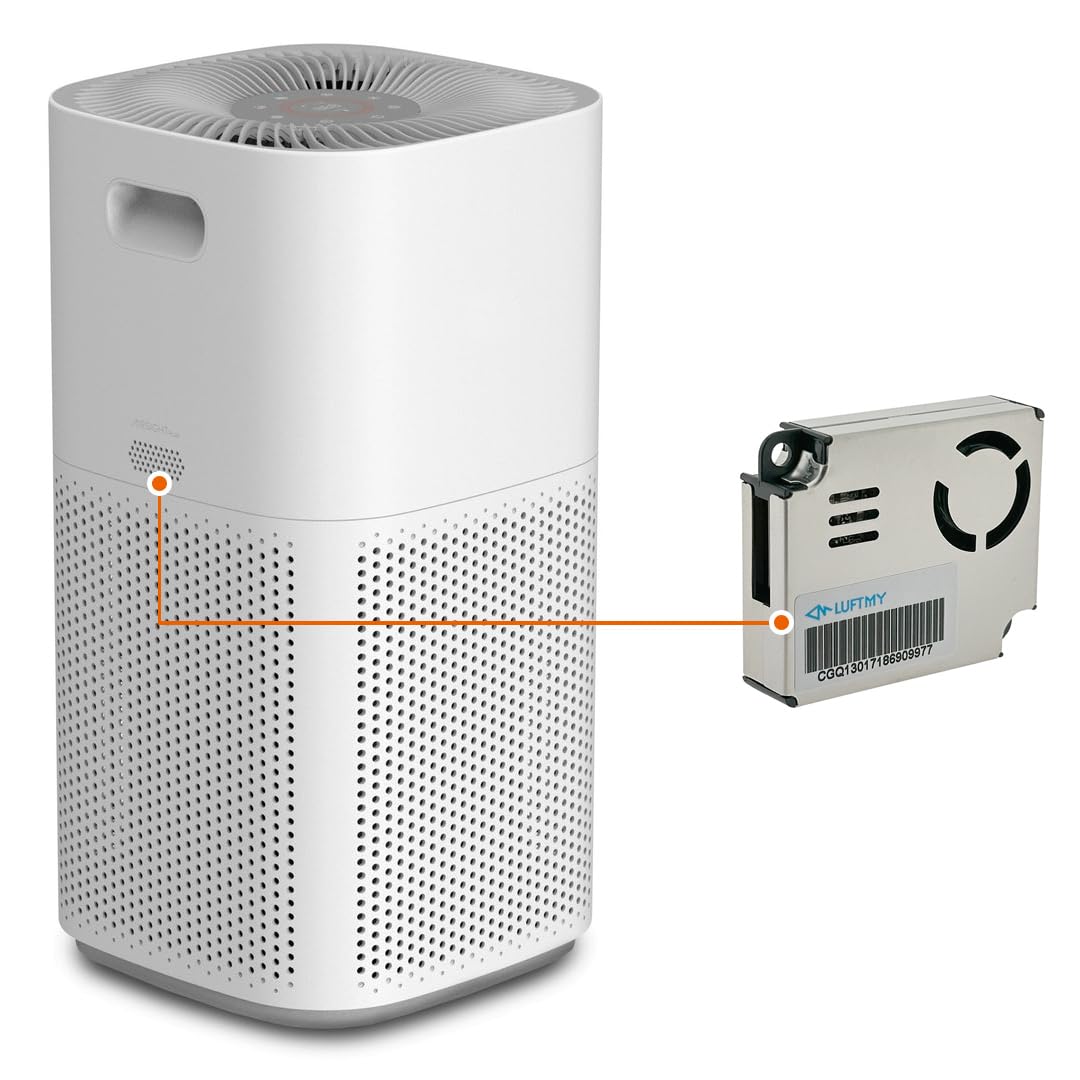
PM2.5 Sensors (The Most Reliable Indicator)
PM2.5 sensors measure microscopic particles from dust, smoke, pollen, and combustion. These sensors are usually laser-based and are highly reliable for trend tracking.
When a purifier is effective, PM2.5 numbers typically drop within minutes of activation.
VOC Sensors (Useful, But Less Precise)
Most consumer purifiers estimate VOCs using metal-oxide sensors. They detect changes in chemical presence but cannot identify specific gases. Readings are best used for relative changes rather than absolute safety thresholds.
AQI Scores (A Simplified Summary)

AQI is often calculated from PM2.5 levels alone. It is easy to understand but hides detail. A “good” AQI does not guarantee low odors or chemical exposure.
Sensor Accuracy vs. Real-World Performance
| Sensor Type | What It Does Well | Limitations |
|---|---|---|
| PM2.5 | Tracks dust, smoke, pollen accurately | Does not detect gases |
| VOC | Detects chemical changes | Broad estimates only |
| AQI | Simple air-quality snapshot | Oversimplifies conditions |
| Auto Mode | Adjusts fan speed efficiently | Depends on sensor quality |
Bottom line: PM2.5 data is the strongest proof that a purifier is working.
Do Smart Purifiers Actually Improve Air Quality?
In controlled tests and real homes, quality smart purifiers consistently show:
- Rapid PM2.5 reduction after turning on
- Stable low readings once the room is clean
- Automatic fan changes during cooking, cleaning, or smoke events
This confirms filtration is happening, not just airflow.
What sensors cannot confirm is pathogen elimination, carbon dioxide reduction, or complete VOC removal unless paired with specialized filters.
When Sensor Data Can Be Misleading
Sensor readings can confuse users when:
- The room is larger than the purifier’s rated coverage
- Filters are clogged or overdue for replacement
- VOC spikes occur from cooking or cleaners without a health risk
- Cheap sensors exaggerate changes for visual effect
This is why filter quality and replacement schedules matter as much as the purifier itself.
Filter Quality Matters More Than the Screen
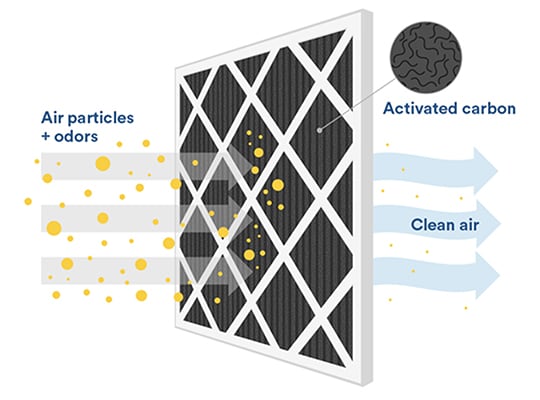
Even the smartest purifier fails without proper filtration. True HEPA filters remove particles that the sensors track. Activated carbon handles odors and chemicals that PM sensors cannot see.
Where to Source Trusted Replacement Filters
Rather than brand-locking yourself into overpriced replacements, many homeowners rely on trusted filter suppliers:
- FiltersFast – Wide selection of purifiers and HVAC filters with precise specifications
- FiltersCollection – Cost-effective replacements for many smart purifier brands
- Field Controls – Professional-grade air quality and ventilation solutions
Reliable replacement filters ensure sensors continue to reflect reality.
These options support long-term performance without compromising accuracy or safety.
Comparison: Smart vs. Non-Smart Purifiers
| Feature | Smart Purifier | Traditional Purifier |
|---|---|---|
| Air Quality Feedback | Real-time sensor data | None |
| Automatic Adjustment | Yes | No |
| Energy Efficiency | Higher | Lower |
| Verification | Visible results | Assumed performance |
Smart purifiers win on transparency and efficiency, not magic.
FAQ
Do air purifier sensors really work?
Yes. PM2.5 sensors reliably track airborne particles, making them a trustworthy indicator of purifier effectiveness.
Can a smart purifier tell if my air is safe?
It can show particle levels, but it cannot detect all gases or biological contaminants.
Why does my purifier spike when cooking?
Cooking releases fine particles and VOCs that sensors detect immediately.
Is auto mode better than manual?
Auto mode improves efficiency when sensors are accurate and filters are clean.
Final Verdict: What the Sensors Reveal
Smart purifiers do improve air quality when used correctly. Their sensors confirm particle reduction, optimize energy use, and provide peace of mind. The real value is not the screen—it is verified performance paired with proper filtration.
When sensor data drops and stays low, your air is genuinely cleaner.
