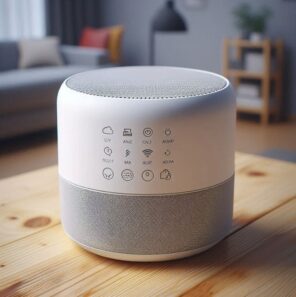
AI-Driven Air Purifiers: How Devices Clean Your Air Before You Notice
The newest smart air purifiers are not just waiting for you to smell dinner, sneeze at dust, or see a spike on a display. With better sensors, smarter auto modes, app-based routines, and home integration, today’s AI-driven air purifiers are designed to react before bad air becomes obvious.
What Is an AI-Driven Air Purifier?
An AI-driven air purifier is a smart purifier that uses sensors, automation, and learned behavior patterns to adjust fan speed, filter reminders, air-quality alerts, and smart-home routines. It does not magically “know” everything in your air, but it can respond faster to particles, odors, VOC changes, and daily household patterns than a basic manual purifier.
There is a big difference between an air purifier that turns on and an air purifier that pays attention.
That is the promise behind AI-driven air purifiers. The best versions are not just another appliance with an app. They use air-quality sensors, auto mode, fan-speed logic, filter tracking, and sometimes smart-home routines to reduce indoor air issues before you feel the room getting stale.
That matters because indoor air quality is not always obvious. Fine particles, cooking odors, VOCs, pet dander, dust, and smoke can build quietly. You may not notice the problem until your eyes feel dry, the bedroom smells musty, the kitchen odor lingers, or allergy symptoms start climbing.
For a broader foundation on why this matters, the EPA’s Indoor Air Quality (IAQ) resource explains how source control, ventilation, and filtration all work together to reduce indoor pollutant exposure.
Why AI-Driven Air Purification Matters Now
Air purifiers used to be simple: plug one in, choose a fan speed, and hope it was doing enough.
That still works in some rooms. In fact, a strong purifier with the right CADR, a real particle filter, enough carbon for odors, and consistent runtime can outperform a “smart” unit that is undersized or poorly maintained.
But homes are changing. More people are tracking air quality. More kitchens are open concept. More households have pets, candles, gas appliances, wildfire-smoke concerns, cleaning-product exposure, and hybrid work routines that keep people indoors longer.
That is where AI-driven air purifiers become interesting. They can help bridge the gap between “I should probably turn the purifier up” and “the purifier already handled it.”
You smell cooking odors after dinner and manually increase the fan speed.
The sensor detects a particle or VOC change and increases airflow while the odor is still building.
Less guessing, faster response, better daily comfort, and fewer forgotten filter changes.
The key is to stay realistic. AI does not replace good filtration. It does not replace ventilation. It does not remove the need to control pollution sources. It simply helps the purifier respond more intelligently to the conditions it can detect.
How AI-Driven Air Purifiers Work
Most AI-driven purifiers follow the same basic pattern:
- Detect: Sensors monitor particles, odors, VOCs, humidity, temperature, or other air-quality signals.
- Interpret: The purifier compares the reading to its internal thresholds or historical patterns.
- Respond: Fan speed, mode, alerts, or routines adjust automatically.
- Learn: Some systems refine recommendations based on recurring events, such as cooking times or daily room usage.
That last step is where the “AI” label usually enters the conversation. In many consumer purifiers, AI is not advanced household intelligence. It is more often a combination of sensor data, automation logic, pattern recognition, and app-based recommendations.
That is still useful. A purifier does not need to be futuristic to help. It needs to detect the right problem, respond quickly, move enough air, and remind you when maintenance matters.
How Devices Clean Your Air Before You Notice
The most helpful smart purifiers are proactive in ordinary moments. They do not wait until the room feels bad. They respond when the air starts changing.
1. Cooking Odors
Cooking is one of the easiest examples. Frying, roasting, searing, and sautéing can release fine particles and odors that move beyond the kitchen. In an open-concept home, that can quickly become a living-room problem.
A smart purifier with particle and VOC detection may raise fan speed when cooking begins. A basic purifier may keep running at the same low speed until you manually adjust it.
If cooking odors are your main issue, read Smart Purifiers That Remove Cooking Odors in Minutes before buying. For odor control, you want more than a particle filter. You want meaningful activated carbon and enough airflow for the room.
2. Pet Dander and Dust
Pet dander and dust are not always dramatic. They build slowly. A good purifier can help reduce airborne particles, but only if it runs long enough and moves enough air.
AI-driven models can help by increasing fan speed during active periods. For example, if the purifier detects a particle spike when pets are moving around, it may respond without you touching the controls.
3. VOC Changes
VOCs can come from cleaning products, paints, furnishings, fragrances, and some household materials. Not every purifier detects VOCs accurately, and not every filter is designed to reduce gases well. This is where buyer caution matters.
If VOCs and odors are a priority, look for a purifier with a dedicated gas or VOC sensor and a substantial activated carbon filter. Thin carbon sheets may help with light odors, but they are not the same as a deep carbon bed.
4. Sleep-Time Air Quality
A bedroom purifier has a different job than a kitchen purifier. It needs to clean quietly enough that you will actually keep it running.
AI-driven sleep modes can lower noise at night and raise fan speed only when the sensor detects a spike. That sounds simple, but it solves a real problem: many people buy a purifier, find it too loud, and end up turning it off.
5. Seasonal Air Quality Changes
Pollen season, wildfire smoke, humid summers, dry winters, and closed-window months can all change what your purifier needs to handle. A smart purifier with app alerts and trend tracking can help you see when the air changed, not just guess.
That is especially helpful for households comparing indoor air quality across seasons or trying to understand whether a filter upgrade is worth it.
AI Purifier vs Smart Purifier vs Standard Purifier
| Type | What It Does | Best For | Buyer Caution |
|---|---|---|---|
| Standard air purifier | Runs at manual fan speeds and filters air continuously when turned on. | Budget buyers, bedrooms, small rooms, simple allergy support. | You must size it correctly and remember to adjust speeds and replace filters. |
| Smart air purifier | Adds app control, schedules, air-quality displays, and sometimes voice assistant support. | People who want remote control, alerts, schedules, and basic automation. | Some smart features are convenient but do not improve filtration performance. |
| AI-driven air purifier | Uses sensors, auto mode, pattern recognition, and automation to respond to changing air conditions. | Open-concept homes, pet homes, cooking odors, allergy households, smart-home users. | The “AI” label can be vague. Verify CADR, filters, sensors, and filter costs before buying. |
The best choice is not always the most advanced one. A properly sized standard purifier can beat an undersized AI purifier. But when the core filtration is strong, AI-driven features can make the device easier to live with every day.
The Sensors That Matter Most
Sensors are the nervous system of an AI-driven purifier. Without them, the purifier cannot respond to what is happening in the room.
| Sensor Type | What It Helps Detect | Why Buyers Care |
|---|---|---|
| PM2.5 sensor | Fine particles from smoke, cooking, dust, and outdoor pollution. | One of the most useful sensors for automatic fan response. |
| PM10 sensor | Larger particles such as dust and some pollen. | Helpful for general particle awareness, especially in dusty homes. |
| VOC sensor | Airborne chemical changes from cleaning products, fumes, fragrances, or cooking. | Useful for odor and gas awareness, but performance varies by model. |
| CO2 sensor | Ventilation-related buildup from people breathing in closed rooms. | Helpful for knowing when fresh air may be needed, but a purifier does not remove CO2 like ventilation does. |
| Humidity sensor | Moisture trends that can affect comfort, odors, and mold risk. | Useful context, especially in basements, bedrooms, and humid climates. |
For a deeper dive into how sensors connect with smart-home routines, see Sensors & Home Integration.
What to Look for Before You Buy an AI-Driven Air Purifier
Here is where the buying decision gets practical. The smartest purifier is not the one with the most buzzwords. It is the one that fits your room, your air-quality problem, and your budget after filter costs.
1. Match CADR to the Room
CADR, or Clean Air Delivery Rate, helps estimate how quickly a purifier delivers filtered air. A higher CADR generally means faster particle removal for the tested category.
For many rooms, the basic buying mistake is choosing a purifier that technically “covers” the room only on its highest and loudest speed. If you plan to run the purifier on low or sleep mode, consider buying more capacity than the minimum recommendation.
2. Choose the Right Filter Stack
Most buyers should look for a strong particle filter plus activated carbon if odors are part of the problem.
- For dust, pollen, pet dander, and smoke particles: prioritize particle filtration and CADR.
- For cooking smells and household odors: look for meaningful activated carbon.
- For VOC concerns: compare the carbon design carefully and avoid vague claims.
- For whole-home IAQ: consider whether HVAC-based solutions may complement portable purifiers.
If you need replacement filters, FiltersFast is a useful place to compare filter availability and ongoing replacement costs before you commit to a purifier ecosystem.
3. Check the Sensor Claims
Do not assume every purifier with an air-quality light has the same sensor quality. Some displays are simple color indicators. Others show PM2.5 readings, VOC trends, or app history.
A useful display should help you make decisions. If it only glows red, yellow, and blue without context, it may still be helpful, but it is not the same as detailed air-quality tracking.
4. Compare Noise at Real Speeds
Purifiers clean more air at higher fan speeds, but people often run them on lower speeds because of noise. That means a purifier that looks powerful on paper may underperform if you cannot tolerate the sound level.
For bedrooms, buy with quiet operation in mind. For kitchens and open living spaces, prioritize higher CADR and faster odor response.
5. Review App Support and Smart-Home Fit
App quality matters more than many buyers expect. A purifier can have strong filtration but frustrating controls. Look for reliable scheduling, clear filter-life data, useful alerts, and compatibility with your existing home setup.
If you are comparing smart-home standards, start with Matter vs. Wi-Fi Purifiers: What’s the Difference and Why It Matters? and Are Matter-Compatible Air Purifiers Worth It Yet? A Real-World Breakdown.
The Hidden Cost: Filters Over Five Years
This is where smart buyers slow down.
The upfront price of an air purifier is only part of the cost. Filters can quietly become the bigger story over time. A $180 purifier with expensive proprietary filters may cost more over five years than a $300 purifier with affordable, widely available replacements.
| Buying Factor | Why It Matters | What to Check Before Buying |
|---|---|---|
| Filter price | Replacement filters can add up quickly. | Check the cost of one full replacement set. |
| Replacement frequency | Some filters last months; others may need replacing more often in dusty or smoky homes. | Read the manufacturer’s schedule and consider your air conditions. |
| Availability | A purifier is less useful if filters become hard to find. | Search for replacement filters before buying the device. |
| Carbon amount | Odor performance depends partly on carbon design and capacity. | Look beyond vague “deodorizing” language. |
| Energy use | Purifiers may run for many hours per day. | Compare ENERGY STAR listings when energy cost matters. |
For a more detailed cost breakdown, read How Much You Really Spend on Filters Over 5 Years.
Smart Purifiers Buyer Tip
Before you buy any AI-driven air purifier, price the filters first. Check the purifier cost, replacement filter cost, replacement schedule, room size, CADR, and energy use together. That gives you the real ownership cost, not just the sale price.
Matter, Wi-Fi, and Smart-Home Integration
AI-driven air purifiers become more useful when they work with the rest of the home.
For example, a purifier may run harder when an air-quality sensor detects a spike, slow down when the room improves, or follow a schedule based on occupancy. Some users may want app control only. Others may want routines that connect purifiers with smart thermostats, sensors, plugs, or voice assistants.
This is where Matter and Wi-Fi become important.
| Connection Type | Strength | Possible Limitation | Best Fit |
|---|---|---|---|
| Wi-Fi purifier | Easy app connection, remote control, updates, schedules. | May depend heavily on the brand’s app and cloud service. | Most buyers who want simple smart control. |
| Matter-compatible purifier or sensor | Better cross-platform smart-home potential. | Feature support can vary by device type and ecosystem. | Smart-home users building around Apple Home, Google Home, Alexa, SmartThings, or multi-brand setups. |
| Standalone sensor plus purifier routine | Flexible automation using separate air-quality monitors. | Requires setup and compatibility planning. | Advanced users who want whole-room or whole-home routines. |
The biggest point is simple: smart-home support is valuable when it improves daily use. It should not distract from core purifier performance.
Best Use Cases for AI-Driven Air Purifiers
Best for Cooking Odors
Choose a purifier with high airflow, a reliable auto mode, and strong activated carbon. Place it where air can circulate from the kitchen into the living area without blocking intake or exhaust.
Best for Allergies
Prioritize CADR, particle filtration, quiet operation, and bedroom performance. Smart features are helpful, but the purifier still needs to move enough air for the room.
Best for Pet Homes
Look for strong pre-filter access, easy cleaning, pet-hair management, and replacement filters that are not painfully expensive. An AI-driven purifier can help respond when activity increases, but maintenance matters.
Best for Smart-Home Users
Look for app reliability, automation options, Matter or ecosystem support, clear air-quality history, and routines that work with sensors. Also consider whether FieldControls or other whole-home IAQ options may complement portable units in your setup.
You can explore FieldControls IAQ solutions if you are looking beyond a single room and thinking about a broader home-air strategy.
Best for First-Time Buyers
Start with the room where you spend the most time. For many people, that is the bedroom, living room, or kitchen-adjacent space. Then compare CADR, filter cost, odor control, and noise before worrying about advanced AI features.
For a broader buying guide, read Best Air Purifier for Home: 2026 Guide & Reviews.
Where AI-Driven Purifiers Fit Into a Healthy Home
A purifier is one part of a bigger indoor air strategy.
The strongest approach usually combines source control, ventilation when outdoor air is clean, filtration, humidity awareness, and regular maintenance. That is why an AI-driven air purifier should be viewed as a smart helper, not a cure-all.
If you are concerned about whether your indoor air has deeper issues, start with Is Your Home’s Air Toxic? Indoor Air Quality Matters. That article can help you think beyond the device and consider the sources inside the home.
AI-Driven Air Purifier Buying Checklist
- Does the purifier have enough CADR for the actual room size?
- Can it clean effectively at a noise level you will tolerate?
- Does it include a real particle filter for dust, pollen, smoke particles, and dander?
- Does it include enough activated carbon for odors or VOC concerns?
- Are replacement filters affordable and easy to find?
- Does the app provide useful alerts, schedules, and air-quality history?
- Are the AI features specific, or is “AI” just marketing language?
- Does it integrate with your smart-home setup now, not just someday?
- Is it ENERGY STAR certified or otherwise efficient enough for long daily runtime?
- Does it solve your actual problem: allergies, odors, dust, smoke, pets, or whole-home IAQ?
Questions About AI-Driven Air Purifiers
Are AI-driven air purifiers worth it?
AI-driven air purifiers can be worth it if the smart features improve daily use. The best value comes from models with strong CADR, reliable sensors, useful auto mode, clear filter tracking, and reasonable replacement filter costs. Do not pay extra for AI branding unless the core purification performance is strong.
Do AI air purifiers actually clean better?
Not automatically. AI features can help a purifier respond faster, but cleaning performance still depends on airflow, filter quality, CADR, room size, fan speed, and runtime. A smart purifier with weak airflow may underperform a simpler purifier with stronger filtration.
Can an AI air purifier remove cooking smells?
An AI-driven purifier can help reduce cooking smells if it has enough activated carbon and airflow. The AI or auto mode may detect a change and increase fan speed earlier, but odor reduction depends heavily on the carbon filter design.
Do smart purifiers remove VOCs?
Some smart purifiers are designed to reduce certain gases or VOCs, especially when they include substantial activated carbon or gas-phase filtration. However, VOC claims vary widely. Source control and ventilation remain important, and buyers should look closely at the filter design before purchasing.
What is the most important feature in an AI-driven purifier?
The most important feature is still proper room-sized purification. Start with CADR, filter quality, and noise level. Then compare sensors, auto mode, app quality, smart-home compatibility, and filter replacement cost.
Should I buy a Matter-compatible purifier?
A Matter-compatible purifier may be useful if you are building a multi-brand smart home and want better long-term interoperability. However, Matter support does not guarantee every advanced purifier feature will work across every platform. Check the actual supported controls before buying.
How often should I replace air purifier filters?
Follow the manufacturer’s schedule, but expect replacement timing to vary based on dust, pets, smoke, cooking, wildfire exposure, and daily runtime. A smart filter-life indicator is helpful, but it should not replace visual inspection and common sense.
Final Take: Buy the Cleaner Air, Not the Buzzword
AI-driven air purifiers are exciting because they make clean-air habits easier. They can react to cooking, dust, pet activity, particle spikes, and daily routines before you notice the room changing.
But the smartest buy is still the purifier that fits your room, runs quietly enough to stay on, uses proven filtration, gives you useful sensor feedback, and does not surprise you with expensive filters later.
That is the real future of smart air purification: not just cleaner air, but cleaner air with less guessing.

Before You Buy
Compare the purifier, the filter cost, and the room size together. A smart purifier is only smart if you can afford to maintain it and actually want to keep it running.