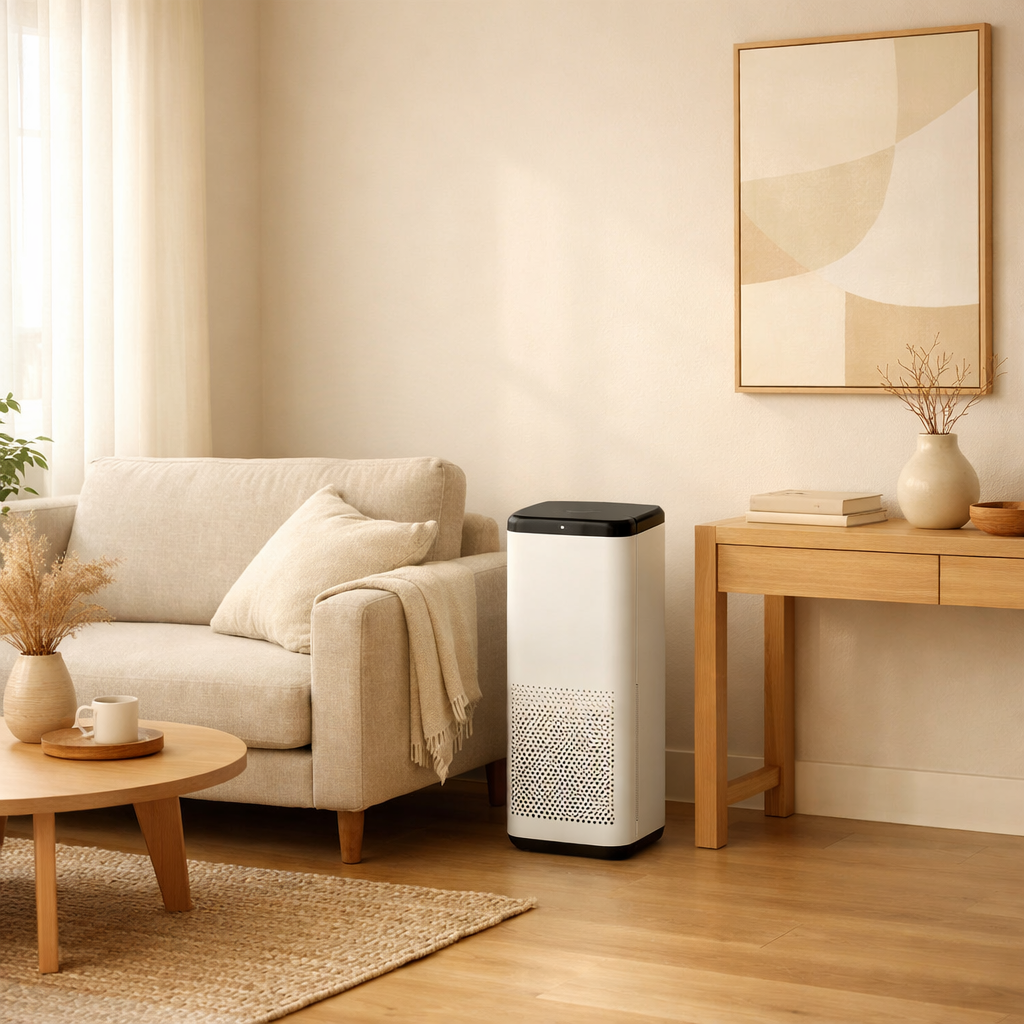
The smartest air purifier in the room is no longer the one that looks the most technical. In 2026, designers are choosing minimalist smart purifiers because homeowners want cleaner air without adding visual noise, harsh lighting, loud fans, or another gadget that fights the room.
Affiliate disclosure: BestSmartPurifiers.com may earn a commission when readers use certain partner links. We only discuss products, filters, and air-quality features in a practical, reader-first way.
Quick answer: Designers are choosing minimalist smart purifiers for 2026 interiors because clean air has become part of the modern wellness home, but bulky appliances no longer fit the look. The best minimalist purifiers combine quiet filtration, simple controls, neutral finishes, app-based automation, and properly sized performance in a form that feels intentional instead of intrusive.
For years, air purifiers were treated like emergency appliances. You bought one when allergies got bad, wildfire smoke drifted in, pet odors lingered, or dust seemed impossible to control. Then you tucked it in a corner and hoped nobody noticed it.
That mindset is changing fast.
Today’s smart home is less about showing off technology and more about making the home feel calm, responsive, and easier to live in. Homeowners still want sensors, automation, app control, air-quality tracking, and powerful filtration. They just do not want every device to look like it came from an electronics aisle.
That is why minimalist smart purifiers are becoming a favorite choice for 2026 interiors. They solve a real indoor air problem while blending into the room’s design language.
The Big 2026 Shift: Clean Air Has Become Part of Interior Design
Interior design used to focus mostly on color, layout, lighting, furniture, and flow. Those things still matter. But in 2026, the definition of a well-designed home is expanding.
A room now has to feel good, function well, and support daily health. That means homeowners are paying more attention to air quality, sound levels, lighting comfort, clutter, and how appliances affect the emotional feel of a space.
A purifier that buzzes loudly, flashes bright lights, or sticks out visually can make a carefully designed living room feel unfinished. A minimalist smart purifier does the opposite. It helps the room breathe without announcing itself.
Less Visual Clutter
Minimalist purifiers use softer shapes, calmer colors, and cleaner controls so they do not interrupt the room.
More Wellness Value
They support cleaner air in bedrooms, living rooms, offices, nurseries, and open spaces where people spend real time.
Smarter Daily Use
Auto mode, sensors, schedules, and app control make the purifier feel less like a chore and more like part of the home.
Why Minimalist Purifiers Work Better in Modern Rooms
The minimalist purifier trend is not about making everything plain. It is about making the appliance feel calm, useful, and properly placed.
Designers are drawn to smart purifiers that have a few key qualities: a simple silhouette, a neutral finish, quiet operation, limited display glare, and enough power to clean the room without needing to run at full blast all day.
That last part matters. A purifier can look beautiful and still be the wrong choice if it is underpowered for the space. Minimalist design should never mean weak performance.
The best minimalist purifier disappears visually, not functionally. It should look calm in the room, but it still needs real airflow, the right filter setup, and enough clean air delivery for the space.
What Designers Look For First
When a designer places a purifier in a room, they are thinking beyond the spec sheet. They are asking a simple question: does this object belong here?
That is where minimalist smart purifiers have an advantage.
1. A Shape That Does Not Fight the Furniture
Rounded columns, soft rectangular forms, fabric-like textures, and smooth matte finishes usually work better than shiny plastic boxes with aggressive vents. A purifier does not need to look decorative, but it should not feel like a medical device sitting next to a sofa.
2. Neutral Colors That Blend With 2026 Interiors
Warm white, soft gray, sand, charcoal, muted blue, and natural-tone finishes are easier to place than bright white plastic with glossy trim. The best units feel compatible with wood, stone, linen, leather, and warm minimalist color palettes.
3. Quiet Performance for Real Living
A purifier that is too loud will eventually be turned off. Designers know this, and homeowners know it too. Quiet low-speed operation is especially important in bedrooms, offices, reading corners, nurseries, and open living spaces.
4. Dim or Hidden Displays
Bright LED rings can look impressive in product photos, but they can become distracting at night. Minimalist smart purifiers usually work best when the display can dim, turn off, or remain subtle during normal operation.
5. Easy Filter Access
Good design also means easy maintenance. If the filter is hard to replace, the purifier may not perform well over time. A clean exterior is nice, but practical filter access is what keeps the unit useful.
Minimalist Does Not Mean Feature-Free
One mistake homeowners make is assuming minimalist means basic. In 2026, many minimalist smart purifiers are actually more advanced than older, bulkier models.
The difference is that the technology is quieter, better hidden, and more automatic.
| Feature | Why It Matters | Design-Friendly Benefit |
|---|---|---|
| Auto Mode | Adjusts fan speed when air quality changes. | Less button pressing and fewer visible controls. |
| Air Quality Sensor | Tracks particles or pollution changes in the room. | Supports cleaner air without constant manual checking. |
| App Control | Lets users set schedules, modes, and alerts. | Keeps the unit visually simple while controls move to the phone. |
| Sleep Mode | Lowers noise and dims lights overnight. | Makes the purifier easier to use in bedrooms. |
| HEPA-Style Particle Filtration | Targets fine particles such as dust, smoke particles, pollen, and other airborne matter. | Delivers real function behind the clean design. |
| Activated Carbon | Helps with some gases, VOCs, and odors when the filter contains enough carbon. | Useful for kitchens, pets, new furniture smells, and multi-use living spaces. |
The Room-by-Room Design Approach
Not every room needs the same purifier. A minimalist unit should be chosen for the way people actually use the space.
Living Room
In the living room, the purifier has to blend with furniture and handle a larger shared space. Look for a clean design, strong CADR, quiet low-speed operation, and a finish that works with the room’s main palette.
Bedroom
In the bedroom, quiet operation matters more than flashy features. Look for sleep mode, dimmable lights, simple controls, and a unit that can run comfortably overnight.
Home Office
Home offices are a perfect fit for minimalist smart purifiers. They can help manage dust, pet dander, stale air, and general stuffiness without making the workspace feel crowded.
Nursery or Child’s Room
For a nursery or child’s room, prioritize quiet operation, stable placement, filter-based purification, and a simple interface. Fewer lights and fewer exposed controls often feel better in a sleep-focused room.
Kitchen-Adjacent Spaces
A purifier is not a substitute for ventilation while cooking, but it can support air quality in nearby rooms after odors, particles, or lingering smells move through the home.
The Performance Rules Still Matter
This is where BestSmartPurifiers.com takes a practical stance. A beautiful purifier is only worth recommending if it can actually serve the room.
Before choosing a minimalist smart purifier, check these basics:
- Room size: Match the purifier to the actual square footage, not just the product photo.
- CADR: Look for clean air delivery rates that fit the space.
- Filter type: Particle filtration and gas/odor filtration are different jobs.
- Noise rating: Pay close attention to low and medium fan speeds.
- Filter replacement cost: A purifier is only as useful as the filter inside it.
- Display controls: Dim, off, or night modes are important in bedrooms.
- Placement needs: Airflow should not be blocked by walls, curtains, furniture, or tight corners.
Design Tip: Size Up Quietly
If two purifiers both match your room visually, the slightly stronger unit may be the better daily choice because it can often clean effectively at a lower, quieter fan speed. That matters in minimalist interiors because sound is part of the design experience.
Why Homeowners Are Moving Away From “Gadget-Looking” Purifiers
The early smart-home era made everything look technical. Devices had bright displays, visible sensors, plastic shells, and app logos everywhere. That made sense when smart technology felt new.
In 2026, smart home buyers are more mature. They do not need every device to prove that it is smart. They want it to work quietly in the background.
That is why minimalist purifiers are showing up in more living rooms, bedrooms, and open-concept spaces. They fit the direction of the modern home: calmer colors, warmer materials, fewer distractions, and technology that supports daily life without taking over the room.
A purifier should not feel like clutter. It should feel like one more thoughtful part of the home — quiet, useful, and easy to live with every day.
Where Matter and Smart-Home Compatibility Fit In
Smart-home compatibility is becoming part of the buying conversation, especially as homeowners try to avoid app overload. Matter is designed as a common smart-home standard, helping compatible devices work across supported ecosystems through one protocol.
For air purifiers, the practical question is simple: can the unit fit into the home’s existing routines without making the user manage another disconnected device?
Even when a purifier is not Matter-ready, buyers should still look for reliable app control, scheduling, filter alerts, sensor visibility, and compatibility with the smart-home system they already use.
Smart-home reality check: Compatibility is useful, but filtration still comes first. A purifier with strong app features but weak room performance is not a good design choice. Start with the room, then choose the smart features.
The Minimalist Purifier Buying Checklist
| Question | Why It Matters |
|---|---|
| Will it look natural beside furniture? | A purifier should feel placed, not parked. |
| Can the lights dim or turn off? | Bright displays can ruin bedrooms and calm spaces. |
| Is the CADR strong enough for the room? | Undersized units often run louder and clean less effectively. |
| Does it use a real particle filter? | Fine particles require proper filtration. |
| Does it include enough activated carbon for odors or gases? | Carbon matters in pet homes, kitchen-adjacent rooms, and spaces with VOC concerns. |
| Are replacement filters easy to find? | Good maintenance keeps the purifier useful after the first month. |
| Can it run quietly on the setting you will actually use? | Real-world use matters more than maximum-speed marketing. |
Common Mistakes to Avoid
Choosing Looks Over Room Size
A small purifier may look better in a large living room, but it may not move enough clean air to make a meaningful difference. Design matters, but sizing comes first.
Blocking the Airflow
Minimalist interiors often use tight furniture arrangements, curtains, baskets, side tables, and built-ins. A purifier still needs space to pull air in and push clean air out.
Ignoring Filter Costs
The purchase price is only part of the decision. Replacement filters are part of ownership. Before buying, check how often the filter should be replaced and whether replacements are easy to source.
Using the Wrong Technology for the Job
For most homes, filter-based purification is the safest starting point. Be cautious with units that rely heavily on ionization, ozone generation, or vague “air sanitizing” language without clear filter details.
Our Take at BestSmartPurifiers.com
Minimalist smart purifiers make sense because they match how people actually want to live in 2026. The home is becoming cleaner, calmer, and more connected, but not colder or more complicated.
The best purifier is not the one with the most dramatic display or the most futuristic shape. It is the one that fits your room, runs quietly enough to stay on, uses the right filters, and makes cleaner air feel like a natural part of the home.
That is why designers are paying attention. Minimalist smart purifiers solve two problems at once: they support better indoor air quality, and they respect the room they are placed in.
Keep the Design Clean — But Don’t Forget the Filter
A minimalist smart purifier only works well when the filter is maintained. If your purifier uses replaceable filters, check the schedule, keep a spare on hand, and replace it before performance drops.
BestSmartPurifiers.com may earn a commission through partner links below.
Check Replacement Filters Explore Whole-Home Air OptionsFAQ: Minimalist Smart Purifiers for 2026 Interiors
Are minimalist smart purifiers as effective as larger-looking models?
They can be, but only if they are properly sized for the room. Do not judge performance by appearance. Check CADR, room coverage, filter type, and noise level before buying.
What color purifier works best in a minimalist room?
Warm white, soft gray, sand, charcoal, and muted natural tones tend to blend well with modern interiors. The goal is to choose a finish that feels connected to the furniture, walls, flooring, and textiles already in the room.
Should I hide my air purifier behind furniture?
No. A purifier needs open airflow to work properly. It can be placed discreetly, but it should not be blocked by curtains, sofas, cabinets, baskets, or tight corners.
Do I need activated carbon in a minimalist smart purifier?
If you are concerned about odors, cooking smells, pets, smoke, or some VOCs, activated carbon is worth considering. Particle filters and carbon filters do different jobs, so the best choice depends on the room.
What is the biggest mistake people make when buying a design-first purifier?
The biggest mistake is buying for looks only. A purifier should fit the room visually, but it also needs the right CADR, filter setup, and noise profile for daily use.