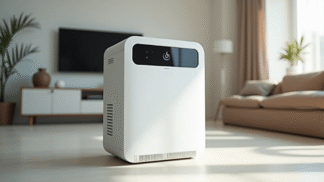
If your home gym smells “clean” when you walk in but turns into a funk zone halfway through a workout, you’re not imagining it. A home gym’s air has its own personality. It’s a mix of sweat humidity, warm body heat, rubber mats that off-gas, and odor particles that get pushed around every time you jump, row, cycle, or lift.
A smart air purifier can make a home gym feel fresher without turning your training space into a noisy wind tunnel. The key is choosing the right filtration stack (HEPA + real activated carbon), sizing it for the room, and using smart features (auto mode, scheduling, and filter tracking) so the purifier keeps up with how you actually train.
Below is a practical, buyer-intent guide focused on sweat smell, rubber odor, and workout air quality—without hype, and with simple setup advice you can use today.
Affiliate Disclosure: This post contains affiliate links. If you buy through my links, I may earn a commission at no extra cost to you. I only recommend products and filters that make sense for home gym air quality and odor control.
What’s the best purifier setup for a home gym?
The best home gym purifier setup is a true HEPA filter plus a substantial activated carbon stage, sized for at least 4–6 air changes per hour (ACH) in your room. Use auto mode during workouts, run it 30–60 minutes before training, and keep it running for 1–2 hours after. Carbon helps with rubber and sweat odors; HEPA helps capture fine particles you stir up during exercise.
Why home gyms smell weird: sweat, rubber mats, and trapped air
Home gym odor usually isn’t “one smell.” Its layers:
Sweat and body odor: Sweat itself is mostly water and salts, but bacteria break down sweat compounds, creating that familiar gym smell. Warm rooms and high humidity make it easier for odor to linger.
Rubber mats and equipment: Many rubber floors and some foam tiles release odor-causing volatile organic compounds (VOCs), especially when new or when the room warms up.
Dust and particles: Training stirs up settled dust, skin flakes, and fine debris. Even if you can’t see it, you can feel it—especially in smaller rooms.
Poor ventilation: Basements, garages, and spare rooms often have limited fresh-air exchange. Odors build because the air keeps recirculating.
What actually works for home gym odor control
You want two things working together:
1) True HEPA filtration (particle control)
HEPA is built for particles—fine dust, tiny airborne debris, and the stuff that gets kicked up during workouts. It helps the room feel “cleaner” and less stale.
2) Activated carbon (odor and VOC control)
Carbon is the difference between “the air is filtered” and “the room actually smells better.” If rubber odor is your main enemy, carbon matters more than most people realize.
Important reality check: Carbon performance varies a lot by purifier. Thin carbon sheets can help a little, but larger carbon mass tends to handle stronger, persistent odors better—especially in warm rooms with rubber flooring.
Smart features that matter in a home gym
“Smart” can be fluff, or it can be the reason your purifier actually keeps up with workouts. Here are the features worth paying for:
Auto mode with particle sensing: Helps the purifier ramp up when workouts stir up dust and particulates.
Scheduling: Set it to run before and after your usual training window so the room is fresh when you walk in.
Filter-life tracking: Home gyms can clog filters faster than quiet bedrooms. Tracking prevents “it’s running but not working” syndrome.
Quiet performance on medium speeds: If it’s too loud, you’ll stop using it. Consistency beats max power.
Quick buyer guide: sizing a purifier for a home gym (without math headaches)
If you want a simple rule that aligns with first-page buyer intent, use this:
Choose a purifier rated for a room size larger than your gym. Home gyms create more turbulence and particles than a quiet living room, and odor control benefits from extra capacity.
A practical target is 4–6 air changes per hour (ACH). If you train hard, run warmer temps, or have rubber mats, leaning higher helps.
| Home gym situation | What to prioritize | Why it matters |
|---|---|---|
| Rubber mat smell (new or strong) | More activated carbon | Carbon is the main tool for odor/VOC reduction |
| Oversized capacity + schedule | True HEPA + higher airflow | Captures fine particles you kick up during training |
| Small room, door closed often | Oversize capacity + schedule | Recirculating air traps odor; pre/post run clears it |
| Noise-sensitive workouts (yoga, guided training) | Quiet on medium speeds | So you actually keep it running |
| Allergy-prone household | HEPA + consistent filter replacement | Performance depends on clean filters and steady use |
Smart purifier vs “just open a window.”
Fresh air helps when outdoor conditions cooperate. But a purifier does something ventilation often doesn’t: it continuously captures particles and can reduce odor compounds with carbon, even when it’s too hot, too cold, or too polluted outside.
If you want the best results, combine both when possible: brief ventilation (5–10 minutes) plus purifier run time before and after training.
Comparison table: filter types for home gym air
| Ionizers / ozone-style “fresheners.” | Best for | Weak for | Home gym verdict |
|---|---|---|---|
| True HEPA | Fine particles, dust stirred up by workouts | Strong rubber/sweat odors (by itself) | Essential foundation |
| Activated carbon (substantial) | Rubber odor, VOCs, lingering smell | Capturing particles | Must-have for odor control |
| Thin carbon sheet | Light odors | Heavy rubber off-gassing, persistent funk | Helpful, but often not enough alone |
| Ionizers / ozone-style “fresheners” | Sometimes marketed for odor | Not a filtration substitute; may be undesirable for many households | Prefer HEPA + carbon instead |
| Smart sensors + auto mode | Hands-off performance during workouts | Not a replacement for correct sizing | High-value convenience |
Where smart purifiers fit in your home gym routine
Use the purifier like part of your training setup, not like a decoration in the corner.
Best routine: Run it 30–60 minutes before you train, keep it on auto (or medium/high) during the session, then let it run 1–2 hours after to clear lingering odor and particles.
Placement tip: Put it where airflow isn’t blocked—away from thick curtains, behind equipment stacks, or pressed into a corner. If you have rubber mats, placing the purifier where it can “pull” air across the room (not just from one tight area) helps.
Filters are the real “upgrade”: don’t let performance fade
In a home gym, filters can load up faster than people expect. Once the filter is saturated, the purifier may still run—but results drop quietly.
If your goal is odor control, carbon matters most, and carbon can saturate over time. If your goal is clean-feeling air, HEPA loading matters too. That’s why filter replacement is part of the buyer decision, not an afterthought.
If you want the purifier to keep working like it did in week one, plan filter replacements from the start.
Filter source: Stock up through FiltersFast so you’re not stuck waiting when performance drops.
Air quality add-on: If you’re also thinking about whole-home airflow and ventilation control, check out options from FieldControls.
Smart home gym setup: purifier + ventilation + habits
Purifiers do the heavy lifting, but the fastest odor wins usually come from combining three moves:
1) Control sweat humidity: If your gym stays damp, odor sticks around longer. A dehumidifier (in humid climates) plus a purifier can be a powerful combo.
2) Clean rubber mats correctly: Some mat odors improve after a few clean cycles. Use a cleaner appropriate for rubber flooring and let the mats fully dry.
3) Don’t trap the air: Even 5 minutes of fresh-air exchange can help, depending on outdoor conditions. For the bigger picture, it helps to understand basic Indoor Air Quality (IAQ) concepts and the factors that affect the air inside your home.
Internal reading (recommended)
If you want to go deeper on how filters and smart features actually work, these guides will help you pick the right setup faster:
Understanding Air Purifier Technology: HEPA, Activated Carbon, and Beyond
Smart Air Purifiers Guide: Automation, Sensors & Home Integration
Questions people ask before buying
Do air purifiers remove sweat odor?
They can help, especially when the purifier has a meaningful activated carbon stage. HEPA helps with particles, but carbon is the main tool for odor and many VOC-related smells.
Are rubber mat fumes something a purifier can handle?
A purifier with activated carbon can reduce odor and some VOCs over time, but results depend heavily on the amount of carbon, the room size, and how long you run it. New mats may off-gas more at first.
Should I run my purifier during workouts or only after?
During and after is ideal. Workouts stir up particles and heat the room, which can make the odor more noticeable. Auto mode helps, but scheduling a pre-run is a strong “set it and forget it” upgrade.
What’s the best place to put a purifier in a home gym?
Where airflow is open and unobstructed—away from corners and not jammed behind equipment. If possible, place it so it pulls air across the room rather than just from one dead zone.
How often do filters need to be replaced in a home gym?
It varies. Dusty gyms and frequent workouts can shorten filter life. Use filter tracking, and replace when performance drops or when your unit’s indicator recommends it. Keeping spares on hand prevents downtime.
Ready to act? If you’re buying a purifier for a home gym, don’t forget the part that keeps it effective: replacement filters.
Shop filters at FiltersFast (easy reorder when performance starts fading).
Explore FieldControls options if your gym is part of a bigger whole-home airflow or ventilation plan.
FAQ
What filter is best for rubber gym mat odor?
Activated carbon is the most important filter type for rubber odor and VOC-related smells. HEPA is still valuable, but carbon usually drives the “smells better” result.
Is a smart purifier worth it for a home gym?
Yes, if you’ll use the smart features. Scheduling and auto mode are especially useful in a gym because air quality changes quickly during workouts, and consistency is what keeps odor under control.
How long should I run an air purifier after working out?
A good target is 1–2 hours after, especially in smaller rooms or rooms with rubber flooring. If odor lingers, extend the runtime or increase speed during and after training.
Can a purifier replace ventilation in a basement gym?
A purifier helps a lot, but it doesn’t fully replace the need for fresh-air exchange. The best results usually come from combining purifier runtime with some ventilation when outdoor conditions allow.
What’s the most common mistake with home gym purifiers?
Buying too small (or choosing weak carbon) and then running it only occasionally. Oversize the unit, use auto/scheduling, and keep filters fresh.