The air inside your home can carry more than ordinary dust. Cooking particles, pet dander, pollen, mold spores, smoke, VOCs, carbon monoxide, radon, and lead dust can all affect indoor air quality in different ways.
The good news is that you do not have to guess your way through cleaner air. Once you know the most common indoor pollutants, you can match the right solution to the right problem: source control, ventilation when outdoor air is safe, moisture control, testing, alarms, and properly selected filtration.
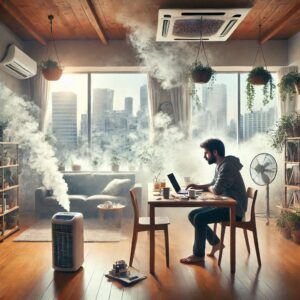
What are the most common indoor air pollutants?
The most common indoor air pollutants include particulate matter, VOCs, mold spores, pet dander, dust mites, pollen, carbon monoxide, radon, tobacco smoke, and lead dust. Some are particles that a HEPA-style filter can help capture. Some are gases that need source control, ventilation, carbon filtration, alarms, or professional mitigation.
Indoor air quality knowledge check
Before you choose a purifier or filter, test what you already know about home air pollutants.
- Which pollutants are particles, and which are gases?
- Can a HEPA-style filter remove carbon monoxide or radon?
- Does activated carbon matter more for odors and gases than for dust?
- Could your home need a carbon monoxide alarm or radon test?
- Do you know the exact replacement filter your purifier uses?
Why indoor air pollutants are easy to miss
Indoor air problems are tricky because the most important pollutants are often invisible. You may smell smoke, mustiness, or cooking odors, but you cannot always see fine particles, VOCs, radon, or carbon monoxide.
That is why cleaner air starts with awareness. If you know what is in the air, where it comes from, and what solution fits the pollutant, you can make better decisions. Sometimes the answer is a purifier. Sometimes it is a better HVAC filter. Sometimes it is fixing moisture, testing for radon, using a carbon monoxide alarm, or changing the source of the pollution.
For a deeper look at filter technology, read our guide to HEPA, activated carbon, and air purifier technology.
The top 10 air pollutants commonly found in homes
Particulate matter: PM2.5 and PM10
Particulate matter is a mix of tiny particles and droplets in the air. Indoors, it can come from cooking, candles, fireplaces, wood stoves, tobacco smoke, outdoor pollution, dust, and wildfire smoke that enters the home.
Fine particles are a concern because they can be inhaled deeply into the lungs. If your home has frequent cooking smoke, candle soot, fireplace use, or outdoor smoke events, particulate matter should be one of your top air-quality concerns.
What helps: Source control, range hood use, cleaner cooking habits, keeping windows closed during smoke events, and a properly sized air purifier with strong particle filtration and enough CADR for the room.
Volatile organic compounds: VOCs
VOCs are gases released from many common products, including paints, cleaning products, air fresheners, building materials, furniture, adhesives, solvents, and some stored household chemicals.
VOCs are different from dust and pollen. A basic particle filter is not designed to remove most gases. If odors, chemical smells, or new-furniture smell are your main concern, look beyond HEPA and study the activated carbon or gas-phase filtration in the product.
What helps: Source reduction, safer product choices, ventilation when outdoor air is clean, proper storage of chemicals, and activated carbon or other gas-phase filtration where appropriate.
Mold spores
Mold grows where moisture is not controlled. Bathrooms, basements, crawl spaces, leaky walls, damp carpets, window condensation, and poor ventilation can all create conditions where mold becomes a problem.
An air purifier may capture some airborne mold-related particles, but it will not fix the source. If water intrusion, high humidity, or hidden mold is the issue, filtration only treats part of the symptom.
What helps: Fix leaks, control humidity, dry wet materials quickly, clean small mold problems safely, seek professional help for larger or hidden problems, and use filtration as a support layer after moisture is addressed.
Pet dander and animal allergens
Pets can release dander, hair, saliva proteins, and tracked-in particles. These can collect on furniture, carpets, bedding, clothing, and air filters. For sensitive people, pet dander can be one of the most noticeable indoor air triggers.
A purifier can help reduce airborne particles in the room where pets spend time, but it should be paired with cleaning habits. The best results usually come from a combination of filtration, grooming, vacuuming, washable bedding, and keeping pet areas clean.
What helps: HEPA-style particle filtration, regular cleaning, grooming, washable pet bedding, and a purifier placed in the room where pets spend the most time.
Dust mites and household dust
Dust mites live in soft materials such as mattresses, bedding, pillows, carpets, and upholstered furniture. Their waste and body fragments can become allergy triggers for some people.
Air purifiers can help capture airborne dust particles, but dust mites themselves live mainly in fabrics and surfaces. That means filtration is only one part of control.
What helps: Washing bedding in hot water when fabric care allows, reducing humidity, vacuuming with appropriate filtration, using mattress and pillow encasements, reducing clutter, and running a room purifier for airborne dust.
Pollen that comes indoors
Pollen enters through open windows, doors, clothing, shoes, pets, and ventilation gaps. Once inside, it can settle on floors, bedding, furniture, and surfaces.
During allergy season, pollen control often depends on daily habits. A purifier helps most when it runs in the room where exposure matters most, such as a bedroom or home office.
What helps: Keeping windows closed during high-pollen periods, changing clothes after outdoor work, showering before bed if pollen exposure is high, cleaning floors, and using HEPA-style filtration in high-use rooms.
Carbon monoxide
Carbon monoxide is a colorless, odorless gas that can come from malfunctioning fuel-burning appliances, blocked vents, generators, fireplaces, vehicles, and other combustion sources.
This is not an air purifier problem. A purifier should not be relied on to detect or remove carbon monoxide. Homes need properly installed carbon monoxide alarms and safe use of fuel-burning equipment.
What helps: Carbon monoxide alarms, appliance maintenance, proper ventilation for fuel-burning equipment, never running generators indoors or in garages, and immediate emergency action if an alarm sounds.
Radon gas
Radon is a naturally occurring radioactive gas that can enter homes through cracks and openings in foundations. It is especially important because you cannot see, smell, or taste it.
Air purifiers are not a radon solution. The right first step is testing. If levels are elevated, a qualified radon mitigation system may be needed.
What helps: Home radon testing, follow-up long-term testing when needed, and professional mitigation if radon levels are elevated.
Tobacco smoke and smoke residue
Tobacco smoke contains a complex mixture of particles and gases. It can linger in air, settle into surfaces, and leave odors behind. Secondhand and thirdhand smoke are serious indoor air-quality concerns.
A purifier with strong particle filtration and meaningful activated carbon may reduce some smoke particles and odor, but it cannot make indoor smoking safe. The best solution is to keep smoke out of the home entirely.
What helps: No indoor smoking, strong source control, ventilation when safe, HEPA-style filtration for particles, and substantial activated carbon for smoke odor support.
Lead dust in older homes
Homes built before 1978 are more likely to contain lead-based paint. When old paint deteriorates or renovation work is done improperly, lead-contaminated dust can become a hazard, especially for children.
A HEPA-filtered device may capture some airborne dust, but lead hazards require lead-safe practices, proper testing, careful cleanup, and professional guidance when needed. Do not sand, scrape, or disturb suspected lead paint without following lead-safe rules.
What helps: Lead testing, wet-cleaning methods, lead-safe renovation practices, professional abatement when required, and keeping children away from peeling paint or dust hazards.
Which pollutants can an air purifier help with?
| Pollutant | Can a purifier help? | Best filtration support | Important safety note |
|---|---|---|---|
| PM2.5 and PM10 | Yes, with proper sizing | HEPA-style particle filtration and enough CADR | Reduce sources such as smoke, soot, and cooking particles. |
| VOCs | Sometimes | Activated carbon or gas-phase filtration | Source reduction and ventilation are often more important. |
| Mold spores | Some airborne particles | HEPA-style particle filtration | Fix moisture first. A purifier does not solve mold growth. |
| Pet dander | Yes | HEPA-style particle filtration | Pair with cleaning, grooming, and washable bedding. |
| Dust mites | Airborne fragments only | HEPA-style particle filtration | Bedding, humidity, and surface cleaning matter more. |
| Pollen | Yes | HEPA-style particle filtration | Keep pollen from entering when possible. |
| Carbon monoxide | No | Not an air purifier solution | Use carbon monoxide alarms and fix combustion sources. |
| Radon | No practical solution | Not an air purifier solution | Test the home and mitigate if levels are elevated. |
| Tobacco smoke | Some particles and odor | HEPA-style filtration plus substantial activated carbon | No indoor smoking is the safest strategy. |
| Lead dust | Some airborne dust only | HEPA filtration as support | Use lead-safe testing, cleanup, and renovation practices. |
How air purifiers actually help
Most portable air purifiers use a fan to pull air through one or more filters. The most useful home units often combine a pre-filter, a HEPA-style particle filter, and an activated carbon layer.
Catches larger debris such as hair, lint, and visible dust before it reaches the main filter.
Targets airborne particles such as dust, pollen, pet dander, smoke particles, and some mold-related particles.
Helps with some odors and gases, including certain smoke smells, cooking odors, and VOC-related concerns.
Smart features can also help, but they are not the main performance factor. App control, auto mode, air-quality sensors, schedules, and filter reminders are useful only if the purifier has enough airflow and the right filter system for the room.
For connected-home features, read our smart air purifier guide to automation, sensors, and home integration.
Choosing the right purifier for these pollutants
Do not start with the brand. Start with the pollutant and the room. A purifier that works well for a small bedroom may be too weak for a large living room. A purifier with a great HEPA-style filter may still be underbuilt for odors if the carbon layer is thin.
Prioritize HEPA-style particle filtration, enough CADR for the room, and filters you can replace affordably.
Look for strong smoke CADR and run the purifier long enough at an effective fan speed.
Look closely at activated carbon. More meaningful carbon support usually matters more than vague deodorizing claims.
Balance CADR, noise, sleep mode, display lights, and filter cost.
Check CADR and coverage assumptions. Large spaces may need a stronger unit or multiple purifiers.
Choose smart features after confirming airflow, filter type, ozone safety, and replacement filter availability.
The clean-air stack that works best
Cleaner indoor air usually comes from layers, not one product. A purifier can be part of the solution, but it should work alongside basic home habits.
Reduce smoke, excess fragrance, harsh cleaners, moisture, dust buildup, and poor cooking ventilation.
Bring in outdoor air when outdoor air quality is good. Keep windows closed during smoke, high pollen, or poor AQI days.
Use a properly sized purifier in bedrooms, home offices, pet areas, nurseries, or main living spaces.
Use the best filter your system can safely handle and replace it before airflow suffers.
Use carbon monoxide alarms, test for radon, and take lead hazards seriously in older homes.
Dirty filters reduce performance. Check the exact model number before ordering replacements.
Filter replacement: the overlooked part of cleaner air
A purifier only works well when air can move through a clean, correct filter. If the filter is clogged, cheap, damaged, missing, or wrong for the model, the purifier may run without doing much useful work.
Before buying a purifier, check the replacement filter cost. Before ordering a replacement filter, confirm the purifier brand, model number, filter code, dimensions, and manufacturer guidance.
Replacement filter reminder
If you already own a purifier, the next clean-air upgrade may not be a new machine. It may be the correct replacement filter installed on schedule.
FAQs about indoor air pollutants
What is the most common air pollutant inside a home?
There is no single answer for every home. Common indoor pollutants include particulate matter, VOCs, mold spores, pet dander, dust mites, pollen, smoke, carbon monoxide, radon, and lead dust in older homes.
Can an air purifier remove all indoor pollutants?
No. A purifier can help reduce many airborne particles and, with activated carbon, may help with some odors and gases. It does not remove carbon monoxide, solve radon, fix lead hazards, or repair moisture problems that cause mold.
What filter is best for dust and pollen?
HEPA-style particle filtration is usually the best starting point for dust, pollen, pet dander, and similar airborne particles. CADR and room size also matter.
What filter is best for odors and VOCs?
Activated carbon or another gas-phase filter is usually more relevant for odors and many VOC concerns. Particle filters alone are not designed for most gases.
Can an air purifier help with mold?
It may capture some airborne mold-related particles, but it does not fix the moisture source. Mold problems need moisture control, cleanup, and sometimes professional remediation.
Can a purifier replace a carbon monoxide alarm?
No. Every home with fuel-burning appliances, fireplaces, attached garages, or generators nearby should use carbon monoxide alarms according to safety guidance. A purifier is not a CO detector.
Can a purifier remove radon?
No portable purifier should be treated as a radon solution. Test your home for radon and use proper mitigation if levels are elevated.
Where should I put an air purifier first?
Start with the room where clean air matters most: usually the bedroom, nursery, home office, pet-heavy room, or main living area.
Helpful external resources
For readers who want to verify the science and safety guidance, these official resources are useful starting points:
EPA: Indoor Air Quality
EPA: Indoor Pollutants and Sources
EPA Guide to Air Cleaners in the Home
CDC: Carbon Monoxide Poisoning Basics
EPA: Health Risk of Radon
EPA: Protect Your Family from Sources of Lead
AirNow Outdoor Air Quality Index
Final takeaway: cleaner air starts with knowing what you are fighting
Indoor air quality is not one problem. It is a mix of particles, gases, moisture issues, smoke, outdoor pollution, building materials, pets, dust, and hidden hazards. That is why the best solution starts with identifying the pollutant first.
Use HEPA-style filtration for particles. Use activated carbon when odors and certain gases matter. Use carbon monoxide alarms for CO. Test for radon. Handle lead dust with lead-safe methods. Fix moisture problems before mold spreads. Then choose an air purifier that fits your room, your filter budget, and your real indoor air concerns.
Build your cleaner-air plan
Start with the pollutant. Match the solution. Replace filters on schedule. Cleaner indoor air is easier when every tool has the right job.
What a great article on best smart air purifiers. This is something that a lot of us do not consider in our daily lives. We don’t really think about how the air in our homes could be causing us health issues or could cause health issues eventually. Breathing is a main survival need, and we should be very mindful of the quality since it is life sustaining. As I read your article, I was agreeing with the statements made about all the things in my home that likely cause air quality issues. My husband loves to light and burn great smelling candles during the day. I love them too, but they likely are not good for the air quality since we do not have an air purifier. We have a dog, I love to cook, we are doing home remodeling over a long period of time, I have plug in scent warmers, and the list goes on. We really need to look into a good quality air purifier!
This also made me think how I would want to find an air purifier that actually is loud 🙂 If I put that in our bedroom at night, I would not have to run the loudest fan I could find in the store, especially in the Winter.
Do you think a louder air purifier would end up being a lower quality air purifier?
Hi Cindy!
Wow, thank you so much for your amazing comment! I’m thrilled to hear that the article struck a chord with you and got those wheels turning about the air quality in your home. It’s such a crucial topic that often flies under the radar—with all those sneaky factors like candles, cooking, pets, and renovations you mentioned!
You’re absolutely spot-on about candles and scent warmers! They smell incredible, but they can unleash VOCs and soot that might play tricks on your indoor air quality over time. Imagine transforming your space with a powerful air purifier that can filter out those pesky particles and keep the air feeling fresh and revitalized!
I totally get your concerns about air purifiers and noise—they’re super valid! But here’s the fun part: noise levels don’t always indicate how effective a purifier is. There are some fantastic models out there equipped with multiple fan speeds, so you can control the noise level to your liking. Some even create a soothing white noise effect at higher settings—perfect for drifting off in the bedroom! If you enjoy a bit of sound while you sleep, look out for a purifier with adjustable settings, letting you crank it up at night and keep it quieter during the day.
I love that you’re considering adding a purifier to your home—it sounds like a winning idea! If you have any questions as you explore your options, don’t hesitate to reach out.