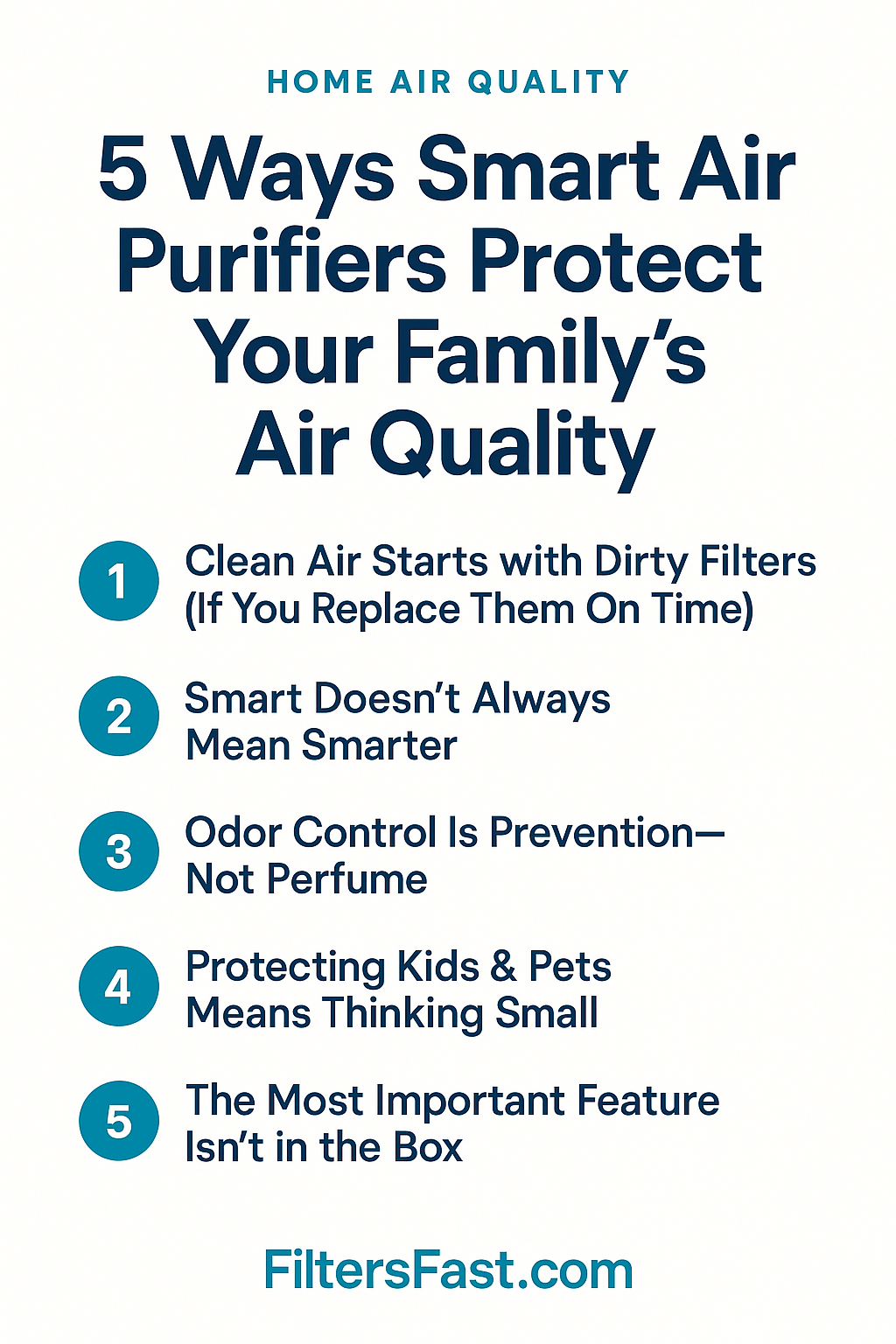
Compare smart air purifiers by energy use, cost, and features. Learn how much power they use, how to choose efficient models, and real running costs, so you get clean air without a high bill.

What You’ll Learn
Smart air purifiers are more energy efficient than older models because they adjust fan speed based on air quality. Typical power use ranges from 10 to 100 watts, depending on size and mode. Choosing ENERGY STAR-certified models and using auto mode keeps costs low. On average, most smart purifiers cost less than $15 per year to operate.
Smart air purifiers can improve indoor air quality while adapting to your lifestyle. But energy use matters: a powerful purifier with constant high fan speeds can raise your electricity bill. This guide explains how smart purifiers manage energy, how much power they use, and how to choose models that balance performance and efficiency.
How Smart Purifiers Use Energy
What Makes a Purifier “Smart”
Smart purifiers have built-in sensors or connect to apps to:
- Detect air quality in real time
- Adjust fan speed automatically
- Schedule operation
- Report energy use or runtime
These features can reduce energy use by avoiding unnecessary high-speed operation.
Typical Energy Use: Quick Reference
Energy Use by Fan Mode
| Mode | Approx. Power Draw | Notes |
|---|---|---|
| Sleep / Low | 10–25 watts | Quiet operation, minimal energy |
| Auto / Normal | 25–50 watts | Balanced cleaning and cost |
| High / Turbo | 50–100+ watts | Strong cleaning, higher cost |
| Standby / Smart Ready | <1 watt | Minimal power when idle |
Annual Running Cost Estimate
Assumptions: 12 hours per day, $0.14 per kWh (US average).
| Fan Mode | Wattage | Monthly kWh | Monthly Cost | Annual Cost |
|---|---|---|---|---|
| Sleep | 15 W | 5.4 kWh | $0.76 | $9.10 |
| Auto | 35 W | 12.6 kWh | $1.76 | $21.10 |
| High | 75 W | 27 kWh | $3.78 | $45.40 |
Bottom line: Even at higher settings, smart purifiers typically cost less than $50/year to run.
Efficiency Features That Save Energy
Look for These
- Auto mode with sensors – runs only when needed
- ENERGY STAR certification – verified efficiency
- Filter change indicators – keeps system optimized
- Smart scheduling – limits runtime when you’re away
- Low standby power – reduces wasted energy
Smart Purifier Comparison
| Feature | ENERGY STAR Models | Non-Certified |
|---|---|---|
| Average Power Use | Lower | Higher |
| Auto Efficiency | Typically advanced | Varies by brand |
| Running Cost | Lower | Higher |
| Smart Controls | Often included | Sometimes basic |
| Price Range | Mid to High | Low to Mid |

How to Evaluate Real Energy Use Before Buying
Ask These Questions
- What is the power draw in auto mode?
Auto mode is the best proxy for realistic use. - Is the model ENERGY STAR certified?
Certification means independent testing. - Can I schedule or automate runtime?
Less runtime = less energy. - Does the app report energy or runtime?
Helps you track usage in real time.
If you decide you want replacement filters or accessories for your new purifier, I recommend reliable sources that stock a wide range of genuine parts:
- FiltersFast – extensive selection of filters for most major air purifier brands, plus clear compatibility guides. (Affiliate link: https://tidd.ly/3L0gZlZ)
- FieldControls – specialized controls and replacement parts if you’re upgrading or maintaining smart purifiers. (Affiliate link: https://tidd.ly/48EUxHp)
This article uses affiliate links at no extra cost to you. I only link to trusted retailers with solid return policies and good customer support.
Real-World Tips to Keep Energy Use Down
Use Auto Mode as Your Primary Setting
Auto mode adjusts fan speed based on actual air quality, avoiding wasted power.
Clean or Replace Filters on Schedule
A clogged filter makes the fan work harder, increasing energy use.
Match Purifier Size to Your Space
Oversized units can run unnecessarily; undersized units run constantly. Always check the recommended room size.
Frequently Asked Questions
How much energy does a smart air purifier use?
Typical smart purifiers draw 10–100 watts depending on fan speed. Auto mode usually stays in the 25–50 watt range.
Are smart purifiers more energy efficient than standard purifiers?
Yes. Smart purifiers adjust fan speed with sensors and scheduling, reducing unnecessary runtime.
Do smart purifiers save money on electricity?
Yes. Because they adapt to air quality, they tend to run at lower power most of the time, keeping annual operating costs low.
What features should I look for to reduce energy use?
Prioritize auto mode, ENERGY STAR certification, smart scheduling, and low standby power.
Conclusion,
Choosing a smart air purifier with thoughtful energy features can give you cleaner indoor air without a high electricity cost. Focus on models with auto mode and efficiency certifications, and use the comparison tables above to weigh real power use. For replacement filters and parts, reputable vendors help you maintain performance over time without guesswork.