Compare smart air purifier energy consumption, annual electricity costs, and Energy Star 2.0 specs. Learn how smart sensors reduce bills.
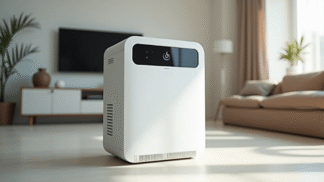
Understanding the energy footprint of an air purifier is essential before purchase, as these devices often run 24/7. While modern smart purifiers are designed for efficiency, their impact on your utility bill depends on fan speed, filtration density, and automation features.
How Much Electricity Does an Air Purifier Use?
On average, a modern air purifier consumes between 30 and 100 watts of electricity. When running continuously, a standard 50-watt model uses approximately 1.2 kWh per day, costing between $5 and $10 per month depending on local utility rates. Energy Star 2.0 certified models are approximately 25% to 40% more efficient than standard units, often consuming less than 30 watts on medium settings.
Smart vs. Traditional Air Purifiers: Energy Comparison
The primary difference in energy consumption between smart and traditional purifiers is not the maximum wattage, but the “duty cycle.” Smart purifiers use onboard particle sensors to adjust fan speeds in real-time, preventing the motor from running at high power when the air is already clean.
Energy Consumption by Model Type (2026 Projections)
| Purifier Category | Typical Wattage Range | Estimated Monthly Cost (24/7) | Energy Star 2.0 Status |
| Small Room (Desktop) | 10W – 25W | $1.20 – $3.00 | Often Exempt |
| Medium Room (Smart) | 30W – 60W | $3.60 – $7.20 | Certified |
| Large Room (Smart) | 60W – 120W | $7.20 – $14.40 | Certified |
| Whole-House Portable | 120W – 250W | $14.40 – $30.00 | Varies |
Calculations based on an average US electricity rate of $0.16/kWh.
Fact-Safe Brand Comparisons
When selecting a high-efficiency unit, professional-grade brands like Field Controls and specialized suppliers like FiltersFast provide data-backed specifications for their filtration systems.
Featured Efficient Systems
- Field Controls TRIO Plus / Pro: These units are Energy Star-certified and use DC motors, which are significantly more efficient than standard AC motors found in budget models. The TRIO Plus is rated for high CADR (Clean Air Delivery Rate) while maintaining a low energy-to-airflow ratio.
- FiltersFast Brand Replacements: High-quality replacement filters from FiltersFast ensure that the air purifier motor does not have to work harder (and draw more current) to push air through a prematurely clogged or poorly designed filter medium.
View current efficiency ratings and models:
3 Factors That Drive Up Energy Costs
1. Filter Resistance (Pressure Drop)
Denser filters, such as HEPA H14 or ULPA, provide superior filtration but create higher resistance. This requires the fan motor to consume more wattage to maintain the same Clean Air Delivery Rate (CADR). Using high-quality FiltersFast replacements ensures the correct balance between filtration and airflow.
2. UV-C and Supplemental Tech
Purifiers that include UV-C lamps or ionizers consume additional power. A single UV-C bulb typically adds 8W to 15W to the total draw. While this increases energy use, it is often necessary for neutralizing airborne pathogens.
3. Fan Speed Settings
Running a purifier in “Turbo” mode can consume up to 10 times as much energy as in “Sleep” mode. Smart “Auto” modes are the most effective way to manage this, as they only trigger high-wattage operation during pollution spikes (e.g., while cooking or vacuuming).

FAQ
Is it expensive to run an air purifier all day?
No. Most Energy Star-rated air purifiers cost less than $0.20 per day to operate. This is comparable to the energy used by a modern LED television or a laptop computer.
Does a smart air purifier save money?
Yes. Smart purifiers save money by using “Auto Mode” to reduce fan speed when air quality is high. By avoiding constant high-speed operation, users can reduce the device’s energy consumption by up to 50% compared to a manual unit left on the high setting.
How do I check the energy usage of my air purifier?
Check the product label for the “Rated Power” in Watts (W). To calculate the daily cost: (Watts × 24 / 1000) × your local kWh rate.
Disclosure and Buying Recommendations
This guide provides factual energy data to assist in your purchasing decision. If you choose to purchase through the links below, we may receive a small commission at no additional cost to you, which helps support our independent testing.
- For Professional Grade Efficiency: We recommend Field Controls for their medical-grade filtration and Energy Star-certified DC motors.
- For Sustainable Maintenance: We recommend FiltersFast for high-performance replacement filters that preserve your unit’s original energy-efficiency ratings.
Summary Checklist for Energy-Conscious Buyers
- Check for Energy Star 2.0: Ensure the model meets the latest 2026 efficiency standards.
- Verify Motor Type: Prefer Brushless DC (BLDC) motors over AC motors.
- Look for Auto-Mode: Ensure the unit has a built-in PM2.5 sensor for automated speed control.
- Schedule Maintenance: Replace filters via FiltersFast regularly to prevent the motor from overworking.
