Matter-compatible air purifiers are smart air cleaners that use the Matter interoperability standard to communicate locally and securely across different smart-home platforms.
In practical terms, this means a single purifier can integrate with multiple ecosystems, respond to shared sensors, and participate in whole-home automations without relying on fragile cloud connections or brand-locked apps.
As indoor air quality becomes a core health concern, this technical shift is changing how homes manage air—quietly, efficiently, and reliably.
The Problem With Today’s “Smart” Air Purifiers
Most smart air purifiers still operate inside closed ecosystems. Each brand ships its own app, its own cloud service, and its own automation logic. That creates three persistent problems: platform lock-in, automation delays, and long-term reliability risks.
If you’ve ever replaced a router, switched phones, or changed smart-home platforms, you’ve probably seen devices disappear, automations break, or features quietly removed. Air quality shouldn’t depend on whether a company still maintains an app.
What Matter Changes (and Why It Matters for Air Quality)
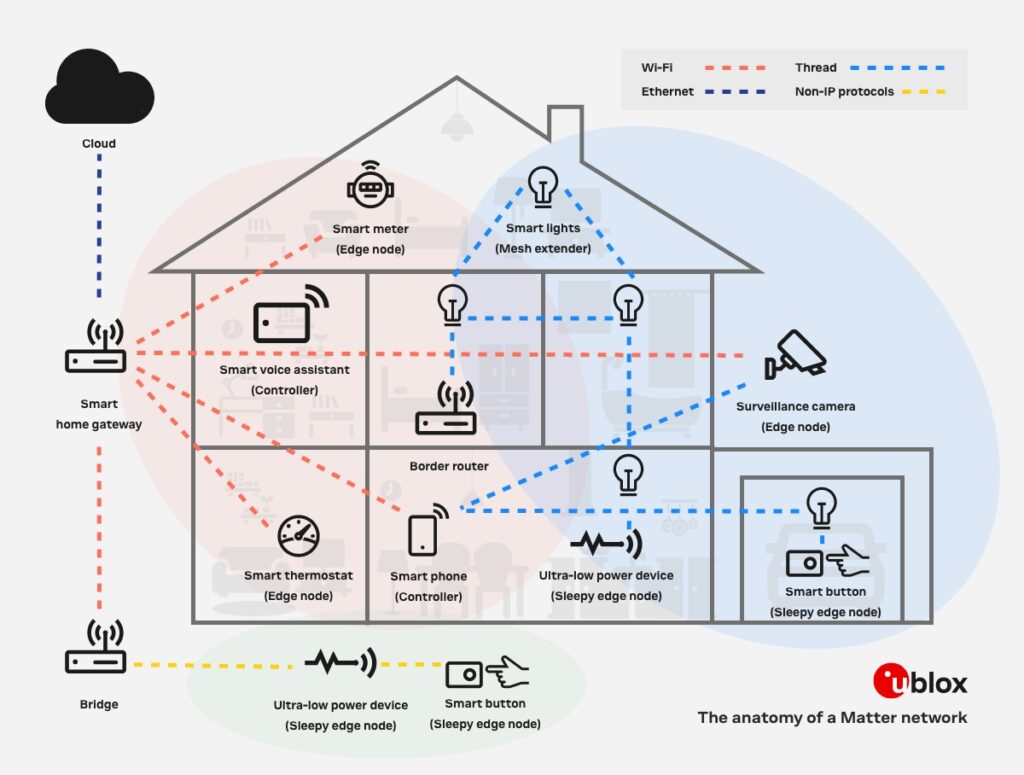
Matter is an open smart-home connectivity standard developed by the:contentReference[oaicite:1]{index=1}. Its goal is simple: make smart devices work together locally, securely, and consistently—regardless of brand.
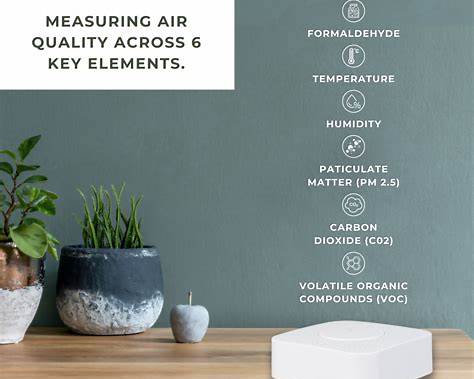
For air purifiers, this has significant implications. Instead of reacting only to their own built-in sensors, Matter-compatible purifiers can respond to data from shared indoor air monitors, HVAC systems, and occupancy sensors. The result is air management that behaves like infrastructure, not a gadget.
Key Technical Advantages of Matter-Compatible Purifiers
- Local control: Automations run inside your home, not in distant data centers.
- Cross-platform support: Works with ecosystems like :contentReference[oaicite:2]{index=2} and :contentReference[oaicite:3]{index=3} without duplicate devices.
- Reduced latency: Faster responses when pollutants spike.
- Longer lifespan: Less dependence on vendor-specific cloud services.
Matter vs Traditional Smart Purifiers: A Clear Comparison
| Feature | Traditional Smart Purifier | Matter-Compatible Purifier |
|---|---|---|
| Platform support | Single ecosystem | Multi-ecosystem by design |
| Automation reliability | Cloud-dependent | Local + cloud-optional |
| Sensor integration | Limited to device sensors | Whole-home sensor sharing |
| Latency | Variable | Consistently low |
| Long-term usability | Vendor-dependent | Standards-based |
Why This Matters for Real-World Air Management
Air quality problems are not isolated events. Cooking, pets, outdoor pollution, humidity shifts, and seasonal allergens interact across rooms. A Matter-compatible purifier can react when a kitchen sensor detects particulates, slow down when rooms are unoccupied, or sync with ventilation systems to avoid over-filtering.
This turns air purification into a coordinated system rather than a single device running at full speed all day.

Energy Efficiency and Filter Longevity
Because Matter allows smarter triggers, purifiers don’t need to rely on aggressive preset schedules. Running only when air quality thresholds are exceeded reduces fan wear and extends filter life. Over time, this lowers operating costs and improves sustainability—without sacrificing performance.
When it’s time to replace filters, trusted suppliers like FiltersFast make it easier to keep systems running at peak efficiency without having to guess about compatibility.
Matter and Whole-Home HVAC Integration
Standalone purifiers are powerful, but their impact is even greater when paired with ventilation and airflow control. Matter-compatible devices can coordinate with dampers, exhaust fans, and inline air systems—creating layered air defense.
Manufacturers like Field Controls focus on airflow management solutions that complement smart purification strategies, especially in homes with complex ducting or pressure-balance challenges.
FAQ,
What is a Matter-compatible air purifier?
It’s an air purifier that uses the Matter smart-home standard, allowing it to work across multiple platforms and respond to shared sensors through local automation.
Do Matter purifiers clean air better?
Filtration performance depends on the filter and airflow design. Matter improves how and when purification happens, not the physics of filtration itself.
Is Matter replacing existing smart-home systems?
No. Matter sits above existing ecosystems, allowing them to interoperate without forcing users to abandon their preferred platforms.
Are Matter-compatible purifiers future-proof?
They are more resilient because they rely on an open standard rather than a single vendor’s cloud infrastructure.
The Long-Term Shift: From Devices to Systems
Matter-compatible air purifiers represent a structural change in how homes manage air. Instead of reacting in isolation, devices collaborate. Instead of brand silos, standards guide behavior. And instead of constant manual adjustments, air quality becomes a background process—quiet, adaptive, and reliable.
As smart homes mature, the question won’t be whether a purifier is “smart.” It will be whether it can think as part of the home. Matter makes that possible.
Affiliate disclosure: Some links may earn a commission at no additional cost to you. Recommendations are based on standards compatibility, long-term reliability, and real-world use cases.