There’s a new kind of “home upgrade” showing up in modern apartments, renovated living rooms, and minimalist bedrooms.
It isn’t a bigger TV. It isn’t a new couch.
It’s a wall-mounted smart air purifier—the clean-air option that looks more like a design feature than a bulky appliance you trip over at night.
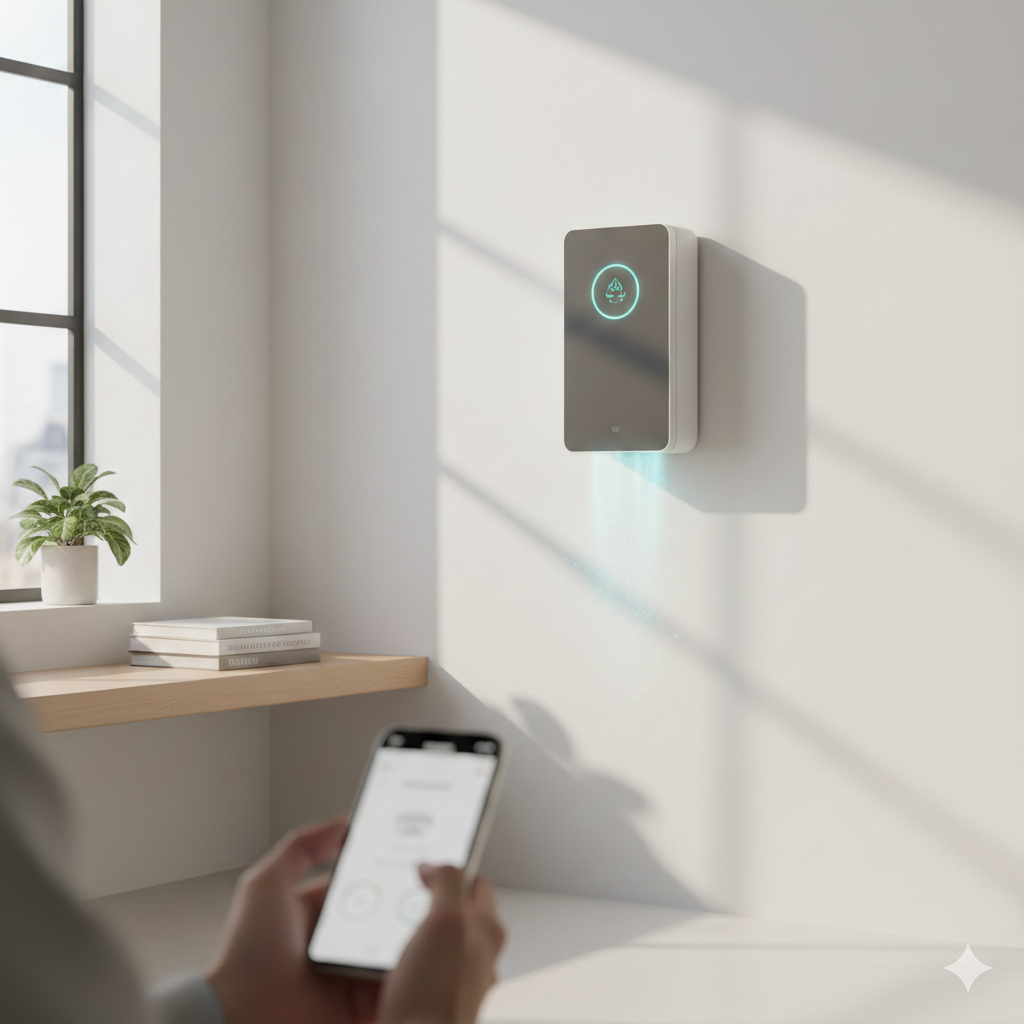
And the timing makes sense. People want cleaner indoor air. They also want their space back. Wall mounting checks both boxes: it keeps the unit out of the way, improves room flow, and makes “clean air” feel like part of the room—not a temporary gadget sitting in the corner.
Featured-snippet quick answer: Wall-mounted smart purifiers are popular because they save floor space, can blend into modern décor, and often include app control, sensors, and auto mode. The smart way to buy one is to size it by CADR for your room, choose true mechanical filtration (like HEPA) for particles, plan for filter replacement costs, and mount it exactly as the manufacturer recommends so airflow stays clear.
Disclosure: This post contains affiliate links. If you buy through my links, I may earn a commission at no extra cost to you. I only recommend products and suppliers that fit a practical, safety-first clean-air approach.
Why Wall-Mounted Purifiers Are Showing Up Everywhere
Traditional purifiers work, but they come with a small daily annoyance: they live on your floor. That means one more thing to bump into, vacuum around, or move when you rearrange furniture.
Wall-mounted units flip that script. You mount them once, and they become part of the room.
- You reclaim floor space (huge for apartments, nurseries, and home offices).
- You reduce “tip-over” risk in kid/pet-heavy households.
- You make clean air look intentional, not like an afterthought.
- You keep airflow zones clearer by avoiding blocked intakes behind furniture.
Some brands even lean into the design angle with customizable front panels so the purifier can blend in like wall décor.
Do Wall-Mounted Air Purifiers Work Better?
Here’s the honest answer: wall mounting doesn’t magically increase cleaning power.
What matters most is still the same as any purifier:
- CADR (Clean Air Delivery Rate) sized to your room
- Filter type (mechanical filtration for particles)
- Airflow (clear intake/exhaust, not jammed behind furniture)
- Runtime (you actually run it often enough)
Wall mounting helps with the real-world part of performance: it’s easier to keep the intake unobstructed, and it’s easier to leave the purifier running without it being “in the way.” That consistency is what turns a purchase into a habit.
The “Smart” Part: Features That Actually Matter
Smart purifiers aren’t all equal. Some are genuinely helpful. Others are just basic fans with an app.
These are the smart features worth caring about:
Auto mode + real sensors
This is the feature that makes a purifier feel effortless. A sensor-driven auto mode can ramp up during cooking, cleaning, pet activity, or smoky outdoor days—then quiet down when the air improves.
App control that solves a real problem
The best app control isn’t “cool.” It’s practical. It lets you:
- check air quality without guessing
- change fan speed from bed
- set schedules so it runs when you’re home
- track filter life so performance doesn’t quietly drop
Quiet performance you can live with
Most people don’t stop using a purifier because it doesn’t work. They stop using it because it’s loud. If a unit can’t run comfortably while you sleep, you lose the one window of time you can clean air for hours uninterrupted.
How to Size a Wall-Mounted Purifier Correctly (Without Guessing)
This is where smart buyers separate themselves from impulse buyers.
Look for a purifier with a CADR that matches your room size. Government and industry guidance consistently points to CADR as a key metric for particle removal performance.
Fast rule of thumb: If your room is 200 sq ft, target a smoke CADR around that range for smoke-heavy situations, or at least a strong CADR for your room size for everyday use. If your purifier is undersized, you’ll run it on high all the time and still feel disappointed.
Smart sizing shortcut
1) Measure your room (length × width).
2) Match purifier coverage to that number.
3) When smoke is the issue, prioritize smoke CADR and avoid undersizing.
Wall-Mounted vs. Floor vs. Whole-Home: What Fits Your Life?
Wall-mounted purifiers are great, but they’re not always the “best” answer. It depends on your space, your goals, and what you want to fix.
| Option | Best for | Strengths | Tradeoffs |
|---|---|---|---|
| Wall-mounted smart purifier | Small spaces, modern layouts, homes with kids/pets | Saves floor space, looks intentional, easy to keep intake clear | Requires mounting, placement matters, not every model is truly “smart” |
| Floor/stand purifier | Renters, flexible room moves, quick setup | Plug-and-play, easy relocation, many high-CADR options | Takes floor space, easier to block airflow, easier to ignore |
| Whole-home / HVAC add-on | Homes with central HVAC, coverage across multiple rooms | Works in the background, can improve air throughout the house | Install complexity, depends on HVAC runtime, not a “single-room boost” tool |
Three Wall-Mounted Styles Buyers Are Choosing Right Now
When people say “wall-mounted purifier,” they usually mean one of these three categories. Knowing the categories makes shopping easier and keeps you from comparing the wrong things.
1) True wall-mount designs (made to live on the wall)
These are built with wall placement in mind—thin profiles, wall-friendly airflow design, and often a more “tech panel” look than a traditional tower purifier.
Best for: minimalist rooms, hallways, offices, and kitchens with limited floor space.
2) Wall-mountable flat panel purifiers (floor OR wall)
This category gives you flexibility. You can use the unit as a floor purifier now, then mount it later when you’re ready.
Best for: renters who might move, homeowners who want optionality, and anyone who likes clean design.
3) Heavy-duty purifiers that use wall brackets
These aren’t always “smart,” but they’re built for serious filtration, and they can be wall-mounted using dedicated mounting kits. This is a good option when you care more about robust filtration than app control.
Best for: workshops, smoke-prone areas, chemical/odor concerns (with the right filtration media).
Buyer Checklist: What to Look For Before You Mount Anything
Before you buy, run through this checklist. It keeps the decision grounded and prevents “feature bait” from taking over.
1) CADR and coverage that match your room
If the purifier is underpowered, the wall mount won’t save it. A correctly sized unit is the foundation.
2) True mechanical filtration for particles
For particles like smoke, dust, and pollen, buyers commonly look for HEPA-class mechanical filtration. If your main issue is odor or gases, you’ll also want substantial activated carbon or other gas-targeting media.
3) Filter replacement cost (the hidden “ownership” cost)
This is the part that too many people skip. Filters are the recurring cost of clean air.
If you want a simple way to stay stocked on replacements, this is the practical move:
4) Noise range (especially if it’s for a bedroom)
Wall mounting can bring the purifier closer to ear level, depending on placement. That makes “quiet mode” more than a nice-to-have.
5) Safety and “what to avoid”
Avoid products that lean on ozone generation as a “feature.” If a listing is vague about how it cleans air, that’s a signal to slow down and verify what you’re buying.
Installation Tips That Keep Performance (and Safety) Intact
Mounting a purifier isn’t hard, but it’s worth doing carefully. You’re placing a powered device on the wall, and airflow matters.
- Follow the manufacturer’s clearance guidance so intake and exhaust aren’t blocked.
- Mount into studs when required (or use proper anchors rated for the unit’s weight).
- Keep cords tidy so the setup looks clean and stays safe.
- Don’t mount behind curtains or large furniture that can choke airflow.
- Plan for filter access so replacement doesn’t become an annoying project.
If you want clean-air results, the goal is simple: unblocked airflow + correct sizing + consistent runtime. Wall mounting helps with two of those, but sizing and usage still lead the way.
When a Wall-Mounted Purifier Isn’t the Best Answer
Sometimes the smarter buy is a different format—especially if you’re trying to clean large areas quickly or you want a more “whole-room punch” during smoke season.
That’s where a high-output portable purifier can make sense. Field Controls, for example, sells portable purification systems designed for larger spaces and multi-stage treatment. If you’re comparing room coverage and want a heavy-duty option to consider, it’s worth looking at what they offer.
Also, if your home has central HVAC and your goal is broader coverage across rooms, a whole-home approach can be the long-term play. It’s not always the cheapest up front, but it can be the most “set-and-forget” solution when installed properly.
Quick Comparison Table: What Smart Buyers Compare First
| What to compare | Why it matters | What to aim for |
|---|---|---|
| CADR / coverage | Determines how quickly particles are removed | Coverage that matches your room size (don’t undersize) |
| Filter type | Particles vs gases need different strategies | Mechanical filtration for particles; carbon/media for odors/VOCs |
| Noise range | Quiet use increases runtime and results | A mode you can sleep with |
| Smart controls | Automation reduces “set it and forget it” failure | Auto mode + sensors + scheduling |
| Filter replacement cost | Long-term ownership cost | Easy-to-buy replacements and a realistic schedule |
| Mounting requirements | Safety + airflow clearance | Clear install instructions and strong bracket design |
FAQ (Real Answers, No Hype)
Are wall-mounted air purifiers worth it?
They’re worth it if you want clean air without giving up floor space. The biggest advantage is consistency: a wall-mounted unit is easier to keep unobstructed and easier to live with day to day. Just make sure the CADR matches y