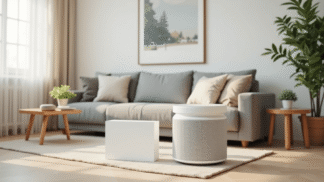
Smart air purifiers are usually worth the upgrade if you want automatic air-quality detection, quieter day-to-day operation, and more consistent protection from allergens, smoke, and fine particles. Traditional purifiers can still work well, but they depend on manual fan settings and won’t react to pollution spikes unless you adjust them.
That sounds simple. But in real homes—pets, cooking, traffic pollution, pollen seasons—the difference between “runs” and “responds” is where smart purifiers earn their keep.
Quick win: A purifier is only as good as the filter inside it. If you’re not sure when to replace yours, start here:
Why this matters: a clogged or expired filter can reduce airflow, strain the motor, and make the purifier feel “weak”—even if the model itself is excellent.
Quick Answer: What’s the Real Difference?
Traditional purifiers can clean the air well when they’re running at the right speed—yet you usually have to choose that speed. Smart purifiers add sensors and automation so the unit detects changes in air quality and adjusts fan speed automatically.
In other words, the upgrade isn’t “smart lights and an app.” The upgrade is consistent performance without constant babysitting.
Smart vs. Traditional: Side-by-Side Comparison
If you want the decision fast, this table summarizes what most homeowners actually feel day-to-day.
| Feature | Traditional Purifier | Smart Purifier |
|---|---|---|
| Air quality response | Manual (you adjust fan speed) | Automatic (sensor-driven adjustments) |
| Best for | Stable air, simple needs, tight budgets | Allergies, pets, smoke events, and changing air |
| Noise level | Often constant (fixed speed) | Often quieter overall (ramps up only when needed) |
| Energy efficiency | Can waste energy if left on high | Adaptive (uses power when needed) |
| Filter replacement timing | Timer-based or basic light indicator | Usage-aware alerts and tracking |
| Convenience | Simple controls | App control, schedules, automation |
| Upgrade value | Good results if managed well | Better consistency with less effort |
What Defines a Traditional Air Purifier?
Traditional air purifiers are straightforward. They pull air through filters—often HEPA or HEPA-style, sometimes paired with activated carbon for odors—and they run at the speed you set.
They can absolutely help, especially in smaller spaces or predictable environments. The limitation is that most traditional models don’t “know” when your air gets worse. If the fan is on low during a pollen spike or a smoky cooking moment, the purifier won’t correct itself.
Filter choice also matters a lot here. If you’re deciding between particle removal and odor/VOC reduction, this guide will help:
HEPA vs. Activated Carbon: Which Filter Wins?
What Makes an Air Purifier “Smart”?
A smart air purifier adds sensors and automation so it can measure air quality changes and react in real time. That matters because indoor air shifts more often than most people realize—cooking, cleaning, pets, open windows, outdoor pollution, even heavy foot traffic can stir particles into the air.
Smart purifiers adjust fan speed automatically. They also tend to provide filter-life tracking, schedules, and app alerts, which makes maintenance easier and keeps performance consistent.
If you’re choosing by home size, room layout, or coverage needs, this breakdown makes the decision cleaner:
Best Purifiers for Small Apartments vs. Large Homes
Real-World Performance: Which One Cleans Better?
Both smart and traditional models can use excellent filters. The difference is consistency. Smart purifiers reduce the chance you’re running too low when you need high—or wasting energy and filter life when you don’t.
If your goal is steady, predictable, clean air with minimal effort, smart models usually outperform traditional units in real homes.
For authoritative indoor air guidance, use EPA resources here: EPA Indoor Air resources
Energy Use & Noise: The Surprise Advantage of Smart Purifiers
Here’s what many homeowners notice first: smart purifiers often feel quieter overall. That’s because they spend more time on low settings and only ramp up when sensors detect a problem. Traditional purifiers can run “loud on purpose” if you leave them on a higher fixed speed to stay safe.
Over time, that adaptive behavior can also reduce unnecessary energy use and help your filters last closer to their true service life.
Maintenance: The Part Everyone Forgets (Until Performance Drops)
If a purifier “stops working,” the culprit is often maintenance—especially filters and airflow. Smart models help by tracking usage and nudging you when replacement is due. Traditional models depend on your routine and memory.
If you want easy, practical ways to keep performance strong, this guide is a must:
Purifier Maintenance Hacks: Keep Your Device Running Longer
Bonus: Don’t Ignore MERV Ratings if Your HVAC Runs Often
Portable purifiers are powerful, but many homes also rely heavily on HVAC airflow. If your system runs frequently, your HVAC filter choice can influence how “dusty” your home feels and how many particles keep circulating.
If you’ve ever felt confused by MERV numbers, this clears it up in plain language:
Understanding MERV Ratings: What They Mean for Your Health
CTA: Replace Filters + Upgrade Smarter (Trusted Sources)
Whether you upgrade to a smart purifier or stick with a traditional model, your results depend on filter quality and replacement timing. If you want reliable options, start with trusted suppliers below.
Disclosure: Some links in this article are affiliate links. If you purchase through them, we may earn a commission at no extra cost to you. We only recommend suppliers we believe provide real value.
Cost & Value: Is the Upgrade Worth It?
Smart purifiers cost more upfront. But if your home experiences frequent air-quality swings—pets, allergies, smoke, or heavy cooking—the upgrade often pays off through consistent performance and less effort. You’re not buying “an app.” You’re buying automatic protection.
Who Should Stick With a Traditional Purifier?
Traditional models can still be the right choice for smaller spaces, stable indoor air conditions, and households that prefer simple controls. If you’re disciplined about maintenance and filter replacement, you can still get excellent results.
Start with the filter timing guide here:
When Is the Best Time to Replace the Filters in Your Air Purifier?
Who Should Upgrade to a Smart Purifier?
If you want clean air without constant adjustments—or you’re dealing with allergies, pets, smoke events, or busy routines—smart purifiers are usually worth it. They reduce guesswork, keep performance steady, and help you stay on top of filter replacement.
Final Verdict
Traditional purifiers can clean the air, but smart purifiers optimize when and how that cleaning happens. If your home’s air changes throughout the day (most homes do), the upgrade is often worth it—especially when you pair it with quality replacement filters and good maintenance habits.
FAQs: Smart Purifiers vs. Traditional Models
Are smart air purifiers healthier than traditional models?
Smart purifiers can be healthier in real-life use because they respond automatically to pollution spikes, keeping air quality more consistent. Traditional purifiers can work well too, but they rely on manual settings and may miss sudden changes.
Do smart air purifiers detect air quality accurately?
Most smart purifiers use particulate sensors that detect fine particles like dust, smoke, and pollen. While consumer sensors vary by model, they’re generally accurate enough to guide automatic fan adjustments and improve day-to-day air quality consistency.
Are smart air purifiers louder?
Often, no. Smart purifiers tend to be quieter overall because they run at low speed most of the time and only ramp up when sensors detect poor air quality. Traditional purifiers may stay on a higher setting longer unless you adjust them manually.
How often should I replace air purifier filters?
It depends on usage, indoor pollution, pets, and the filter type. Smart purifiers can track filter life more accurately. A practical rule is to check monthly and replace when airflow drops, odors linger, or the filter indicator signals it’s time.
Is a smart purifier worth it for allergies?
Yes, for many people. Allergy triggers can spike quickly, and smart purifiers automatically increase filtration when particle levels rise. That reduces the time allergens stay airborne and can improve comfort, especially during peak seasons.