Pet owners often face a common dilemma: the joy of animal companionship versus the persistent struggle with microscopic allergens. While standard air cleaners may remove dust, pet dander is uniquely difficult to manage because of its size and “stickiness.”
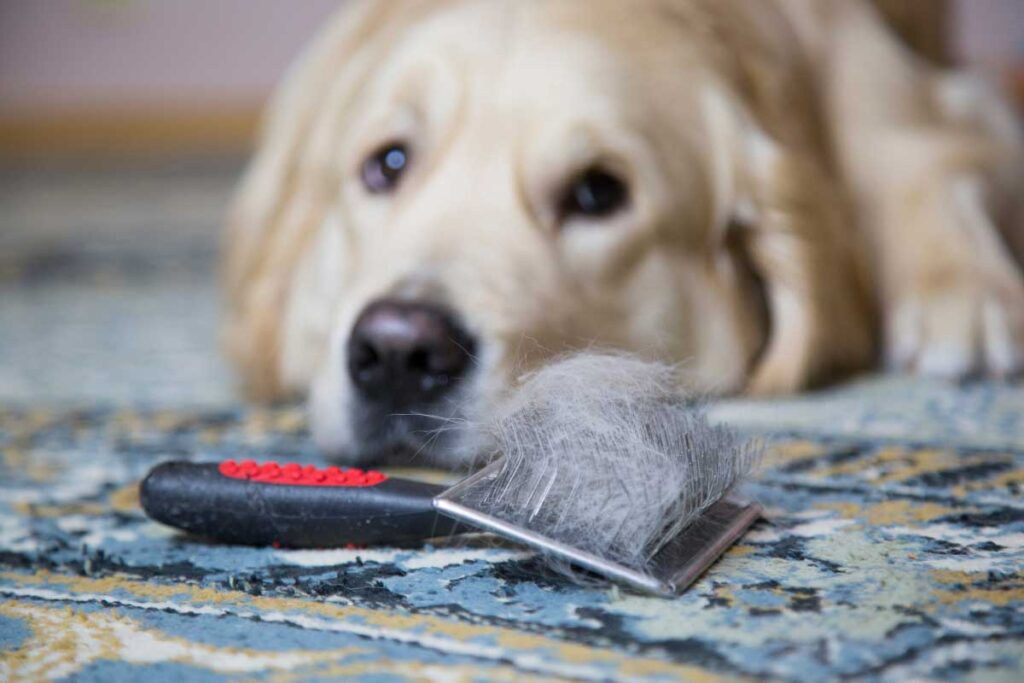
This guide analyzes the specific technologies required to neutralize pet allergens and evaluates which smart features actually improve air quality outcomes.
The Reality of Pet Dander and Air Filtration
Pet dander consists of microscopic flecks of skin shed by cats, dogs, birds, and other animals with fur or feathers. Because these particles are often as small as 0.5 to 2.5 microns, they remain airborne for long periods.
To effectively clear these allergens, an air purifier must utilize a True HEPA filter capable of capturing 99.97% of particles at 0.3 microns. Units that rely solely on “HEPA-type” or “ionizing” technology often fail to capture the smallest dander particles that trigger respiratory issues.
Affiliate Disclosure: This post contains affiliate links. If you purchase through links like FiltersFast or FieldControls, we may earn a commission at no additional cost to you.
Top Smart Purifier Technologies for Pet Owners
| Feature | Standard HEPA Purifier | Smart Pet-Specific Purifier |
| Primary Filter | Basic HEPA | Medical Grade H13 HEPA |
| Odour Control | Thin Carbon Sheet | Granular Activated Carbon |
| Automation | Manual Speed Selection | Laser PM2.5 Auto-Adjustment |
| Maintenance | Visual Inspection | App-Based Life Tracking |
| Connectivity | None | WiFi / Alexa / Google Home |
Critical Features for Pet Dander Elimination
1. High-Efficiency Particulate Air (HEPA) H13
For homes with multiple pets, standard filtration is rarely sufficient. H13 Medical Grade HEPA is the gold standard, as it is dense enough to trap not only dander but also the dried saliva proteins that frequently hitch a ride on dander particles.
2. Specialized Carbon Filtration
Pet ownership brings more than just physical particles; it brings volatile organic compounds (VOCs) and ammonia-based odors. To address this, look for “Granular Activated Carbon” rather than carbon-coated fabric. To understand why this matters, read our deep dive on Understanding Air Purifier Technology: HEPA, Activated Carbon, and Beyond.
3. Smart Laser Sensors (PM2.5)
Inexpensive purifiers use infrared sensors that can be “fooled” by humidity. Smart purifiers use laser particle counters to detect sudden spikes in dander (such as when a dog shakes or jumps on furniture) and automatically increase fan speed to clear the air before the particles settle.+1
The Long-Term Cost of Pet Air Purification
When selecting a unit, the initial sticker price is often misleading. Because pet hair and dander clog filters faster than standard dust, you must account for the frequency of replacement. You can calculate these hidden costs in our analysis: How Much You Really Spend on Filters Over 5 Years.
For those seeking high-capacity industrial-grade solutions, brands like FieldControls offer robust systems designed for higher air exchange rates.
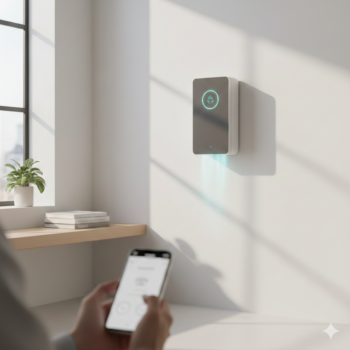
Smart Integration and Automation
Modern air quality management is moving toward “set it and forget it” systems. Integration with smart home hubs allows you to create “Pet Zones.” For example, you can program your purifier to run on “Turbo” mode for 30 minutes after your robotic vacuum completes its cycle, capturing the dander kicked up into the air.
Explore more about these integrations in our Smart Air Purifiers Guide: Automation, Sensors & Home Integration.
Frequently Asked Questions
What is the best air purifier for dog dander?
The best air purifier for dog dander is one that combines an H13 HEPA filter with a high CADR (Clean Air Delivery Rate). High CADR ensures the air in the room is cycled at least 4.8 times per hour, preventing dander from settling on surfaces.
Do air purifiers help with pet smells?
Yes, but only if they contain a significant amount of activated carbon. HEPA filters trap physical particles like dander, but they cannot trap gas-phase odors. A dedicated carbon canister is required to neutralize pet-related smells.+2
Can a smart air purifier reduce pet allergies?
Smart air purifiers reduce allergy symptoms by maintaining consistent air quality. By using “Auto Mode,” the device increases filtration the moment it detects a rise in particulate matter, ensuring that allergen levels stay below the threshold that triggers a reaction.
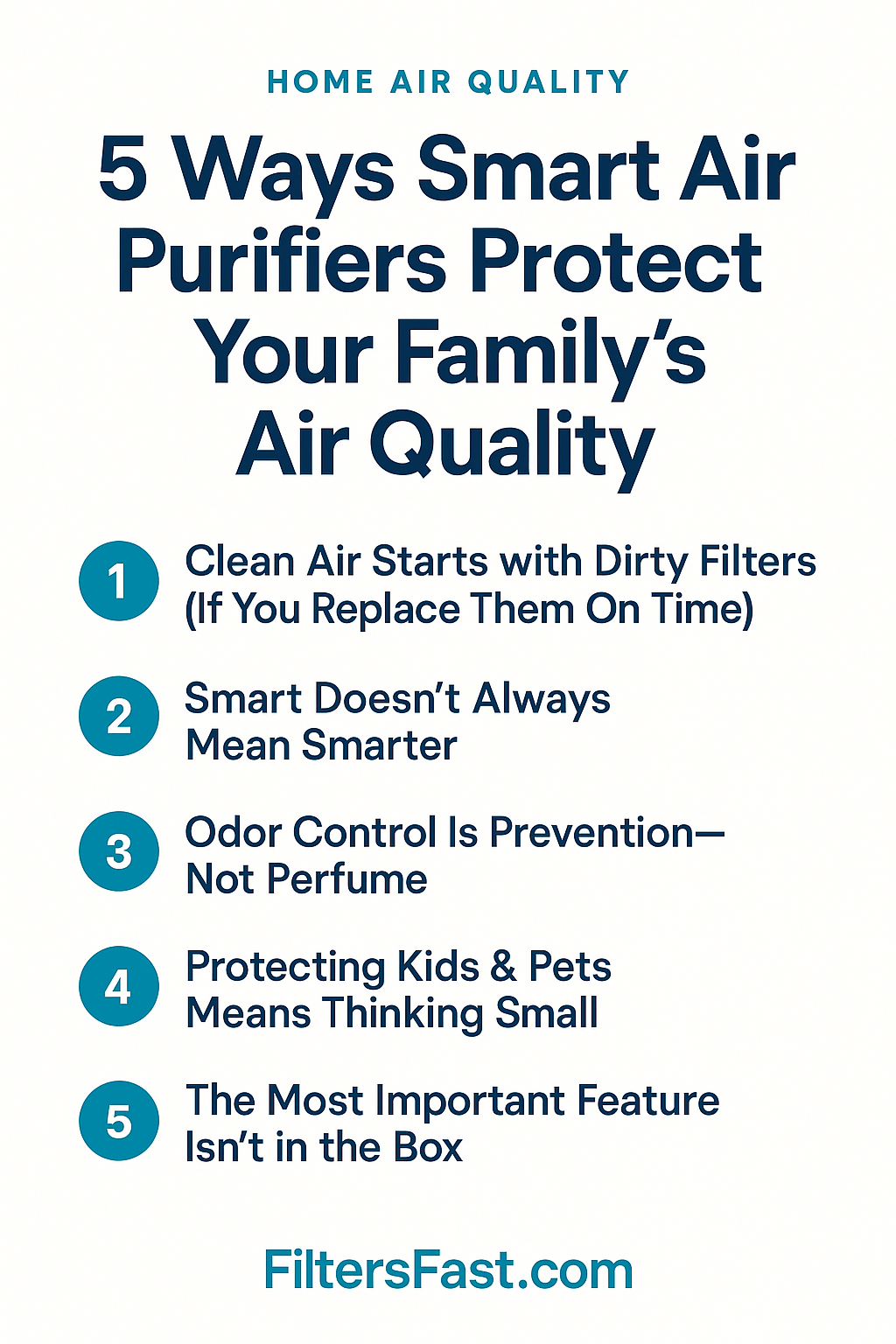
Why Indoor Air Quality Matters
The air inside your home can be significantly more polluted than outdoor air, especially when pet hair, dander, and outdoor pollutants brought in on fur are trapped in confined spaces. This accumulation of pollutants can lead to long-term respiratory sensitivity. Learn more about the risks in our article: Is Your Home’s Air Toxic? Indoor Air Quality Matters.
For broader information on health standards, refer to the Indoor Air Quality (IAQ) guidelines provided by the EPA.
Final Recommendation
If you are serious about eliminating pet dander, do not settle for “HEPA-like” filters. Focus on units with H13 filtration and smart sensors that react in real-time. For genuine replacement filters and a wide selection of top-tier units, we recommend browsing the inventory at FiltersFast.
Investing in a smart system today prevents the buildup of allergens that make living with pets a respiratory challenge. Prioritize high CADR ratings and verifiable filtration standards to ensure your home remains a healthy environment for both you and your pets.